

Roofers
One storm turns a normal month into a year of demand aimed at whoever is still reachable that afternoon.
Roofers hosting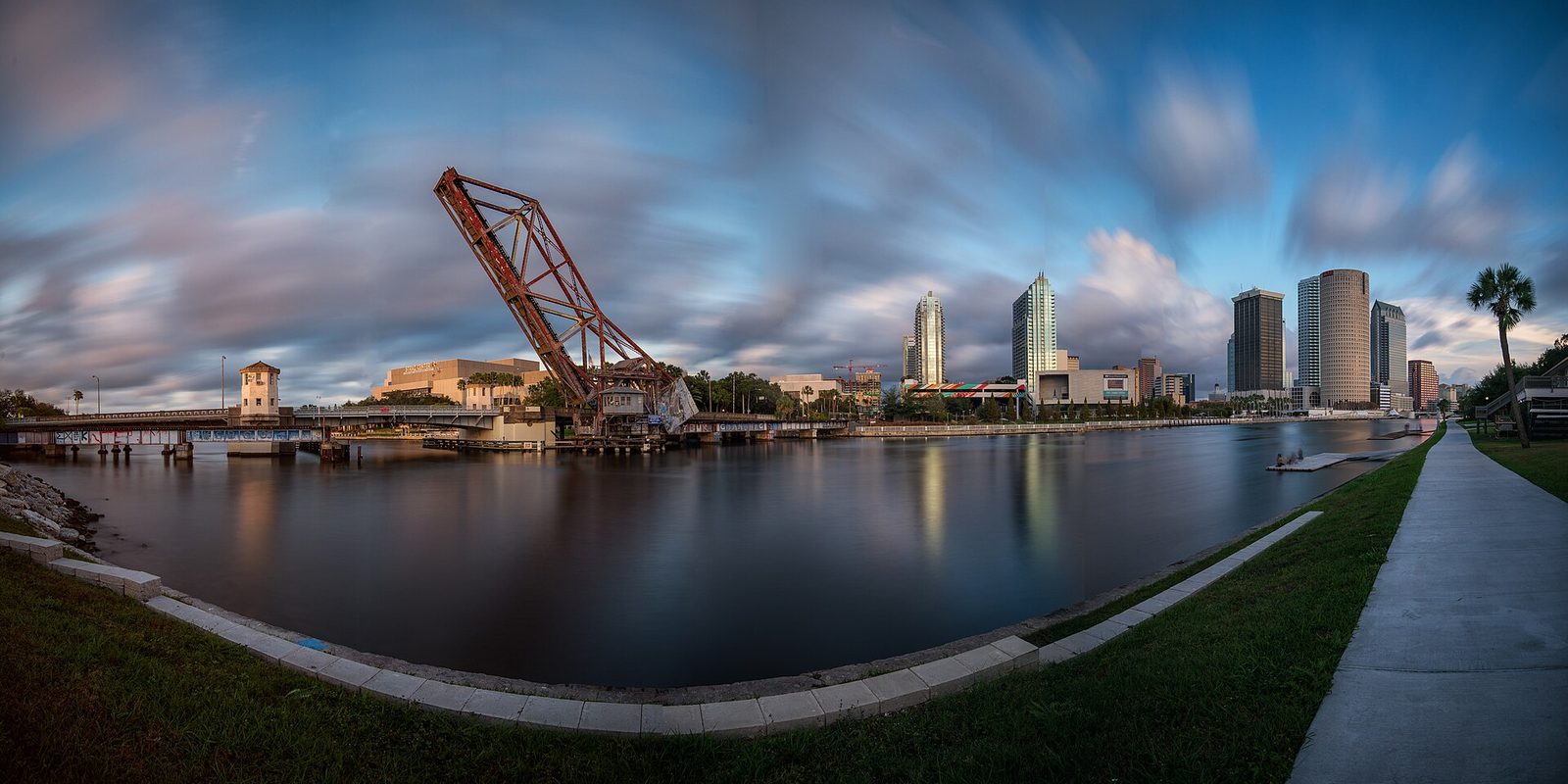
An economy running on finance, healthcare, tourism and the trades that keep buildings standing in heat and salt air produces a particular kind of bill for web hosting in Tampa, FL. Businesses here tend to pay for capacity they never touch and skip the two or three cheap changes that would actually make the site earn its keep. That is worth sorting out, and the weather calendar decides when.
We are not in Tampa. AldoMedia works from one office in Buffalo, New York, and there is no Florida address, no local number and nobody on the ground there. Setup, migration and support all happen remotely, which is how hosting normally works anyway.
Most cities give a business one busy stretch a year. A storm-exposed coast gives you two, and they are separated by a few days. The first arrives while a system is still out over water and people are getting ready. The second arrives once it has passed and people are dealing with what it left.
Those two waves want opposite things from a website, and a site tuned for one usually fails the other. Preparation traffic is planning traffic. It reads. It compares. It wants to know whether you can book something this week, what it costs, whether you are the kind of business that will answer in an emergency later. Recovery traffic reads nothing. It wants a phone number and an answer about today.
In the run-up, people are still calm and still online at a desk or on good wifi. This is when longer pages earn their keep: what you actually do, how quickly you can do it, what you will not do. If you take appointments, the booking page is doing real work here, and it is worth checking that it works before the week it matters.
Afterwards the conditions are the worst your site will ever face. Mobile data on a congested network, a phone somebody is trying not to drain, a person who is tired and has already tried three other companies. What survives that visit is a tappable phone number near the top, one honest line about whether you are taking calls, and a page light enough to appear before they give up.
A page that is only sluggish in March is a page people abandon once the power is back and everybody is dialling at once.
Send us the address and we will tell you what your homepage weighs, how it loads on a phone, and whether it would hold up in the busiest week you get. If it is already fine, we will tell you that instead.
There is a strange upside to all of this. Because the pattern repeats, you can plan for it, which is more than most seasonal businesses anywhere can say. You know roughly when demand will climb. You know it will climb sharply and then fall away. You can decide in advance what the site says in each phase and write it while nobody is calling.
The practical version of that is small. Write the storm week version of your homepage message now and keep it in a document. Know who can publish it and make sure that is more than one person. Check the login to your site works, because the moment you need it will be the moment you discover the password changed when somebody left.
The same logic applies to whatever is not on your own site. An economy of finance, healthcare and tourism runs on borrowed software: booking calendars, patient forms, payment links, availability feeds. All useful, all fine, and all far more likely to fail under load than hosting is. Work out which parts of your page depend on another company being awake, and make sure the phone number is not one of them.

Now the part that is about hosting rather than about Florida. Weight is the problem, and the trades named on this page arrive at it from three different directions, which is why one instruction does not cover all of them.
For roofers it is increasingly video. A flyover of a finished job is the most persuasive thing the business owns, and it is also the one file type that should never sit on your own hosting. A clip parked on your server begins downloading whether or not anybody presses play, so it is charged to every visitor including the ones who came for the phone number. Put it on a video service, show a still with a play button, and fetch the clip only when somebody asks for it.
For a med spa it is photographs, doubled. Every treatment carries a before and an after, they are published in pairs, and above them sits a booking script owned by another company that loads ahead of everything a visitor came for. Two separate fixes: export your own pictures at the size the page displays them, and push somebody else's script down below your own content.
For pest control it is rarely visual at all. These sites are text and forms, and they slow down because the server reassembles the whole page for anyone who so much as glances at it. That is a setting somebody can change in an afternoon, not a bill you have to raise.
Not because weather reaches the server. It does not, and any host worth paying keeps your files a long way from your climate. It is that storm weeks are when people edit in a hurry, under stress, and break something. What a backup does and does not cover is set out on the website backups page. Read it once now rather than at the moment you need it.
Work out what your current plan already does. The shared hosting page covers what a small plan handles and the point at which a business genuinely outgrows one, which for most of these three is later than they assume. If the real question is what the whole thing should cost across a year once domain, mail and plan are added up, that sum is on the running costs page. Figures move, so they live there instead of here.
Copy, test, switch the domain, keep the mail records intact. You keep working while it happens, and afterwards there is somebody to call.
A place taking in new residents and visitors continuously has a different referral pattern from a settled town. A large share of enquiries come from somebody with no friend to ask and no way to check you beyond what is on the screen. Word of mouth still works. It is simply not carrying as much of the load as owners assume.
That shifts what the website has to do. Say plainly what you are licensed and insured to do and who holds the credential, because a stranger cannot infer it. Use your own photographs rather than bought ones, since a first-time enquirer reads stock imagery as a business with nothing of its own to show. Describe the work in language somebody outside the trade can follow, which for a clinic means fewer treatment names and for a contractor means fewer product codes.
The hosting half of that is unglamorous and comes down to arrival and reply. Somebody meeting you for the first time gives the page a second or two before returning to the search results, so weight punishes you far more with strangers than with regulars, who wait because they already trust you. Then the enquiry has to reach a mailbox somebody reads. A form that quietly fails costs you a stranger permanently, because they never chase it.
Send yourself a test enquiry from an address that is not on your own domain, and check the folder it lands in. Your own mail always arrives. Everyone else's is the question.
Almost nobody asks us about hosting because they are starting from nothing. They ask because a renewal doubled, or a supplier went quiet, or nobody left in the building can explain how the thing is put together.
The order of the steps decides whether a move is uneventful, and it is short: copy, prove it works on the new server, change the domain last. The whole sequence sits on the website migration page, which is worth more than a compressed version here. If you are picking up a site you cannot yet log in to, start with taking over a website.
Mail is the piece that actually breaks, and it breaks because it is treated as an afterthought. A pest control company's renewal notices, a med spa's appointment reminders and a roofer's replies to quote requests all ride on the same records, and all three vanish together if those records are rebuilt from memory. How to carry mail through a change intact is on the email migration page.
The timing part is where this coast differs from most places. Do the work in the cool months, when a quiet fortnight costs you nothing, rather than in the stretch when your phone should be ringing.
Three kinds of business whose websites work hardest in a humid, storm-exposed economy built on finance, healthcare and tourism, each with a page of its own.
One storm turns a normal month into a year of demand aimed at whoever is still reachable that afternoon.
Roofers hostingHeat, humidity and standing water after a wet week mean there is no off season, so the site sells contracts all year rather than emergencies once a year.
Pest control companies hostingA healthcare and tourism economy books by calendar, so the site lives or dies on photographs and a booking tool that both have to be fast.
Med spas hostingEvery trade we cover is on hosting by industry, and every city on our locations page.
Skyline photograph: Gregory Urbano from St. Petersburg, Florida, USA, CC BY 2.0, via Wikimedia Commons. Cropped.
No, and the distinction is worth understanding before it happens. A booking tool or an intake form is somebody else's software borrowed onto your page, and it can be offline while your site is perfectly healthy. The lesson is about layout rather than plans. Anything a customer must reach in a bad week, above all a tappable phone number, should belong to your own page.
Yes, but not through traffic surges. Contract work here is steady, so the pressure lands on renewal notices, reminders and enquiry forms rather than on a homepage rush. Mail delivery and form reliability are what to watch, because an enquiry nobody read is a contract somebody else signed. Watch the weeks after bad weather in particular, when a property owner is reviewing everything they pay for.
The cooler, drier months, and for a reason that has nothing to do with risk. A move is not dangerous at any point, but every change has a settling period, and you want it landing while your phone is quiet. Working backwards from a season you can already see coming is the whole trick.
Usually yes, and you do not need them to cooperate. The domain registrar and the hosting account are separate from the person who built the site, and control of the domain is the piece that matters. We work out what exists, recover what we can prove is yours, and rebuild anything genuinely lost. Start by finding the card that pays for the renewals.
Tell us what your site runs on and what it has to survive. We will tell you what to fix, what to leave alone, and whether the plan you are already paying for is the right one.
See hosting plans Get help choosing
Or call 716-771-2536. We are in Buffalo, New York, so we answer Eastern time.
.jpg)