
.jpg)
Jacksonville
Logistics, finance and the largest city by land area in the lower 48.
Hosting in Jacksonville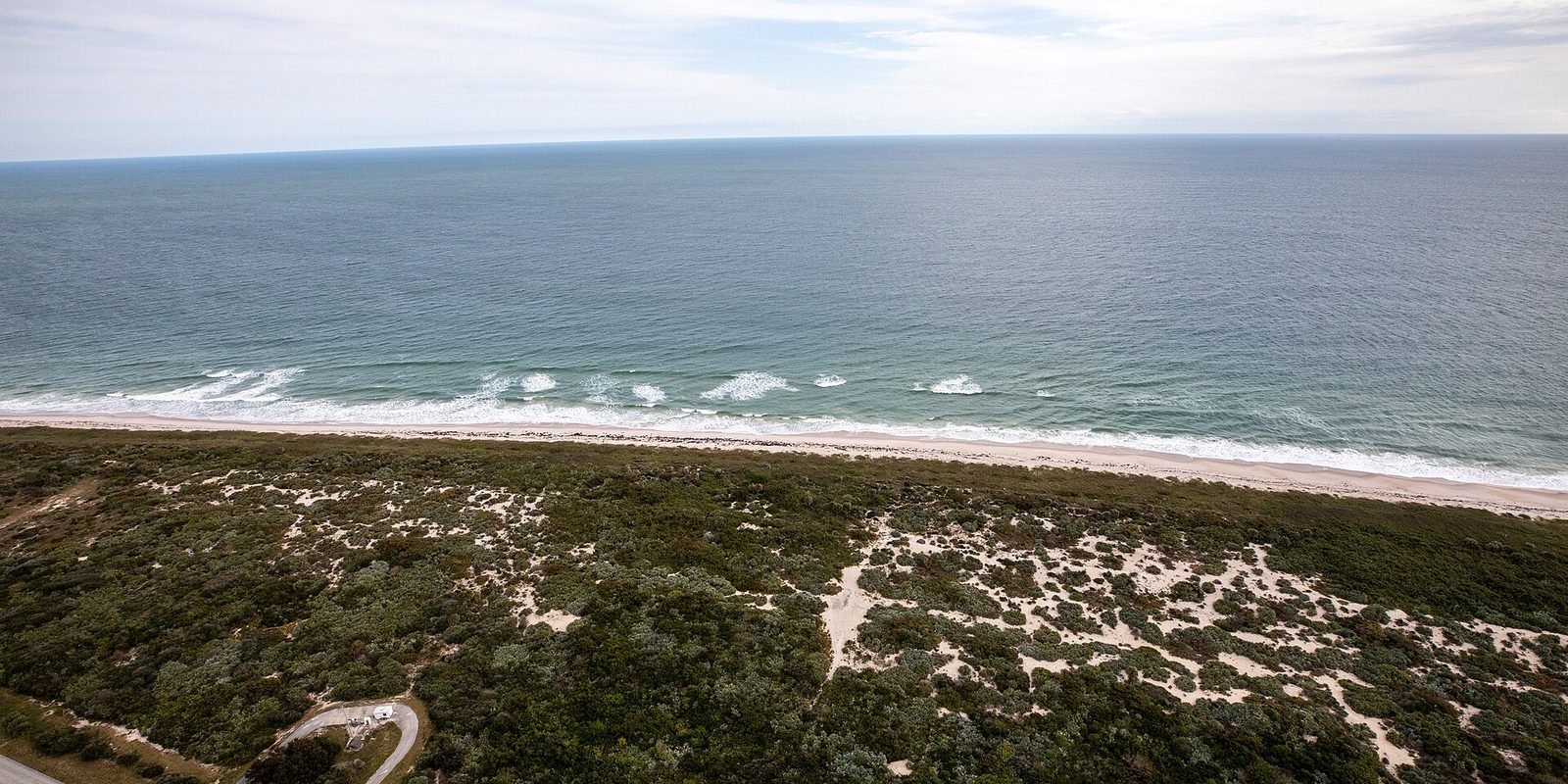
Florida runs on tourism, construction, trade and retirement, and all four of those move to a calendar. The most reliable date on that calendar is storm season, which arrives every year, tests web hosting in Florida the same way every year, and is still treated as a surprise every year.
We are not in Florida. AldoMedia works out of one office in Buffalo, New York, with no Florida address, staff or phone number. Everything here is set up, migrated and supported remotely, which is how hosting works for everyone.
Every year, from early summer into autumn, a large share of the state starts watching the forecast. Every year, a set of businesses sees its web traffic jump: roofers, tree services, restoration firms, general contractors, marinas, property managers, anyone who boards up, tows, repairs or reschedules.
That is not an emergency. It is a season. It has a start date, it has a peak, and it ends. The businesses that do well through it are not the ones with the best hosting, they are the ones that decided in April what the website would say in September.
Very little reading. They want to know whether you are open, whether you are taking calls, whether you are in their area and how fast you answer. Often they are on a phone, on a battery they are trying to preserve, on a network that is congested or running through a single tower. A heavy page in those conditions is the same as no page.
Practise the update before you need it. Change the homepage line on a quiet Tuesday in May. If that takes you three days and two phone calls, you have found the problem while it is still cheap.
Send us your web address. We will tell you what the homepage weighs, how it behaves on a phone on a poor connection, and whether it could carry a status line you can edit yourself. If it is already fine, that is what we will say.
It would be easy to write about Florida as though the weather were the whole story. It is not. Storm season is a spike on top of an economy that has its own steady rhythms, and those rhythms shape what a website has to do far more often.
Tourism means your busiest enquiry months and your slowest ones are not the same as your neighbours' in another industry, and the site has to carry seasonal hours and closures without anyone panicking. Construction and the trades mean galleries, and galleries mean the largest files on the internet sitting on a small business website. Retail and trade mean stock, suppliers and a lot of email. A retirement-heavy customer base means a real share of your visitors are reading on a tablet at a comfortable text size, and a site that only works at small type on a new phone is quietly turning them away.
None of that is exotic. It just means the ordinary things matter more here than the clever ones: readable text, honest hours, a contact route that works, and pages light enough to open anywhere.

Less than you are usually sold, with two exceptions that are genuinely worth paying for in this state.
The first is backups you have actually tested. A site that lives on a server somewhere else is already safer than an office computer in a flood zone, but that only helps if a working copy exists and somebody knows how to restore it. Read website backups and then, once, restore one. An untested backup is a belief, not a backup.
The second is email. A construction or trade business through a busy season runs on email, and losing it for a day during a claim rush costs more than a year of hosting. If you are moving providers, do it out of season, and read email migration first.
Spending more earns its place when the site takes bookings or payments, when it carries a large and growing gallery, or when a day of downtime costs you work the same day. Visitor numbers on their own almost never justify it.
It is tempting to treat a state this size as one market. It is not, and the four places we cover in detail want noticeably different things from a small business site.
The storm calendar sits across all four, but it hits them in different orders and it asks different things of each. A hospitality site needs to say whether it is open. A trade site needs to say whether it is taking work. Those are not the same page.
Copy, test, switch the domain, keep the mail records intact so nothing bounces. You keep working through it, and afterwards there is somebody to call.
Fair question, and the answer is not flattering to anyone selling local hosting. Hosting is not a local service. Your website does not sit in Florida today and it will not afterwards. It sits in a data centre, and which state that building is in makes no difference a visitor could measure.
So the thing you are choosing is not proximity. It is whether somebody answers when the site is down, whether they know what your DNS looked like last week, and whether they will tell you when you do not need to spend money. That has nothing to do with distance.
We are in Buffalo, we answer on Eastern time, which is your time, and we have been building websites since 1999. We are an independent authorised reseller, not the operator of the underlying platform, and we will say so. If you want somebody who can drive to your office, we are the wrong choice, and we will tell you that too.
One thing that genuinely is local: your Google Business Profile. It is free, it is where most people see your hours, and it matters more in a storm week than your homepage does. Get it right before you spend anything on hosting.
Most people who contact us are not launching something new. They are leaving something: a host that got slow, a designer who stopped replying, a renewal that quietly doubled, a site nobody has the login for any more.
The order of work is what protects you. Copy the site, test it on the new server, and only then point the domain across. Done that way nothing goes dark, because the old server keeps answering until every visitor's connection catches up. The full sequence is on website migration.
The part that breaks is nearly always email, because somebody rebuilt the DNS from scratch and left the mail records out. Write down what exists before you touch anything. And pick your month. A migration in spring is routine work. The same migration in the middle of a busy storm week is the worst day of your quarter.
If the previous site was built by somebody you have lost contact with, getting control of the domain is the first job rather than the last. Nothing else can be moved until that is settled.
Four very different local economies sit under this page, and what a website has to do is not the same in each of them.
Logistics, finance and the largest city by land area in the lower 48.
Hosting in JacksonvilleTrade, tourism and international business.
Hosting in MiamiFinance, healthcare and tourism.
Hosting in TampaTourism, conventions and simulation technology.
Hosting in OrlandoMarine trades, international business and tourism.
Hosting in Fort LauderdaleHealthcare, marine science, tourism and home services.
Hosting in St. PetersburgEvery state is on our locations page, and every trade we cover is on hosting by industry.
Photograph: Ben Smegelsky, Public domain, via Wikimedia Commons. Cropped.
No. The distance between a visitor and a server is measured in milliseconds and is swamped by everything else on the page. A site that feels slow in Florida is nearly always heavy rather than far away. Resize the images and turn caching on before you consider moving anything, and read shared hosting before you buy a bigger plan.
The website almost certainly will, because it is not in your building. Your office power, your office internet and your phone line are the fragile parts, not the server. What tends to fail is the ability to change the site, because the one person who can update it has no power. Fix that by making sure two people can edit the homepage from a phone.
It depends on whether you will ever need to leave. A builder is quicker to start and harder to move away from, and a lot of seasonal businesses discover that at renewal. If your site is mainly text, hours and a gallery, ordinary hosting is cheaper over five years and stays portable. We have laid the comparison out on the web hosting vs website builder page.
Out of season, and further ahead than feels necessary. Migrations are dull when nothing is urgent and awful when something is. If your busy months run summer into autumn, do the work in late winter or spring. If you are already in your busy stretch and the current host is merely annoying rather than broken, wait.
Usually not. Several locations normally live on one site as separate pages, on one plan, with one set of email addresses. Where cost genuinely climbs is when each location wants its own domain, its own inbox set and its own updates, and that is a decision about how you want to be found, not a hosting requirement.
Tell us what your site runs on and what it has to survive. We will tell you what to fix, what to leave alone, and whether the plan you are already paying for is the right one.
See hosting plans Get help choosing
Or call 716-771-2536. We are in Buffalo, New York, so we answer Eastern time.
.jpg)