

Shared Hosting
The plan type a pest control site belongs on, and what the higher tiers actually change.
Read about shared hosting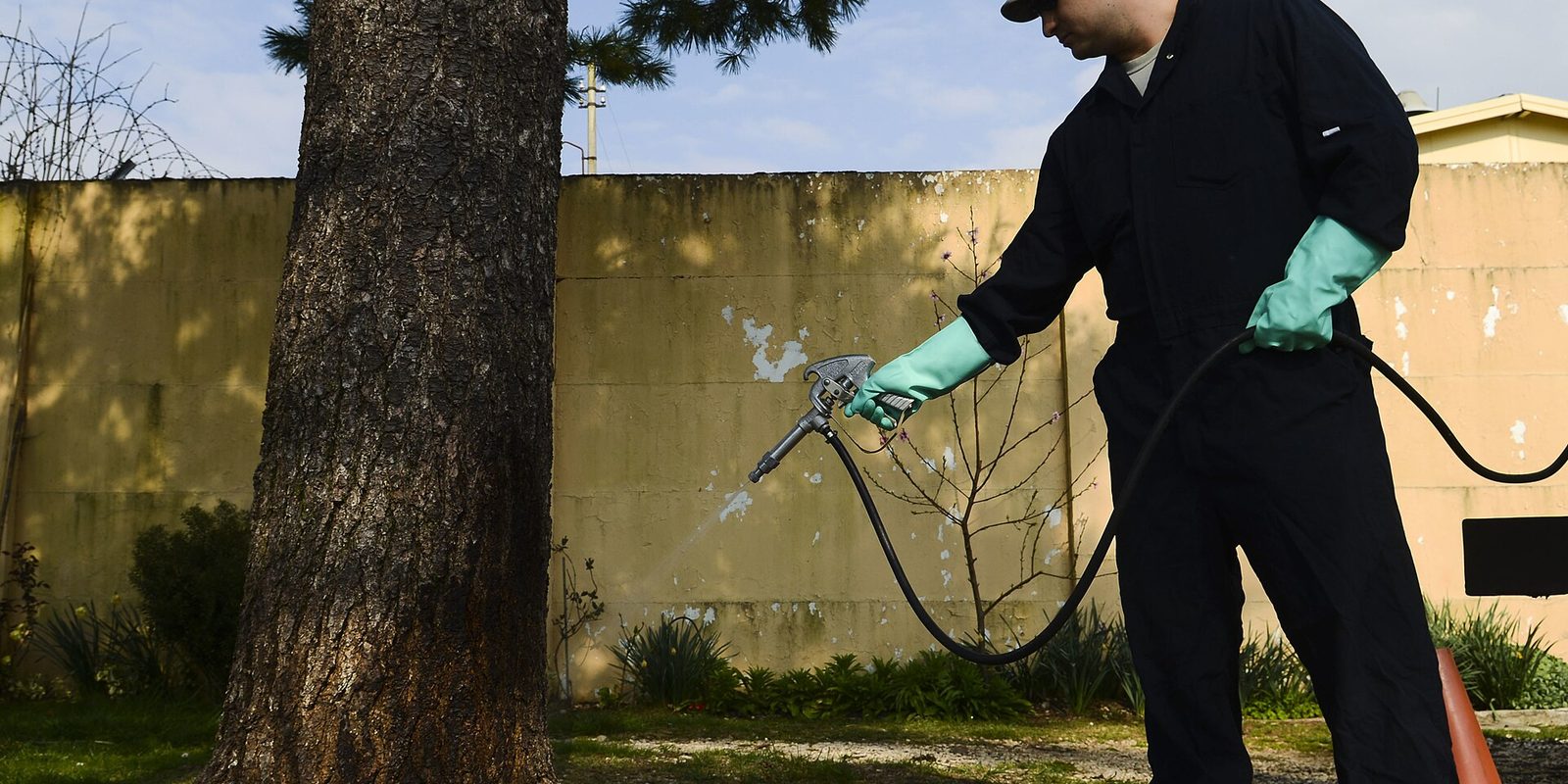
Pest control demand arrives on a calendar written by insects. Ants in spring, wasps in late summer, mice the first genuinely cold week. Web hosting for pest control companies is judged on one thing, whether you can get each page live before the season starts, because the searches do not wait for you.
Disclosure: AldoMedia is an independent authorized reseller. If you buy through a link on this page we may earn a commission, at no extra cost to you. The hosting platform, the domain registry and the certificate authority are run by upstream providers whose full-time job that is. What AldoMedia does is set the products up properly, support them, and stay accountable for your account.
Here is the pattern almost every pest control company falls into. The phone starts ringing about mice in late October. By the second week of November somebody says the website should really have a page about mice. It gets written, published, and starts to earn its keep some time in January, which is when nobody is searching any more.
The page was not wrong. It was late. Three weeks late on the searches, and a full month behind the competitor who published theirs in September and has been collecting that traffic ever since.
This is the single most useful thing to understand about a pest control website. Your demand is not steady and it is not random. It is a calendar, it repeats every year, and you already know it by heart from the dispatch board. The website is the one part of the business that never gets planned against it.
| What people search for | When calls start | When to publish |
|---|---|---|
| Ants indoors, carpenter ants | First warm stretch of spring | Late winter |
| Termite swarmers | Spring, often after rain | Late winter |
| Wasps, hornets, yellow jackets | Mid to late summer, nests at their largest | Early summer |
| Mice and rats indoors | The first properly cold week | Early autumn |
| Bed bugs | No season, travel driven | Any time, then leave it alone |
Your local calendar is not the same as anyone else's. Write it down from your own dispatch records rather than copying a generic one. Two weeks of error is the difference between arriving early and arriving late.

None of this needs a content strategy or a marketing calendar in a spreadsheet nobody opens. It needs one habit, repeated four or five times a year.
The best time to write about mice is August, when you have time and nobody is calling about them. The best time to write about ants is January. Whatever is slow right now, write about what comes next.
A page needs a few weeks before search engines take it seriously. Publishing six weeks ahead of the calls is not too early, it is exactly right. Publishing the week the calls start is publishing for next year.
Second year onwards, you are not starting over. Open the mice page, fix anything that changed, add what you learned last season, and leave the address alone. A page that has existed for three years outranks a brand new one saying the same thing.
This is where most of these plans die. If changing a paragraph means emailing someone and waiting four days, you will not do it four times a year. Whatever the site runs on, you need to be able to open it and type.
That last point is the one that touches hosting. Not speed, not storage. Access. If you cannot log in and change a page yourself, the seasonal habit never forms, and none of the rest of this matters.
Tell us what your pest control site runs on and we will make sure you can log in and publish a seasonal page yourself, weeks before the calls start. If you already can, we will tell you so.
Somebody finds a small brown insect on a windowsill and photographs it. Somebody else finds sawdust under a doorframe. What they type is not "pest control near me". It is a description of the thing they are looking at.
Those searches are enormous, and most pest control websites ignore them completely because the person searching is not obviously a customer. Some of them genuinely are not. But a meaningful share of people who identify a problem on your website then call the company whose website told them.
These pages are text and a few images. They are among the lightest things you can put on a server, and a shared hosting plan carries a library of them without noticing. If you are building them in WordPress, which most people are, the practical considerations are on the WordPress hosting page.
Do not gate an identification page behind a form. Someone with a bug in a jar will not fill in a form to find out what it is. They will go to the next result.
Pesticide application is licensed at state level, and the rules about certification, business registration and what has to be disclosed vary by state. That is a matter for your own regulator and your own adviser, not for a hosting company. What we can say is what happens on websites.
A share of homeowners, and a much larger share of property managers, will look for your license details before they call. Not all of them, but the careful ones, and the careful ones are usually the better customers. If the number is nowhere on the site, they assume the worst or they simply move on.
There is a smaller technical point attached to this. Trust signals only work on a site that looks trustworthy in the first place, and a browser warning about an insecure connection undoes all of it in one line of red text. An SSL certificate is table stakes rather than an upgrade.
Quarterly and annual service plans are the backbone of a residential pest control business, and at some point somebody suggests a customer portal. Log in, see your service history, pay your bill, book the next visit.
It is a reasonable idea, and it changes what your website is. Up to that point the site is pages of text that a server hands out. A portal is software holding customer records, addresses and payment details, and it needs looking after in a way brochure pages never did.
The honest alternative is worth considering first. Most companies running a few hundred residential plans manage them perfectly well in their field service software, and the website's job is a phone number and a request form. A portal earns its cost when customers are genuinely asking for one, not when a developer suggests it.
We will host and look after a site full of pest pages, license details and treatment safety answers, and resize the photographs that are slowing it down. If a portal is not worth building yet, we will say that too.
Ask any technician what the most common question at the door is and it is some version of this. Is it safe for my kids. Is it safe for the dog. How long do we stay out. Can I leave the cat's bowl down.
Those questions get asked at the door because the website did not answer them. Every one of them is also a search, made by someone deciding whether to call you at all.
Write the page. Say what a treatment involves, what preparation you ask for, how long people and animals should stay off treated surfaces, and what you do differently for a house with a fish tank or a baby crawling on the floor. Describe your actual practice rather than copying a manufacturer's label, and point people to the label for the specifics.
This is one of the few pages where being genuinely careful reads as competence rather than caution. A company that has thought hard about the dog is a company that has thought hard about the ants.
Everything above is a residential argument, and it is worth saying that clearly rather than letting you find out later.
Commercial accounts do not come from a website. Restaurant chains, food processing, warehousing, property management portfolios and anything under a third-party audit scheme are won by relationships, references, a tender document and proof you can produce the paperwork their auditor wants. Nobody awarded a multi-site contract because the ant page was good.
Where spending more genuinely makes sense: you are running real recurring plans with customer logins and payments, you run several branded companies or service areas from one place, or you have built a large identification library that is now a meaningful source of work. Those are real reasons. A busy spring is not one of them, because a page of text costs the same to serve in April as it does in February.
AldoMedia has built and looked after websites for Western New York businesses since 1999, and a seasonal trade with a page nobody can edit is familiar work. We are an independent authorized reseller rather than the operator of the underlying platform, and if the plan you are on already covers what you need, we will tell you that instead of selling you a bigger one.
Current pricing and plan details are on the hosting page. If you are taking over a site somebody else built and nobody has the login for, start with taking over a website. Call 716-771-2536 or tell us what your site runs on.
Early autumn, well before the first cold week brings the calls. A new page needs a few weeks before search engines treat it as established, so publishing in November puts you a month behind the company that published in September. From the second year onwards you are updating that same page rather than writing a new one, which works better anyway.
Many of them are not, and that is fine. Somebody photographing an insect on a windowsill is not yet deciding anything. But a real share of people who work out what they have on your website then call you about it, and those searches are far larger in volume than "pest control near me". Write one page per pest, be honest about what a homeowner can handle themselves, and do not put a form in front of the answer.
Careful customers do check, and property managers almost always do. Putting your business registration or license number in the footer and on an about page, along with the states you are licensed in, costs nothing and removes a reason to call somebody else. What has to be disclosed varies by state, so check the specifics with your own regulator or adviser rather than copying another company's footer.
Usually not at first. Most companies running residential plans manage them in their field service software, and the website's job is a phone number and a request form. A portal turns your site into software holding addresses, service history and payment details, which changes what security and backups need to look like. Build it when customers are asking for it, and let a payment provider handle the cards rather than storing them yourself.
No. A page of text costs the same to serve in April as in February, and seasonal demand in this trade is measured in extra phone calls rather than server load. If your site feels slow it is almost always weight, usually oversized photographs of treatments and equipment, and the fix is to resize them rather than to upgrade.
Rarely, and it is worth planning around that. Food processing, warehousing, property management and anything under an audit scheme is won on references, tender documents and paperwork. If your revenue is mostly commercial your website is a credibility check that needs to exist and look current, and the money is better spent on documentation than on content or a larger plan.
The plan type a pest control site belongs on, and what the higher tiers actually change.
Read about shared hostingIf your seasonal pages live in WordPress, what a WordPress plan does and does not take off your desk.
Read about WordPress hostingWhat to collect when nobody at the company has the login to the site they paid for.
How a handover worksEvery trade we cover is listed on hosting by industry.
Hero image: Senior Airman Austin Harvill, Public domain, via Wikimedia Commons. Cropped.
Tell us what your pest control site runs on and whether you can edit it yourself. If the plan you are paying for already does the job, we will say so.
Get Your Web Hosting Plan Get help choosing
Or call 716-771-2536 and tell us what the site has to do. If the plan you are already on is the right one, we will say so.
