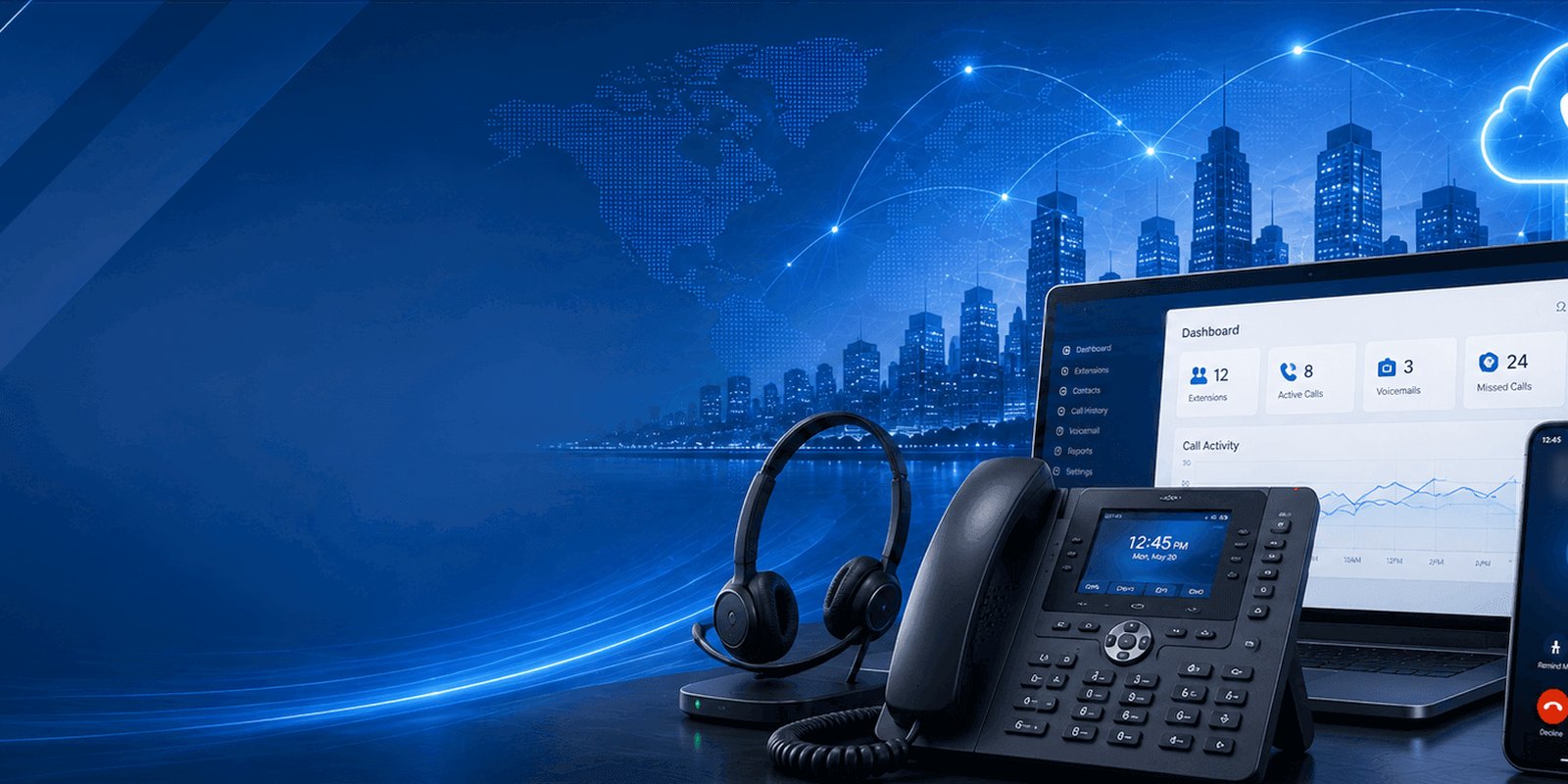
What business VoIP actually is
An old business phone line is a physical pair of copper wires running to your
building. The phone company owns them, the number belongs to that address, and the
phone on the desk works because it is wired to that pair.
VoIP replaces the copper with your internet connection. Your voice is turned into
data, sent the same way a web page or an email is sent, and turned back into sound
at the other end. The person calling you hears a phone call. Nothing about the
conversation is different, and they have no way of knowing which kind of line they
reached.
Because it is data, the thing that rings no longer has to be wired to anything in
particular. The same business number can ring an app on a phone in somebody's
pocket, a handset on the front counter, and a tab open on a laptop. One number,
several places it can be answered, chosen by you rather than by where the wire was
run in 1996. You will see this sold as hosted phone, cloud phone system or business
phone service. It is the same arrangement.
The problem it actually solves
Most small businesses do not have a phone problem in the technical sense. They
have one of these, and they have had it for years:
- The number on the van, the invoices and the website is the owner's personal
mobile, so every customer has it forever.
- Calls come in while somebody is on a roof, under a sink or with a client, and
there is nobody else the call can go to.
- The office line rings out to a voicemail greeting recorded once, in a kitchen,
with a dog in the background.
- There is a landline being paid for that everybody in the business has stopped
using, because the work happens away from the desk it sits on.
A phone system is what fixes those. VoIP is the most flexible
way for a small business to get one, because the intelligence sits with the
provider instead of in a box on your wall.