

Roofers
Hail spikes on top of steady sun and altitude damage means the site has to handle both a stampede and a slow enquiry.
Roofers hosting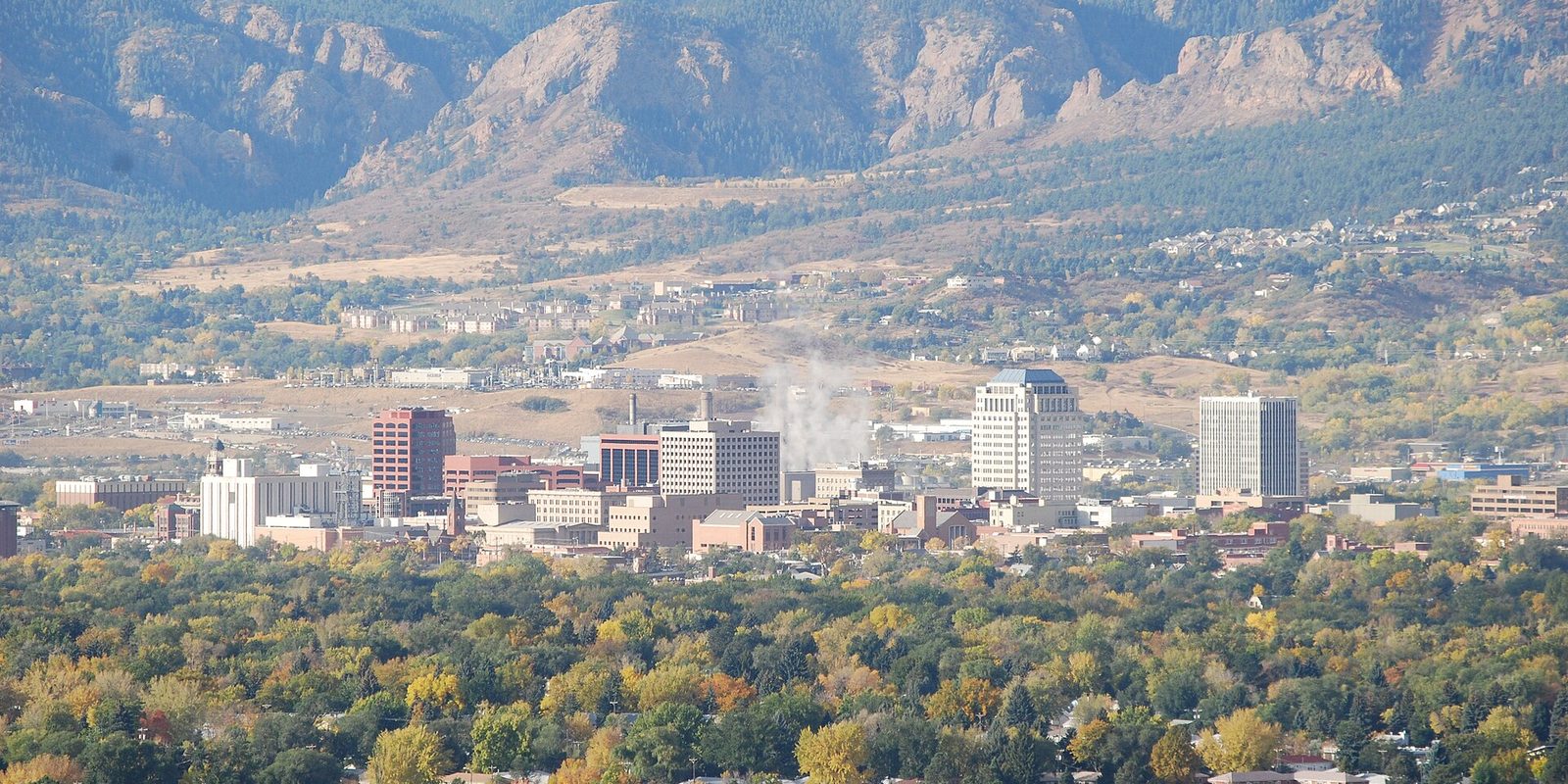
A city whose payroll leans on defence contracts, aerospace suppliers and a warm-season visitor trade ends up buying web hosting in Colorado Springs, CO sized for somebody else's company. Most firms here pay for capacity they will never touch while the thing actually slowing the site sits untouched on the homepage.
We are not in Colorado Springs. AldoMedia works out of Buffalo, New York, and there is no Colorado office, no local number and nobody to send round. Setup, migration and support all happen remotely, which is how hosting works anyway.
Most cities give roofers one busy stretch and then leave them alone. This one does not. The hail comes through in the warm months, and when a storm cell tracks across a populated stretch, a few thousand people walk outside within the hour and start looking at their cars and their shingles. That part is loud and obvious.
The altitude is the quiet half, and it never stops. Up here the sun carries more ultraviolet than it does at sea level, the air is dry, and the temperature can swing thirty or forty degrees between a winter afternoon and the same night. Materials age faster under that. A roof that would have twenty years in a milder place gives you fewer, and it fails gradually rather than all at once.
So the demand has two shapes stacked on top of each other. There is a spike after every serious storm, and underneath it a steady baseline of ordinary replacement that would keep people employed even if it never hailed again. Nobody else in the trade nationally gets both at that intensity.
It means the site has two jobs, and most sites are built for only one of them. During a storm week it has to reach somebody standing in a driveway on a phone, outdoors, on a network carrying everybody else's calls at the same moment. The rest of the year it has to answer a slower question from somebody at a kitchen table wondering whether a decade of thin-air sun means it is finally time.
A site that feels slightly slow in February will be unusable in the fortnight that pays for your year. Look at it while nothing is happening.
Send us the address and we will tell you what your site weighs, how fast it loads on a phone, and whether it would hold up in a busy fortnight. If it is already fine, we will say so.
Shrink your photographs is true and useless, because what a business uploads depends on what it sells. The three trades leaning hardest on their sites here each break a page differently.
A roofer accumulates an archive rather than a gallery. Every inspection produces close-ups shot at whatever resolution the phone was set to, and they pile up for years because nobody wants to throw away evidence. The proof matters, so keep it. What it cannot do is sit on the front page in full size, four dozen frames deep, in front of somebody who came looking for a phone number.
A landscaper here is selling something a homeowner has been told is impossible: a garden that survives dry air, thin soil and a growing window that shuts early. That case is made in pairs, before and after, and pairs double the weight of every point being proved. Prove fewer points, in larger and better frames, and the page gets lighter and more persuasive at the same time.
A wedding venue has the opposite problem. Couples are browsing from another state, late at night, comparing several places at once, and they want the full album rather than a selection. That is a legitimate reason to carry a lot of imagery, and the answer is to stop making the first screen pay for it. Let the album load as somebody scrolls into it instead of all at once on arrival.
In all three cases the server should be handing out a page it has already assembled rather than rebuilding one for every arrival. That is a setting, not a purchase, and it is included in what an ordinary plan does. Shared hosting explains where the line actually sits.

This is a city people rotate through. Postings end, contracts finish, and the person who set your website up five years ago may now be in another state with no particular reason to answer an email. Sooner or later somebody asks a question nobody in the building can answer: who actually holds the domain.
It is worth finding out on a quiet afternoon rather than during the week the site goes down. Three logins decide everything. The registrar where the domain is renewed, the hosting account where the files live, and whatever the email is running on. If those are in one departed contractor's personal account, you do not own your website in any way that will survive a disagreement.
Write down which company holds each one and which address the renewal notices go to. A domain that lapses because the reminder went to an inbox nobody reads is on domain expiration, and untangling one you have inherited is on taking over a website.
This is also why buying support from another state is not the risk people assume. We are in Buffalo, on Eastern time, two hours ahead of you, and we have been looking after websites since 1999. If you want somebody who will drive over and sit at your table, we are the wrong choice and will say so. What matters is whether the keys are in your name and whether somebody picks up.
Ask whoever maintains your site to confirm, in writing, that the domain is registered to your business rather than to them. A straight answer takes a minute.
Two clocks run through this city's year, and between them they tell you when to change hosts. Not in the warm months, when hail enquiries and visitors both arrive. Not while a contract officer might be reading your capability pages. The cold stretch in between is the answer, and almost nobody uses it, which is why moves get done in a panic.
The sequence itself is not improvised and it is written out once, properly, on website migration. The short version is that nothing is switched until the copy has been proved to work somewhere else first. Mail is the part that catches people out, and if the mailboxes themselves are moving too, that is on email migration.
Before any of it, take a copy you have actually restored rather than one you assume exists. What that covers, and what it quietly does not, is on website backups.
Copy, test, switch the domain, keep the mail records intact. You carry on working while it happens, and if something is wrong afterwards you have somebody to call.
An economy built on defence work, aerospace suppliers and a warm-season visitor trade produces a particular sales conversation. Because some firms here genuinely do carry handling requirements, everybody nearby gets sold as though they do, and a machine shop with a contact form and nine pages of company history ends up quoted for infrastructure built to hold controlled technical data it will never touch.
The distinction saves real money. Controlled information belongs in whatever system your prime contractor already specified, and a public marketing website is deliberately not that system. Once nothing sensitive is on it, the site is a brochure with a form, and it wants ordinary hosting done competently.
What a vetting officer actually checks on your public site is duller than any upsell. Does the certification list match the current year. Is there a named human to contact. Does the address in the footer agree with the one on the registration paperwork. None of that is a plan tier. It is somebody keeping the page current.
Where extra spending is genuinely earned is narrower than it sounds: a site taking payments or bookings, a venue carrying an enormous photo library, a tour or class schedule running live, or a business that loses billable work the same day the site goes dark. Visitor numbers alone almost never get you there. The full year of running costs is on what a website costs to run, current plan pricing is on the hosting page, and if you were quoted separately for a certificate, read the SSL page before paying for it.
Those two clocks also put two incompatible readers on the same website. Tourism concentrates the year into a warm stretch when somebody is planning on a phone, often from another time zone, often the night before. Defence and aerospace work runs on a far slower calendar, where somebody is quietly establishing whether your company is real, what it is approved for, and who to write to.
They want opposite things. One wants hours, availability and a way to book in under a minute. The other wants a capabilities page updated this decade and a named person to email. A site built entirely for either reader loses the other, and most sites in town are built for neither.
The answer is not two websites. It is deciding which handful of facts change, and keeping those where you can correct them yourself between jobs. Hours go stale in weeks. Approvals and capability lists go stale over years, quietly, and that is the one being read most carefully. Anything sitting inside an image or a document attachment is the version nobody ever corrects, because fixing it means hunting down the original file and whoever owns the software that made it.
Three businesses whose websites do more work than the owners expect in this climate and this economy, each with a page of its own.
Hail spikes on top of steady sun and altitude damage means the site has to handle both a stampede and a slow enquiry.
Roofers hostingDry air, thin soil and a short growing window sell from photographs, and photographs are what make a site slow.
Landscapers hostingA tourism economy books weddings from out of state, so the gallery and the enquiry form are the whole business.
Wedding venues hostingEvery trade we cover is on hosting by industry, and every city on our locations page.
Skyline photograph: The original uploader was Postoak at English Wikipedia., CC BY 2.0, via Wikimedia Commons. Cropped.
The archive earns its keep, because sun-worn shingles and hail bruising look different and a homeowner here is working out which one they have. What it cannot do is load in full on arrival. Keep a small chosen set on the landing page, put the rest behind its own link, and send every frame out at the size a screen can show. The evidence stays, the weight goes.
Load a plain page with almost nothing on it, then load the gallery of finished work. If the plain one is quick and the heavy one is not, the pages are at fault and a new host changes nothing. If both drag in a dead February as well as a busy August, the server is worth questioning. Do the test outdoors on cellular signal, because that is the condition your storm week visitor is in.
Not the plan, no. Somebody comparing venues at midnight from another time zone has several tabs open and leaves the slowest one first. What matters is that the album loads as they scroll rather than all at once, that the enquiry form works without a phone call, and that the reply comes from an address on your own domain rather than a free account, which reads as temporary to somebody about to send a deposit.
You get a recent copy of the files and the database, kept off the server, and a restore we have practised rather than assumed. What backups do not cover is anything living outside the site. Mailboxes, your business profile listing, the certification documents a procurement officer asks for, and the domain registration itself all need their own copies. Ask any host to restore one page as a test before you rely on it.
Tell us what your site runs on and what it has to survive. We will tell you what to fix, what to leave alone, and whether the plan you are already on is the right one.
See hosting plans Get help choosing
Or call 716-771-2536. We are in Buffalo, New York, so we answer Eastern time.
