

Denver
Energy, outdoor industry and steady growth.
Hosting in Denver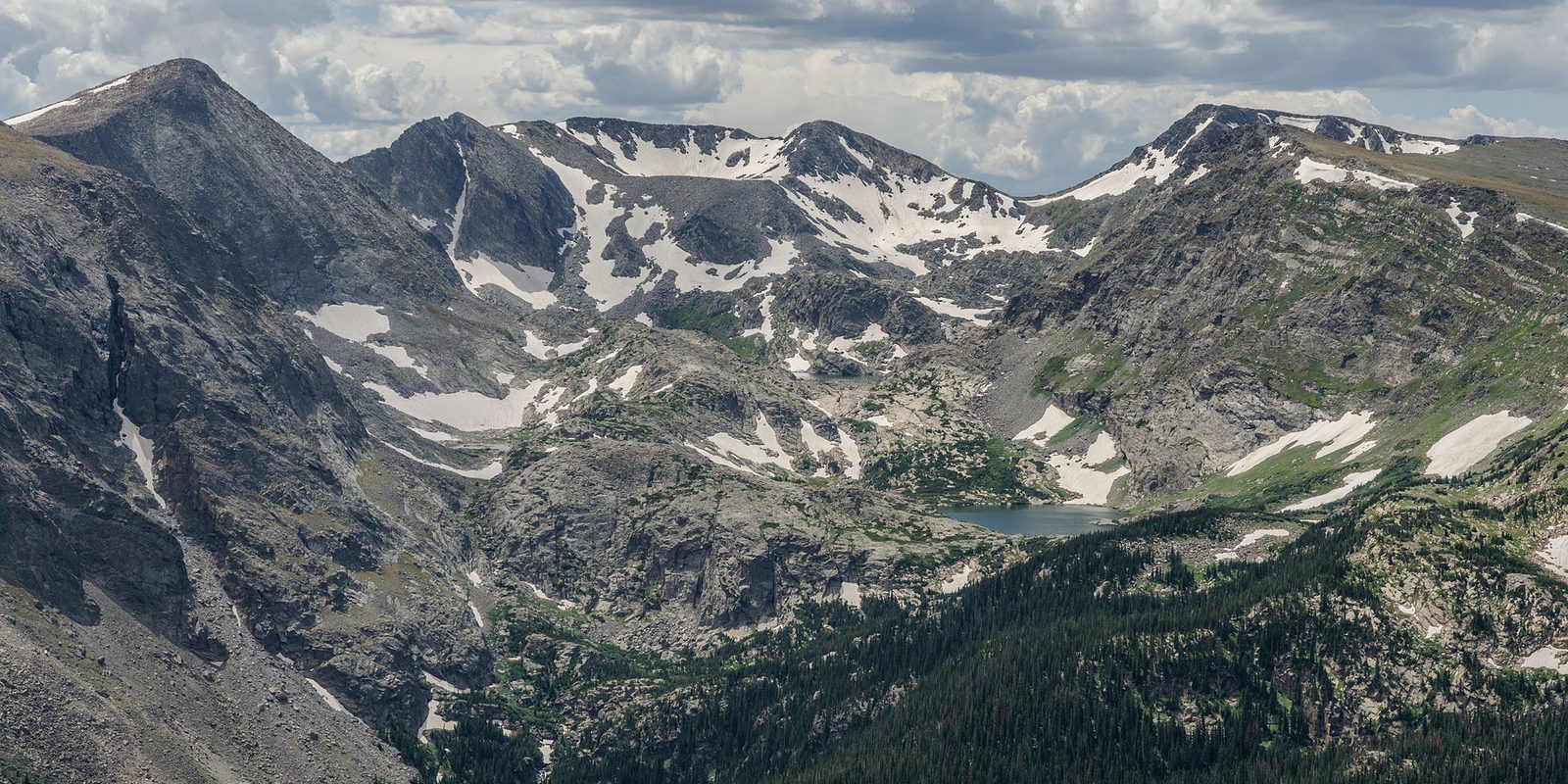
Colorado runs on three economies at once: an outdoor industry that sells by season, an energy sector that moves in long cycles, and a technology corridor that hires and sheds in shorter ones. Underneath all three sits the ordinary trade and service business, and for a lot of those the year has one violent fortnight that decides everything. That fortnight is when web hosting in Colorado earns its money or does not.
We are not in Colorado. AldoMedia works from one office in Buffalo, New York, and there is no Colorado address, no local number and nobody in the state. Everything is set up, moved and supported remotely, which is how hosting normally works anyway.
It is worth being clear about what a Colorado business website is competing inside, because the state does not have one economy. It has several, and they keep different calendars.
The outdoor and recreation side sells to a season and to weather. Demand arrives when conditions arrive, which means the website has to be right before the window opens rather than during it. Nobody edits a booking page in the middle of a good week.
Energy moves on a far longer cycle. Companies serving it tend to have small websites that sit untouched for years and then matter enormously during a hiring push or a contract bid. The common failure there is not traffic. It is a site nobody has logged into since the person who built it left.
Technology employment concentrates along the populated corridor and pulls a lot of skilled people into the state. That has a knock-on effect on ordinary local businesses: your customers are used to software that works, and they judge a slow or broken website harder than they would elsewhere.
The practical version of all this: your website is rarely under stress from visitor numbers. It is under stress from neglect between the weeks that count.
Send us your web address. We will tell you what the homepage weighs, how it behaves on a phone, and whether it would survive a fortnight of storm traffic. If it is already fine, we will say that and stop.
Colorado gets serious hail, reliably, most years, across the populated part of the state. For a homeowner it is a bad afternoon. For a roofer, a siding contractor, a glazier, a body shop or a general contractor, it is the single largest commercial event of the year, and it does not give notice.
What happens next is unusual. Search demand for repair does not rise gently. It goes near vertical within hours of the storm, stays there for roughly two weeks, and then falls back to nothing. Whoever is visible during that fortnight books a season of work. Whoever is not, waits a year.
Three things go wrong, and none of them are the hosting plan.
There is a fourth, quieter problem. Storm work attracts out-of-state operators who arrive fast and advertise hard. You are not only competing with the contractor two streets over, you are competing with someone who does this for a living in six states and has a page ready before the sky clears. The only reliable answer is being ready first.
If your site is awkward to update in February, it will be impossible to update on the day it matters. Fix the editing problem, not the plan.

Most of the hosting advice on the internet is the same everywhere, so here is the part that is specific to how businesses in this state actually get used.
If your demand is seasonal or storm-driven, you are buying two things: a page that is fast on a phone, and the ability to change it in five minutes. Neither of those is a plan tier. A small site of ordinary pages sits comfortably on shared hosting, and paying for a larger plan will not make a heavy homepage light.
If you serve the energy sector, or you supply the technology employers, your site is a credibility document more than a lead machine. It is read by procurement people and recruiters. What matters there is that it loads, that the certificate is valid, that the contact details are current, and that the domain does not quietly lapse. Put the renewal on a calendar and read domain expiration once, so it never happens to you.
If you are inheriting a site somebody else built, and a lot of businesses here are, the order of work is the same everywhere and we have written it out rather than repeating it: website migration. Copy first, test on the new server, point the domain last, and write the existing mail records down before touching anything. Migrations rarely break the website. They break the email.
Where spending more is genuinely justified: you take bookings or payments directly, you carry a large photo library of finished work, or a day of downtime costs you jobs the same day. Altitude, distance and visitor counts are not reasons.
Copy, test, switch the domain, keep the mail records intact so email never stops. You carry on working while it happens, and afterwards there is somebody to call.
Fair question, and it deserves a straight answer rather than a slogan.
Hosting is not a local service. Your website does not live in Colorado today and it will not afterwards. It lives in a data centre somewhere, and which state that is in makes no difference a visitor could notice. We do not own the servers either. We are an independent authorised reseller, and we say that plainly rather than implying a machine room behind us.
So the thing you are choosing is not proximity. It is whether somebody answers when the site is down, when the mail stops, when the renewal notice looks wrong, or when a storm week starts and something on the page needs changing today. That varies enormously between providers and it has nothing to do with the map.
We are in Buffalo, we have been building websites since 1999, and we answer on Eastern time, which puts us at our desks two hours before your morning gets busy. If what you want is somebody who will drive to your office, we are the wrong choice and we will tell you so instead of taking the money.
The three cities we cover behave differently enough that the same website advice does not fit all of them.
Denver is the dense end. More competitors per search, more agencies pitching you, and a customer base that includes a lot of transplants with no local loyalty yet. Being findable and being fast both matter more there, because a visitor has five other options one tap away.
Colorado Springs carries a heavy defence, aerospace and non-profit presence alongside its local trades, which means a share of businesses there are selling to institutions rather than households. Those sites get judged on credibility and on whether the security basics are in place, and the buying cycle is slow and document-heavy.
Aurora is largely residential and highly diverse, and the businesses that do best there are the ones serving households directly: trades, health services, food, repair. Language and plain wording matter more than design polish, and the storm calendar hits it hard.
One thing is constant across all three. Almost nobody's problem turns out to be the hosting plan.
Three cities have pages of their own, and they do not share a problem, so start with the one closest to how your business actually earns.
Energy, outdoor industry and steady growth.
Hosting in DenverDefence, aerospace and tourism.
Hosting in Colorado SpringsHealthcare, defence and suburban growth.
Hosting in AuroraTechnology, brewing, research and agriculture.
Hosting in Fort CollinsEvery state is on our locations page, and every trade we cover is on hosting by industry.
Photograph: DXR, CC BY-SA 4.0, via Wikimedia Commons. Cropped.
No. The distance a request travels is measured in milliseconds and it is swamped by everything else happening on the page. A site that feels slow in Colorado is nearly always heavy rather than far away. Resize the photographs and turn caching on before you consider moving anything, because moving a heavy page just relocates the problem.
Write and publish the storm-response page while things are quiet, get the homepage light enough to load on mobile data in a driveway, and make sure at least two people can edit the site. Also take a copy before the season begins. The failures we see during those two weeks are never capacity. They are pages nobody could change fast enough.
You get us from early in your morning, because Eastern time runs two hours ahead of you, and we read email before that. If you need someone physically on site within the hour, no hosting company offers that, ours included. What you are actually buying is a person who answers and knows your setup, not a person nearby.
Find out who controls the domain and who controls the hosting, because those are often two different accounts and one of them may be in a former employee's name. Sort ownership out first. Everything else, including whether the site is worth keeping, is easier to judge once you can actually get into it.
Usually not. A bigger plan makes a heavy page slightly less slow. Making the page lighter fixes it. Spend the money on resizing images, cutting third-party widgets and making the contact route obvious, then look at the plan only if the site takes bookings or payments directly.
Tell us what your site runs on and what it has to survive. We will tell you what to fix, what to leave alone, and whether the plan you are already paying for is the right one.
See hosting plans Get help choosing
Or call 716-771-2536. We are in Buffalo, New York, so we answer Eastern time.
