

Nonprofits
Donations, grant reporting and a board that changes every few years, all resting on an account somebody has to still control after the founder leaves.
Nonprofits hosting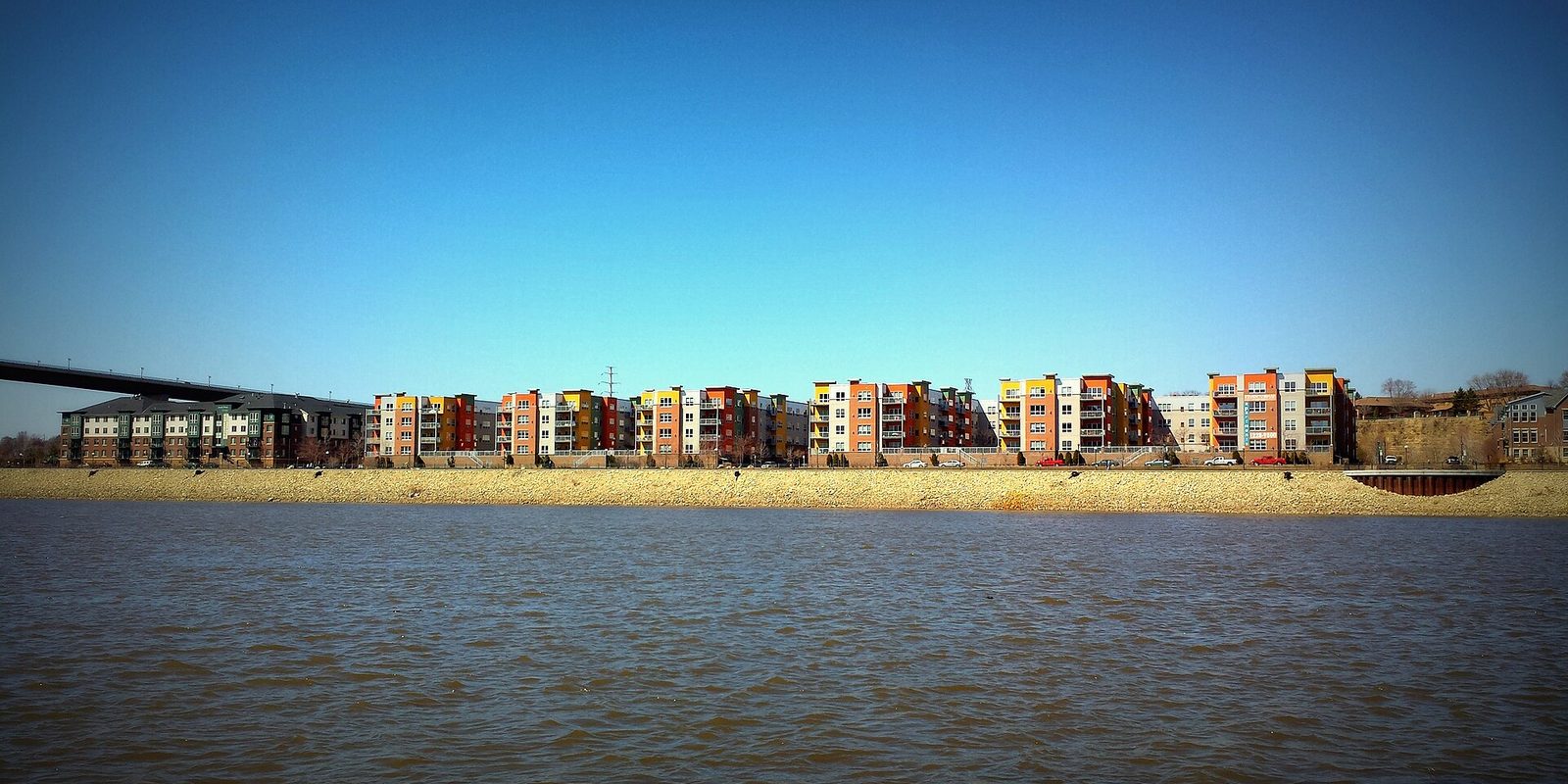
Saint Paul runs on government, education and manufacturing, and all three buy the same way: slowly, on paper, through somebody else's approval. That makes web hosting in Saint Paul, MN a different purchase from hosting bought on a card at midnight.
We are not in Saint Paul. AldoMedia is in Buffalo, New York, and there is no Minnesota office, no local number and nobody who can come to your building. Setup, migration and support all happen remotely, which for hosting is simply how it works.
A lot of the websites in a city like this belong to organisations that cannot just decide something. A nonprofit has a board. A school has a department. A public agency has a procurement process, and a manufacturer with government contracts has learned to act like one. Nobody signs up for anything on a Tuesday afternoon because it looked good.
That changes what a hosting account has to survive. It has to survive being explained to somebody who was not in the room. It has to survive a fiscal year boundary, a grant cycle, and a person leaving. Most hosting problems we are asked to untangle are not technical at all. They are records problems.
If you cannot name today who controls your domain, that is the first thing to fix. It is more urgent than anything about the hosting plan, and taking over a website covers how to get it back.
Send us the address of your current site and we will tell you what it runs on, what you are paying for that you do not need, and what the real renewal cost looks like in writing.
Organisations that buy through a process are unusually exposed to one specific trick, and it is worth naming. Introductory hosting is sold cheaply for the first term and renews at a much higher figure. On a personal account somebody notices. On an organisational card that nobody reviews between audits, it can run for years.
The same applies to domains. A domain renews on its own schedule, often annually, often on a card that has since expired, and the failure is silent until the website disappears. We have taken calls from organisations whose site went dark for a reason that had nothing to do with hosting at all.
Ask any host for the renewal figure, not the first-term figure, before you commit. Ours is published rather than quoted, and you can see what a website costs to run broken down by line so you can put real numbers in a budget request. If a grant is paying for a year of it, you need to know what year two looks like before you write the application.
Set a calendar reminder for a month before your domain expires and give it to two people. Domain expiration explains the grace periods and what recovery costs once you miss them.

Minnesota winters give a public-facing website a job it does not have in warmer states. When a storm closes something, people go to the website to find out, and they do it all at once, on phones, in a hurry.
That means the closure notice has to be editable by somebody who is not technical, from home, at six in the morning. If updating your homepage requires emailing a designer, your website is not going to tell anyone anything useful on the day it matters. This is worth solving in October, not in January.
Cold also drives the trades. Heating work goes from routine to urgent on the first hard night, and remodelling shifts indoors for months. Their websites carry a seasonal load that the rest of the year does not hint at.
This is the part most hosting companies leave out, so here it is plainly. A brochure website with a few pages, a staff list and a contact form is one of the lightest things you can put on a server.
Spending more genuinely makes sense when the site takes donations or payments, when it runs a membership or registration system, when it holds anything about a person that should not leak, or when a day of downtime costs you real work. Visitor numbers alone almost never justify it.
If the site takes any information from the public, an SSL certificate is not optional and neither is keeping the software patched. That is a maintenance habit rather than a product, and it is the one thing worth paying attention to every month.
Copy, test, switch the domain, keep the mail records intact. You keep working while it happens, and afterwards there is somebody to call rather than a support form.
It is a fair question and it deserves a straight answer. Hosting is not a local service. Your website does not live in Saint Paul now, and it will not afterwards. It lives in a data centre somewhere, and which state that is in makes no practical difference to somebody loading your page in Minnesota.
So the thing you are actually choosing is who answers when something is wrong. That varies enormously between hosts, and it has nothing to do with distance. We are in Buffalo, on Eastern time, and we have been building and looking after websites since 1999. We are an independent authorised reseller rather than the operator of the underlying platform, and we will tell you when the plan you are already on is the right one.
We answer an hour ahead of you, which in practice means we are at our desks before your morning starts. If what you need is somebody who will walk into your building, we are the wrong choice and we will say so rather than take the work.
For the paperwork side, we can put things in writing at the level a board or a purchasing office expects. If you need a quote before you can request funds, ask us for one and we will send something you can attach to a request.
Most organisations that contact us are not launching something new. They are leaving something: a host that got slow, a volunteer who moved away, a plan that quietly doubled at renewal, a site nobody has the login for.
The order of operations matters more than the tools. Copy the site first, test it on the new server, and only then point the domain across. Done that way nothing goes dark, because the old server keeps answering until every visitor's connection catches up.
The part that goes wrong is nearly always email. Somebody rebuilds the DNS from scratch and leaves out the mail records, and the organisation loses a day of enquiries before anyone notices. Write the existing records down before touching anything. The full sequence is on the website migration page, and if mailboxes are moving too, email migration covers that separately.
Three kinds of organisation whose websites do the most work in a public-sector and manufacturing city, each with a page of its own.
Donations, grant reporting and a board that changes every few years, all resting on an account somebody has to still control after the founder leaves.
Nonprofits hostingA heating failure on the coldest night of the year is an emergency search, and the site has to load on a phone before anything else on it matters.
HVAC companies hostingThe work sells from photographs, and photographs are what make a site slow, right when a long indoor season is filling the calendar.
Remodeling companies hostingEvery trade we cover is on hosting by industry, and every city on our locations page.
Skyline photograph: Gabriel Vanslette, CC BY 3.0, via Wikimedia Commons. Cropped.
Almost never. Distance adds a few milliseconds, and a visitor cannot perceive that. What they perceive is a page carrying oversized photographs or a stack of tracking scripts. Fix the weight of the page and the site feels faster everywhere, including here. Choosing a server by map location is one of the few hosting decisions that genuinely does not matter.
Load the site on a phone using mobile data rather than office wifi, then load a plain page on the same domain, something with almost no images. If the plain page appears quickly and the main one crawls, the site is the problem, not the server. If everything is slow, including the plain page, the host is worth questioning. Test it more than once, at different hours.
A brochure site handles a sudden rush of people checking a closure notice or hunting for a heating number without any special plan. What breaks under that load is not the server, it is a homepage stuffed with large images, or a booking tool sitting on a slow database. Test the pages people actually reach in a hurry, and do it before the cold arrives.
Usually a copy of the site files and the database, kept for a limited window and overwritten as newer copies arrive. That covers a bad update or a broken theme. It does not cover your email, your domain registration, or anything a staff member deleted months ago. Keep your own copy somewhere off the server, and check once that you can actually open it.
Tell us what your site runs on, what you are paying and when it renews. We will tell you what to fix, what to leave alone, and whether you are already on the right plan.
See hosting plans Get help choosing
Or call 716-771-2536. We are in Buffalo, New York, so we answer Eastern time.
.jpg)