

Home inspectors
Old rowhouse stock means the report is the product, and the site has to prove you have seen a house like that before.
Home inspectors hosting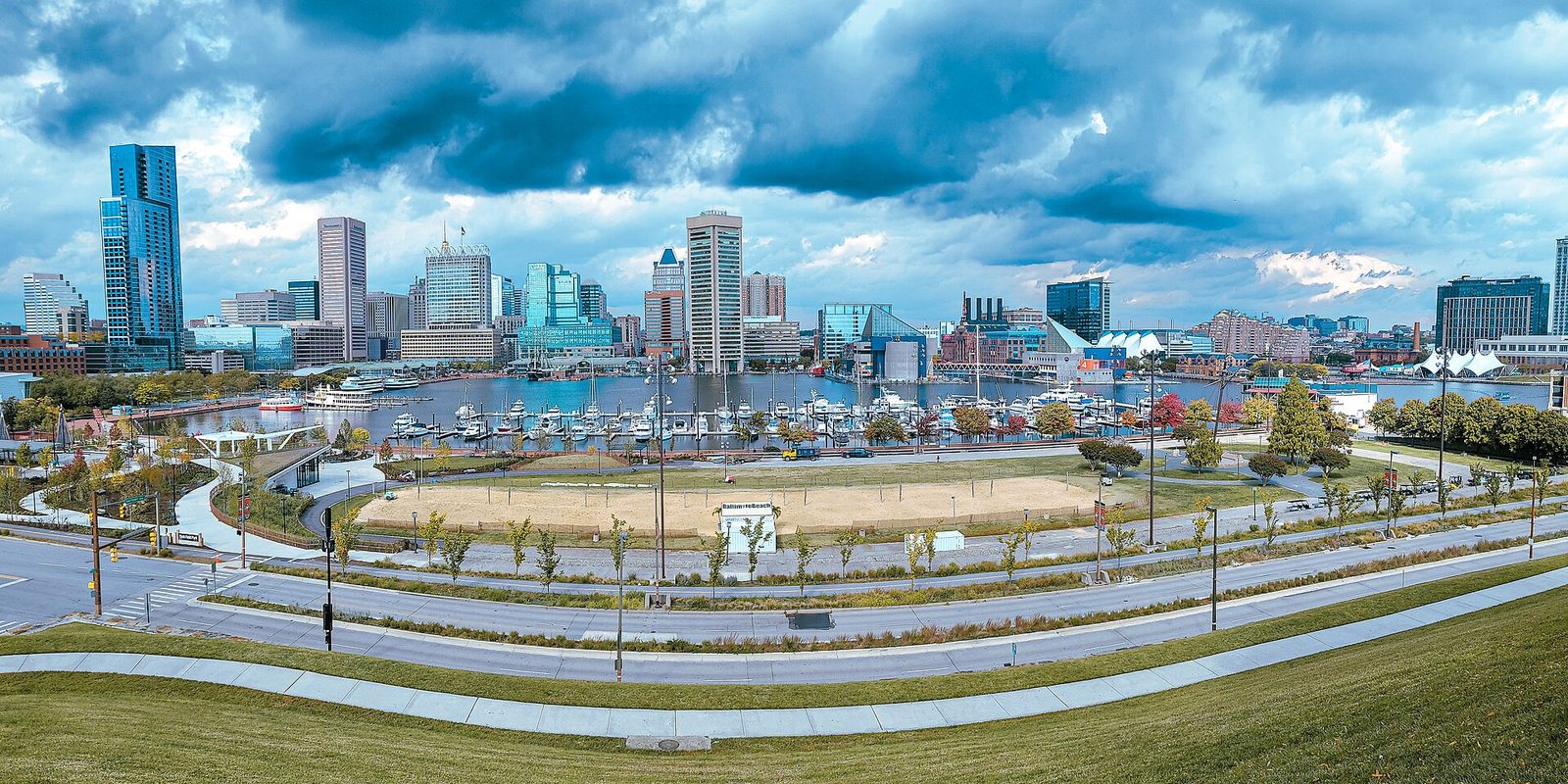
Baltimore runs on medicine, on a working port, and on housing that is a great deal older than the national average. That last one quietly pays a lot of trades, and it shapes what web hosting in Baltimore, MD is actually asked to support.
We are not in Baltimore. AldoMedia works out of Buffalo, New York, and there is no Maryland office, no local number and no van. Setup, migration and support all happen remotely, which for hosting is simply how the work is done.
Plenty of American cities grew after the war. Baltimore mostly did not. A very large share of the housing here is rowhouse stock built long before anybody thought about a second bathroom, and much of it has been renovated, subdivided, rented, sold and renovated again.
That produces a particular kind of demand. Old party walls, old drains, old service lines and old wiring do not fail on a schedule, but they fail often enough that inspection and plumbing work stays steady in a way it does not in a city of thirty-year-old subdivisions. Add humid summers, hard freezes, and coastal storm remnants that dump water on a basement, and the phone keeps ringing through the year rather than in one season.
It changes the shape of the site more than the size of it. A trade that works mostly on old buildings gets asked the same handful of questions before anybody books, and if the site does not answer them, the call turns into a long conversation or does not happen at all.
None of that is a hosting feature. It is content, and it is the part that decides whether the site earns anything. Hosting only has to keep it fast and up while it does its job.
Send us the address and we will tell you what the site weighs, how fast it loads on a phone and whether the plan you are on is already the right one. If nothing needs changing, we will say that.
Inspection and repair work is documented work. People photograph everything, because they have to, and then some of those photographs end up on the website at whatever size the phone produced.
That is the single most common reason a small trade website feels sluggish. A homepage carrying eight megabytes of full-size images will crawl on a phone on a weak connection, in a basement, standing in a doorway, which is exactly where your customers open it.
Almost none of this is fixed by paying for a larger plan. A bigger plan makes a heavy page slightly less slow. Making the page lighter actually fixes it.

This is the honest objection and it deserves a straight answer rather than a slogan. Hosting is not a local service. Your website does not live in Baltimore today and it will not afterwards. It lives in a data centre somewhere, and the state that building sits in makes no practical difference to somebody loading your site from a Maryland phone.
So the thing you are really choosing is who picks up when something breaks, and that has nothing to do with distance. We are in Buffalo, we work the same Eastern hours you do, and we have been building and looking after websites since 1999. AldoMedia is an independent authorised reseller rather than the operator of the underlying platform, which means the plan is somebody else's product and the help is ours.
If what you want is a person who will drive to your office and sit down with you, we are the wrong choice and we will say so now rather than after you have paid. For setting up hosting, moving an existing site and keeping email running through the change, being in another state changes nothing at all.
The genuinely local part of your online presence is your Google Business Profile, and it is free. Get that right before you spend money anywhere else.
Copy, test, switch the domain, keep the mail records intact. You carry on working while it happens, and if something looks wrong afterwards you have somebody to call.
Most businesses that come to us are not starting from nothing. They are leaving something: a host that got slow, a designer who stopped replying, a renewal that quietly doubled, or a site somebody else built and nobody can log into any more.
The order of operations matters more than the tools. Copy everything first, test it on the new server while the old one is still live, and only then point the domain across. Done that way the site never goes dark, because the old server keeps answering until each visitor's connection catches up.
The part that goes wrong is nearly always email. Somebody rebuilds the DNS from scratch, leaves out the mail records, and a business loses a day of enquiries before anyone notices. Write the existing records down before touching anything. The full sequence is on the website migration page, and if the trouble is only your mailboxes, email migration covers that on its own.
If you have inherited a site and do not know who controls the domain or the hosting login, that is a common and solvable problem. Taking over a website walks through what to ask for and in what order.
Most hosting companies leave this bit out, so here it is plainly. See current pricing for what things actually cost, then check the list below before you buy anything larger.
Spending more is genuinely worth it when the site books appointments, takes payments, carries a large library of reports or galleries, or when a day of downtime costs you work the same day. Visitor numbers on their own almost never justify it.
Nonprofits are the one group we tell to look harder before economising, because they usually take donations on the site, which means logins, payment handling and a longer list of things that must not break.
Three kinds of business whose websites carry real weight in a city built on medicine, a port and housing stock with decades on it.
Old rowhouse stock means the report is the product, and the site has to prove you have seen a house like that before.
Home inspectors hostingAgeing drains and service lines plus hard freezes make emergency calls year-round work, and the site has to load on a phone in a wet basement.
Plumbers hostingDonations, forms and logins make a nonprofit site the most demanding thing on this page, and the least tolerant of downtime.
Nonprofits hostingEvery trade we cover is on hosting by industry, and every city on our locations page.
Skyline photograph: Andrew Parlette from Elkridge,MD, US, CC BY 2.0, via Wikimedia Commons. Cropped.
Most small trade sites are copied, tested and switched within a few days, and the site stays reachable throughout because the old server keeps answering until the domain change spreads. What breaks, when anything does, is usually a contact form pointing at an old mailbox or a plugin nobody has updated in years. Both turn up during testing rather than after.
Usually yes, and it happens more than people expect. You do not need their cooperation to move, only control of the domain registration, which belongs to you. From there the pages can be copied, rebuilt where files are missing, and pointed at new hosting. Start by proving you can log in to the registrar, then worry about the rest.
The introductory term ends and the ordinary rate applies, which is how the whole industry works. What matters is knowing the date before it arrives rather than after. We will tell you what renews and when, and whether the plan still suits a few pages that change occasionally. If you are carrying more plan than you use, we say so.
It keeps running, provided the existing mail records are written down before anything is pointed anywhere. Moving a website does not move mailboxes, so an enquiry arriving overnight still lands where it always did. Mail breaks when somebody recreates those records from memory and misses one. If your mailboxes sit with a separate provider, they normally need no change at all.
Send over what your site runs on and what it has to survive. We will tell you what to fix, what to leave alone, and whether the plan you are already paying for is the right one.
See hosting plans Get help choosing
Or call 716-771-2536. We are in Buffalo, New York, so we answer Eastern time.
.jpg)