
Web Hosting in Wyoming
Wyoming has fewer people in the whole state than a mid-sized city elsewhere, and that single fact changes what a website is for. It is rarely a way to be found by the neighbours. It carries the business past the state line, which makes web hosting in Wyoming the sales counter for buyers, travellers and contractors who will never drive past your door.
We are not in Wyoming. AldoMedia works from one office in Buffalo, New York, and there is no Wyoming address, phone number or staff. Setup, migrations and support all happen remotely, which is how hosting has always worked anyway.
The smallest home market in the country
Every other state page we write can lean on the local crowd. Wyoming cannot. It has the smallest population of any state, spread across a very large area, which means the number of people who could plausibly search for you and then reach you in an afternoon is small enough to count.
So a Wyoming website has a different job. It is not a shop window on a busy street. It is the entire sales counter for people who are somewhere else: an energy buyer in another state, a family planning a trip nine months out, a livestock buyer working from a laptop, a firm looking for a supplier who happens to be here.
What that changes in practice
It changes what has to be on the page. When the customer cannot drop in, the site has to answer the questions a visit would have answered. What exactly do you sell. Who have you done it for. What does it cost, or at least what does it depend on. How quickly do you reply. A thin site with a phone number is enough for a business whose customers are local. It is not enough here.
- Say where you actually work, in miles and regions, not just the state name. Half your enquiries will be from people trying to work out if you are too far away.
- Put real photographs of real work on the page. For a buyer who will never visit, the photographs are the visit.
- Give a written way to make contact as well as a phone number. Out of state means out of your time zone.
- Answer the boring logistics question before it is asked: do you travel, do you ship, do you quote remotely.
If your entire website assumes the reader is already nearby, you have built a shop window for a street that does not have enough people on it.
Have a look at the site you already have
Send us the address. We will tell you how heavy it is, how it behaves on a weak mobile connection, and whether it answers the questions an out of state buyer would ask. If it is already fine, that is what we will say.
Energy, agriculture and travel buy websites differently
The state economy leans hard on three things, and each one puts a different kind of pressure on a website.
Energy and the firms around it
Extraction, power generation and everything that services them is business to business. Nobody is buying from a pretty homepage. They are checking whether you are real, whether you hold the certifications, whether you have done this size of job before, and whether the person listed on the site still works there. Credibility documents matter more than design here. Keep the capability sheets and safety records current and easy to download, and keep the staff list honest.
Ranching and agriculture
Agricultural sites tend to be small, stable and seasonal, and they are often the only place a buyer can see what is available this year. The traffic is low and the value per visitor is high, which is the opposite of most of the web. That means uptime and a working contact form matter far more than speed records or traffic capacity.
Travel and the visitor season
Tourism is the part of the economy where a website carries the most weight, because the customer is deciding from hundreds of miles away, often months ahead, usually on a phone. Bookings cluster into a short window and go quiet again. The site has to be right during the window, which means the work happens in the quiet months, not during the season.
Three economies, one shared trait: in all of them the buyer is somewhere else when they decide. That is the whole design brief.


What that means for web hosting in Wyoming
General advice about hosting is the same in every state, so we keep ours on the pages where it belongs. What follows is only the part that Wyoming's economy actually changes.
Traffic is not your problem. A visitor-heavy site is rare here, and paying for capacity you will never use is the most common overspend we see. Most businesses in this state are well served by shared hosting, and the money is better spent on the photographs and the writing.
Connection quality is your problem, at both ends. A lot of the state is rural, and so are a lot of the places your visitors are calling from when they are outdoors, in a truck or in a field. Design for a weak signal. That means resizing images before uploading them, keeping the number of separate things a page has to fetch low, and testing on mobile data rather than office wifi.
Seasonality changes the maintenance calendar more than the plan. If your revenue arrives in a short visitor season, the season is exactly when you must not be migrating, redesigning or experimenting. Do that work in the off months and leave the site alone when it is earning.
- Keep backups running year round, not just when you remember. A ranching or seasonal site can sit untouched for months, which is long enough for a problem to go unnoticed.
- Check that the contact form still delivers, at least quarterly. On a low traffic site a broken form can be silent for a very long time.
- Renew the domain well ahead of the season, not during it.
- If you are moving hosts, do it in the quiet months and follow the order on the website migration page.
Move it in the quiet season
Copy, test, switch the domain, keep the mail records intact. Done in the off months it costs you nothing in lost work, and afterwards there is somebody to call.
The out of state owner question
Wyoming is unusual in one more way. A meaningful share of the companies registered here are owned and operated by people who live somewhere else, because the state is a common choice for forming a business. That produces a specific kind of website problem.
If your company is registered in Wyoming but you work from elsewhere, do not build a site that implies a storefront and a staff here. Visitors and search engines both work out fairly quickly that the presence is administrative, and a site that overstates it reads worse than one that simply says what it is.
There is also a privacy angle. A registered address is public, and an address published on your own website is used by every scraper on the internet. Think about what you actually want indexed, and about domain privacy on the registration itself.
Hosting has no opinion about where your company is registered. Your website should be honest about where the work is done, which is a separate thing.
Why a company in Buffalo, for a business in Wyoming
Fair question, and the honest answer is that hosting is not a local service and never was. Your website does not live in Wyoming today. It lives in a data centre in some other state, and which state that is makes no practical difference to anybody loading the page.
So the thing you are actually choosing is who picks up when something goes wrong. That is the part that varies between hosts, and distance has nothing to do with it. We are an independent authorised reseller, we do not own the hardware and we do not pretend to, and we have been building websites since 1999.
The real gap is the clock. We are on Eastern time, two hours ahead of you, so we start earlier and finish earlier. In practice that is often useful, because a message sent at the end of your day is answered before your next morning. If you need somebody who will drive to your yard, we are the wrong choice and we will tell you so rather than sell you something.
The genuinely local piece of your online presence is your Google Business Profile, and it is free. Get that right before spending anything on hosting.
Working across the state
We do not have separate pages for individual Wyoming cities, and given how the state is laid out that suits it: we work with businesses anywhere in it, from the larger towns to operations with no town nearby at all.
Every state is on our locations page, and every trade we cover is on hosting by industry.
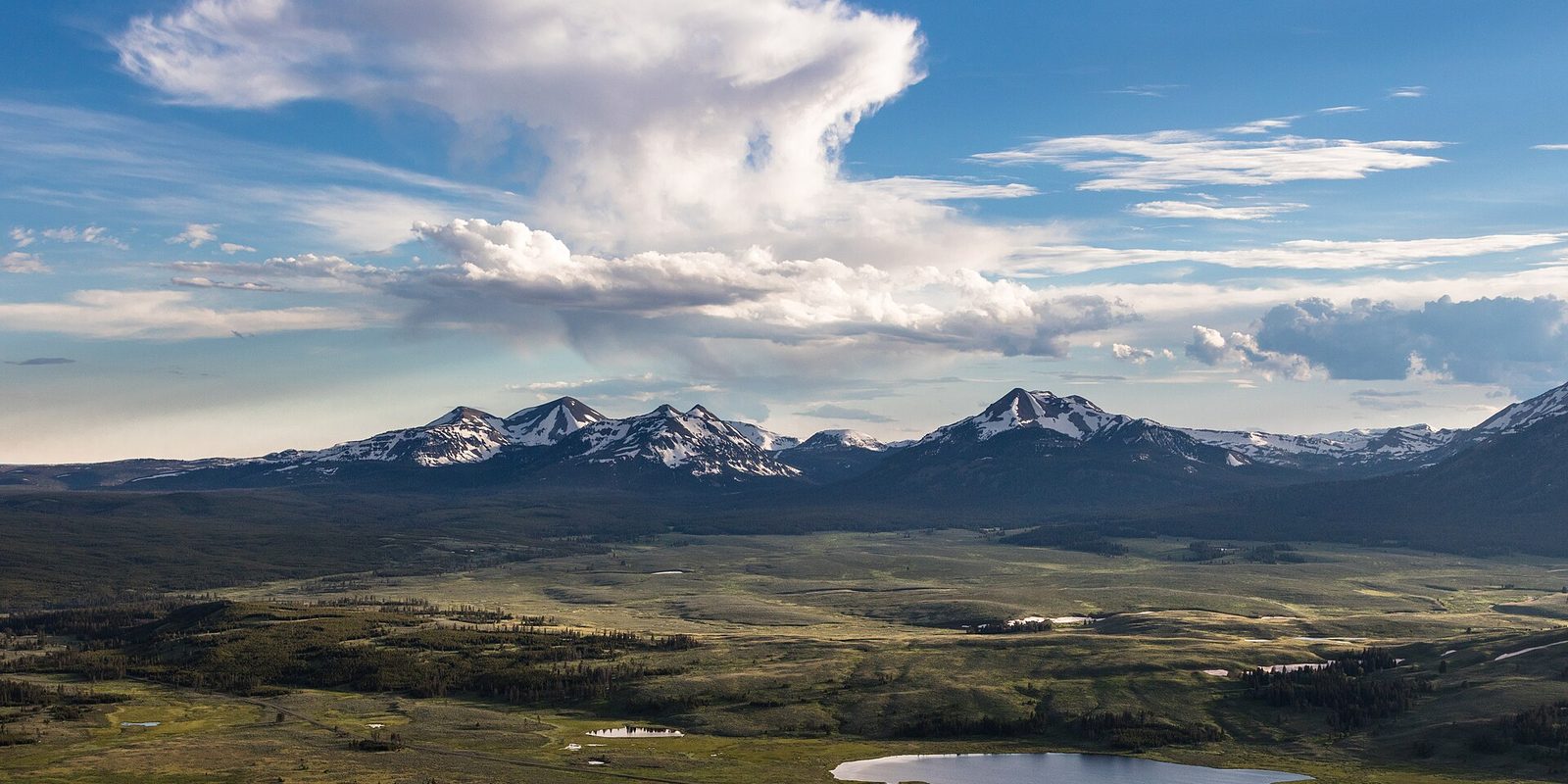
Photograph: Jacob W. Frank, Public domain, via Wikimedia Commons. Cropped.
.jpg)
Wyoming hosting questions
Does my host need to be in Wyoming for my site to work properly here?
No, and there is no real advantage to it. The physical distance between a visitor and a server is measured in milliseconds and is swamped by the weight of the page itself. If your site feels slow on a weak connection out in the field, the fix is lighter images and fewer things loading, not a closer server.
Most of my customers are not in Wyoming. Does that change the hosting?
It changes the website more than the hosting. The plan can be modest. What has to be stronger is everything that replaces a visit: clear pricing logic, photographs of finished work, a contact method that works across time zones, and a fast answer. That is where the money should go.
My business only really earns during the visitor season. Should I pay for hosting all year?
Yes, and it is cheaper than the alternative. Taking a site down and rebuilding it each year costs more in work than the quiet months cost in hosting, and it throws away the search history you have built. Leave it up, keep it backed up, and do the improvements when nothing is at stake.
My company is registered in the state but I work elsewhere. What should the website say?
Say where the work is actually done. Registration is an administrative fact and it does not make a presence. A site that claims a local operation it does not have loses more trust than it gains, and search engines are not fooled either.
You are in New York. What happens when I need you?
You reach us on Eastern time, which is two hours ahead of you, so we are available early in your day and finish before your evening. Messages sent after that are answered the next morning. What you are buying is somebody who answers, not somebody nearby, and for hosting that has always been the useful part.
Tell us what the site has to do
Who it is selling to, where they are, and when in the year it matters most. We will tell you what to fix, what to leave alone, and whether the plan you are already on is the right one.
See hosting plans Get help choosing
Or call 716-771-2536. We are in Buffalo, New York, so we answer Eastern time.