
Web Hosting in Vermont
Vermont has almost no large towns, which changes what a website is for and what to ask of web hosting in Vermont. Most of the money arrives from somewhere else, carried in by people who chose where they were going while they were still hundreds of miles away. The website is where that choice gets made, in a state where nobody has a big local audience to fall back on.
We are not in Vermont. AldoMedia works from one office in Buffalo, New York, and there is no Vermont address, no local number and nobody who can come to your door. Setup, migration and support all happen remotely, which is how hosting is normally delivered.
A state with very few large towns
Most state economies have a centre. There is one metropolitan area that holds a large share of the population, and a business either sells into it or sells around it. Vermont does not really work that way. The population is spread thinly across a lot of small places, and even the largest of them is small by the standards of most states.
That has a practical consequence that catches people out. A Vermont business usually cannot make a living from the people within a short drive of it, because there are not enough of them. The customer base is regional, statewide, seasonal or out of state, and often all four at once.
What that does to a website
It makes the website carry more than it would elsewhere. A shop in a large city gets discovered by being on a street people already walk down. A business in a small place is mostly discovered by being searched for, or by being on a list, or by being recommended and then looked up. Every one of those routes ends at your website rather than at your door.
It also means the website is often the only thing a stranger will ever see before deciding whether you are worth the drive. People will travel a long way here for something worth traveling for, but they want to know first that you are open, that you have what they came for, and roughly what it costs.
If you take one thing from this page: in a state of small places, opening hours and current availability are the highest value information on your site. Stale hours cost more here than a slow homepage does.
Look at the site in the quiet stretch
Send us the address and we will tell you what the site weighs, how it behaves on a phone, and whether anything on it would struggle in your busiest weeks. If it is already fine, we will tell you that instead.
A season that decides the year
Tourism runs on a calendar that everyone in the state already knows. There is a long autumn peak driven by the colour, a winter that depends entirely on snow, a quiet and muddy stretch in spring, and a summer that is steady rather than dramatic. Whole businesses are built around two of those and endure the others.
The website is not busy evenly across that calendar. Traffic climbs weeks before arrivals do, because people plan. Somebody looking at foliage timing in August is a booking in October. Somebody checking conditions in December is deciding between you and three other options that afternoon.
The mistakes a seasonal calendar produces
- Leaving last season's dates, prices or menu on the site through the quiet months, when that is exactly when next season's visitors are researching.
- Doing the big website project in the middle of the peak because that is when the business finally feels urgent.
- Taking a booking form down in the off season, which quietly removes the thing that fills the next one.
- Letting the domain lapse during a quiet stretch when nobody is looking at the site. Set the renewal to automatic and check who owns it on the domain expiration page.
The rhythm cuts the other way too, and in your favour. You have a long, predictable window every year when the site is not carrying the business, and that is when everything difficult should happen. Move hosts then. Rebuild then. Change email then. Nobody with a seasonal trade should be doing any of that in their best month.

.jpg)
Food and farm businesses sell past the state line
Agriculture and food production here are not only a local trade. A great deal of what is made in this state is bought by people who are not in it, either because they visited once and now order, or because they found the product somewhere else and went looking for the source.
That changes what the website has to do. It stops being a brochure with directions on it and becomes a shop, an order desk and a mailing list. Three things then start to matter that do not matter for a purely local business.
- Checkout has to work on a phone, first time, for somebody who has never bought from you before and will not try twice.
- Order and shipping confirmations have to actually arrive, which is a mail deliverability question rather than a website question.
- Perishable and seasonal stock means the site has to be truthful about what is available right now, and easy enough to edit that you will keep it truthful.
The second of those is where most of the pain lives. A confirmation that lands in spam looks to the customer like an order that failed, and you hear about it as a support message rather than as a bounce. If your orders go out from the same domain as your website, treat the mail setup as part of the site. There is more on that on the business email page.
A farm or food business that ships should be more worried about email reaching people than about hosting speed. One of those loses orders silently. The other you can see.
Move it before the season starts
Copy the site, test it on the new server, then switch the domain with the mail records intact. Done in the off season, nobody outside the business notices it happened.
What this economy asks of web hosting in Vermont
Most hosting advice is written for a business with steady traffic and a fast office connection. Neither of those describes a lot of this state, so here is the version that fits.
Peaks are predictable, so they are not really a hosting problem
A seasonal spike sounds like it needs a bigger plan. Usually it does not. A few thousand people looking at a small site over a busy weekend is not a heavy load. What breaks under that traffic is nearly always a page carrying too many full size photographs, and this is a photogenic state, so the photographs are the problem more often than average. Resize them and turn caching on before you pay for anything larger. Shared hosting covers most of what businesses here run.
Assume the connection at your end is not fast
Rural service is better than it used to be and it is still uneven. If you are the one uploading photographs, editing pages or running backups, you feel that far more than your visitors do. Prefer a setup where the heavy work happens on the server rather than over your line, keep image files sensible before they leave your computer, and do not choose a system that requires a large upload every time you change a sentence.
Back up before the season, not after
A business that earns most of its year in a few months cannot absorb losing the site during them. Backups are cheap insurance and worth checking rather than assuming. Confirm that a restore actually works while it does not matter, which is the whole argument on the website backups page.
None of that is exotic. It is the ordinary set of decisions, made in the order that suits a business with two good seasons, a thin local market and customers who are frequently far away.
Why a Buffalo company, for a Vermont business
Fair question, and it has a straight answer. Hosting is not a local service. Your website is not in Vermont today and it will not be afterwards. It sits in a data centre somewhere, and which state that building is in makes no difference a visitor could notice.
So distance is not really what you are choosing. What you are choosing is who replies when something is wrong, and whether that person knows the history of your site. That has nothing to do with mileage. We are in Buffalo, we work Eastern time, which is your time, and we have been building websites since 1999.
We are an independent authorised reseller. We do not own servers and we will not pretend otherwise. What we do is set the hosting up properly, move what already exists without breaking the email, and stay reachable afterwards.
If what you want is somebody who will drive over and sit with you, we are the wrong choice and we would rather say that now. For hosting, a domain, mail and keeping a site online through a season that matters, being in another state changes nothing about the work.
Where in Vermont we work
We work with businesses anywhere in the state, in the larger towns and well outside them, and the service is identical wherever you are because none of it depends on being nearby.
Every state is on our locations page, and every trade we cover is on hosting by industry.
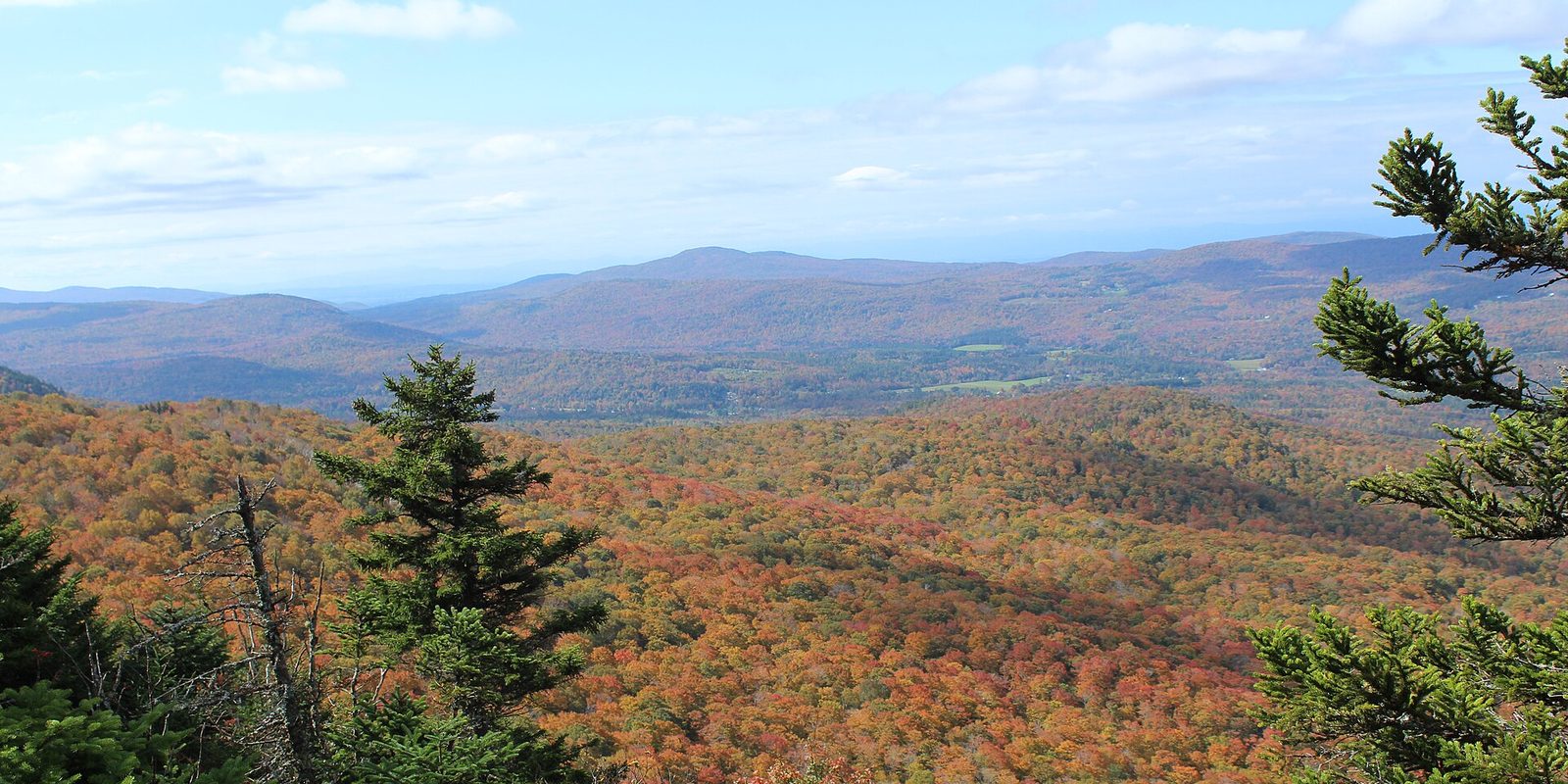
Photograph: Forest Service Photography, Public domain, via Wikimedia Commons. Cropped.
.jpg)
Vermont hosting questions
Does my hosting need to be in Vermont for the site to be fast here?
No, and there is very little hosting in the state to choose from anyway. The delay added by distance is measured in milliseconds and is buried under everything else a page does. A site that feels slow here is almost always heavy rather than far away. Check the size of the homepage images before you consider moving anything.
Most of my customers are out of state visitors. Does that change what I should buy?
It changes the priorities more than the plan. Speed on a phone matters, because people are researching from elsewhere and often on the move. Accurate hours and availability matter more, because a wasted drive is a lost customer and a bad review. The hosting itself can stay modest.
We are only really open for part of the year. Should the site come down in the off season?
No. The off season is when next season is being planned and searched for. Leave the site up, keep the dates and prices current or clearly marked as coming, and say plainly when you reopen. A site that disappears loses the ranking it spent all season earning.
We ship food and farm products out of Vermont. What breaks most often?
Email, by a distance. Order confirmations and shipping notices that land in spam look to the customer like a failed order. That is a mail configuration problem, not a hosting speed problem, and it is worth checking before a busy period rather than during one.
When is the best time to change hosts?
In the quiet stretch between your seasons. Migrations are routine but they are not instant, and you want a few days where a small mistake costs nothing. Doing it in your best month is the one genuine risk, and it is entirely avoidable if you plan it in advance.
Before the next season, not during it
Tell us what the site runs on and what it has to carry when you are busiest. We will tell you what to fix, what to leave alone, and whether what you are already paying for is the right thing.
See hosting plans Get help choosing
Or call 716-771-2536. We are in Buffalo, New York, so we answer Eastern time.