
Web Hosting in South Dakota
South Dakota runs on three clocks at once. Finance keeps banker's hours all year, agriculture works to a calendar written by weather and commodity prices, and tourism packs most of its money into a handful of warm weeks. A website here usually has to serve at least two of those clocks, and so does the web hosting in South Dakota underneath it.
We are not in South Dakota. AldoMedia is in Buffalo, New York, and there is no office, no local number and nobody on the ground in your state. Everything here is set up, moved and supported remotely, which for hosting is simply how it works.
Three economies, three different clocks
Most states have one dominant rhythm. South Dakota has three that barely overlap, and understanding which one your business sits on tells you more about what your website needs than any hosting comparison chart will.
Finance is the steady one. A long-standing regulatory climate pulled card issuing, trust administration and back-office banking work into the state decades ago, and it brought with it a whole tier of professional services: accountants, compliance consultants, employment lawyers, IT contractors, staffing firms. These businesses have flat traffic all year. Nobody visits their site in a rush. What they need is credibility on first read and email that never quietly stops working.
Agriculture is the seasonal one, but its season is not the one people assume. Row crops and cattle produce a calendar of narrow, high-pressure windows: planting, spraying, harvest, calving, sale days. Suppliers and service businesses around that calendar go from quiet to flat out and back again several times a year, and they are often being searched for from a phone in a field with one bar of signal.
Tourism is the sharp one. The warm-weather visitor season is genuinely short and genuinely concentrated, and for the businesses inside it a large share of the year's revenue arrives in a window measured in weeks. Everything else is preparation and recovery.
If you are honest about which clock you are on, most hosting decisions answer themselves. Trouble comes from businesses on the tourism clock buying what suits a finance-sector website, and the other way round.
Get it looked at in the off-season
Send us the address and we will tell you what your site weighs, how fast it opens on a phone on mobile data, and what is due to expire in the next twelve months. If it is already in good shape, we will say so.
The short, sharp season, and what it does to a site
A business with a compressed season carries a risk that a year-round business does not. If the site is broken in February, you lose almost nothing. If it is broken for four days in the middle of the season, you have lost a meaningful slice of the year and there is no second run at it.
That changes what is worth worrying about. Not raw capacity, which is rarely the problem. What matters is that nothing is scheduled to expire, break or need attention during the weeks you cannot afford to look at it.
The pre-season checklist that actually matters
- Check when the domain renews. A domain that lapses mid-season takes the website and the email down together, and it is the most avoidable outage there is. See domain expiration.
- Check when the certificate renews, and that renewal is automatic. A browser warning in front of a visitor costs you that visitor.
- Resize every photograph before it goes up. Scenery and product photography are heavy, and weight is what makes a site feel slow on a weak rural connection.
- Confirm a backup exists and that somebody has actually restored one. An untested backup is a hope, not a plan.
- Make the hours, the season dates and the closing date editable by you, in a minute, without ringing anyone.
Do all of that in the quiet months. The point of a short season is that you have a long off-season to prepare in, and almost nobody uses it.

.jpg)
Farm-facing sites and the one-bar problem
Agricultural businesses have a connectivity reality that urban businesses do not. A large share of your visitors are outdoors, on mobile data, some distance from anything, and their patience is short because they are standing in the middle of doing something else.
A page that takes six seconds on office wifi can take thirty out there. The fix is not a bigger plan. It is a lighter page: fewer scripts, resized images, real text instead of pictures of text, and the phone number as a tappable link near the top rather than buried on a contact page.
The other half of it is that farm-facing work is often documentary. Spec sheets, rate cards, chemical labels, service schedules, compliance paperwork. Those belong on the site as ordinary web pages wherever possible, with the PDF as a download for people who need to print it, not as the only version.
Test your own site on a phone, on mobile data, with the wifi turned off, somewhere with poor signal. It is a five minute exercise and it changes what you prioritise.
What this mix asks of web hosting in South Dakota
Less than you would think, and the reason is specific to the businesses here rather than a general rule.
The finance-adjacent professional firms mostly run small, text-heavy sites that change a few times a year. That is one of the lightest things you can put on a server, and shared hosting covers it comfortably. What those firms should spend attention on instead is email: addresses at their own domain, records set up so mail is not silently filed as spam, and a migration path that does not lose a mailbox when they change providers.
Seasonal tourism sites are heavier because they are photographic, but their traffic pattern is peaky rather than large. A shared plan with caching switched on absorbs that. Where these businesses genuinely need more is when the site itself takes bookings and payments rather than handing visitors to a platform.
Agricultural suppliers usually sit in between, and their real need is reliability of the boring kind: backups that run, someone who answers during a narrow window, and a site light enough to open on a bad connection.
Where the money actually goes
- A large plan bought for a small site. Ask what the extra tier changes for your pages specifically.
- A separate security product duplicating something the plan already includes.
- Extra storage, when the real problem is a dozen unresized photographs.
- A builder subscription for a site nobody has edited since it launched.
The full breakdown of what running a site costs, line by line, is on what a website costs to run. It applies everywhere, so there is no sense repeating it here.
We will handle the move
Copy, test, switch the domain, keep the mail records intact. You carry on working while it happens, and afterwards there is somebody to call when something looks odd.
Why a Buffalo company, for a South Dakota business
Fair question, and it deserves a straight answer rather than a slogan.
Hosting is not a local service. Your website does not live in South Dakota now and it will not afterwards. It lives in a data centre somewhere, and which state that building sits in makes no practical difference to a visitor loading your page from a truck cab or a hotel lobby. We are an independent authorised reseller, not the operator of the underlying platform, and we say that plainly.
So the thing you are actually choosing is who picks up when something is wrong. That varies enormously between providers and it has nothing to do with distance. We are in Buffalo, we answer Eastern time, which is an hour ahead of most of your state and puts us at our desks early relative to your morning, and we have been building websites since 1999.
If what you want is somebody who will drive to your premises and sit with you, we are the wrong choice and we will tell you so. For setting up hosting, moving an existing site and keeping the mail flowing through the change, being in another state changes nothing at all.
The genuinely local piece of your online presence is your Google Business Profile, and it is free. Get that right before you spend anything on hosting.
Inheriting a site somebody else built
Most businesses that contact us are not launching anything. They are leaving something: a host that got slow, a designer who stopped replying, a renewal price that quietly doubled, or a site built by an employee who left three years ago and took the passwords with them.
The first job in that situation is not technical. It is finding out what you actually own. Who holds the domain, who holds the hosting, who holds the mail, and whether those are three accounts or one. Very often nobody at the business knows, and the answer is sitting in an old inbox.
Once that is established, a move is orderly. Copy the site, test it on the new server, and only then point the domain across, so the site never goes dark. The part that goes wrong is nearly always mail: somebody rebuilds the records from scratch, leaves the mail entries out, and the business loses a day of enquiries before anyone notices. The order of operations is set out on the website migration page.
Where in South Dakota we work
We take on work anywhere in the state, from the finance and professional corridor to farm-country suppliers and seasonal visitor businesses, and the setup is the same wherever you are.
Every state is on our locations page, and every trade we cover is on hosting by industry.
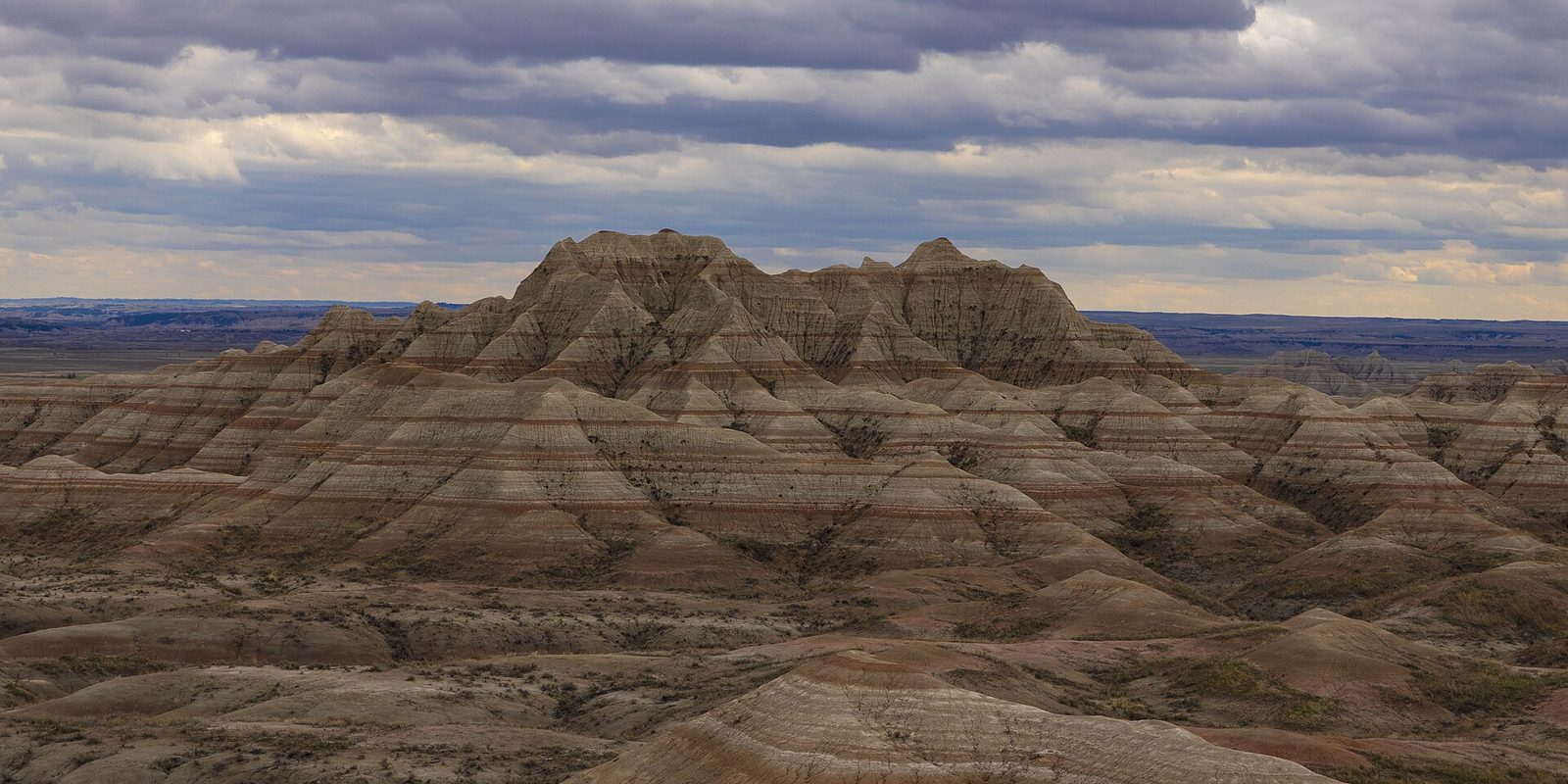
Photograph: Janusz Sobolewski, CC BY 2.0, via Wikimedia Commons. Cropped.

South Dakota hosting questions
Does my hosting need to be in South Dakota for the site to load quickly here?
No. The delay distance adds is measured in milliseconds and is swamped by everything else on the page. A site that feels slow in South Dakota is almost always heavy rather than far away, and on a weak rural connection that weight is magnified. Resize the images and switch caching on before you consider moving anything.
My business only really trades for a few months a year. Should I turn the hosting off in the off-season?
No, and it would cost you more than it saved. A site that disappears for eight months loses its search position and takes the whole next season to recover it, and the email attached to the domain goes with it. Keep it up, keep it small, and use the quiet months to fix the things you cannot fix during the season.
We are a professional firm serving the finance sector. Does that mean we need something more serious than shared hosting?
Usually not, because the site itself is small and static. What does deserve more attention is email: addresses on your own domain, records configured so your mail is not filed as spam, and a considered move if you change providers. Start with email migration rather than a bigger hosting tier.
You are in New York. What happens when I need you during harvest and I am in a field?
You get us from early morning Eastern, which is earlier still relative to your clock, and email before that. If you need somebody physically present within the hour, no hosting company anywhere is that, including one down the road from you. What you are buying is a person who answers and knows your setup.
Do South Dakota businesses need anything special because of the winters?
Not for the hosting itself, since the server is nowhere near your weather. What winter does affect is you. A storm week is when a customer cannot reach you by phone and looks for hours, closures and contact details on the site instead, so make sure those are things you can edit yourself in a minute from anywhere.
Before your next busy stretch
Tell us what your site runs on and what it has to survive, whether that is a harvest window, a visitor season or simply a year of nobody touching it. We will tell you what to fix, what to leave alone, and whether the plan you are already paying for is the right one.
See hosting plans Get help choosing
Or call 716-771-2536. We are in Buffalo, New York, so we answer Eastern time.