
.jpg)
Albuquerque
Research, film and outdoor tourism.
Hosting in Albuquerque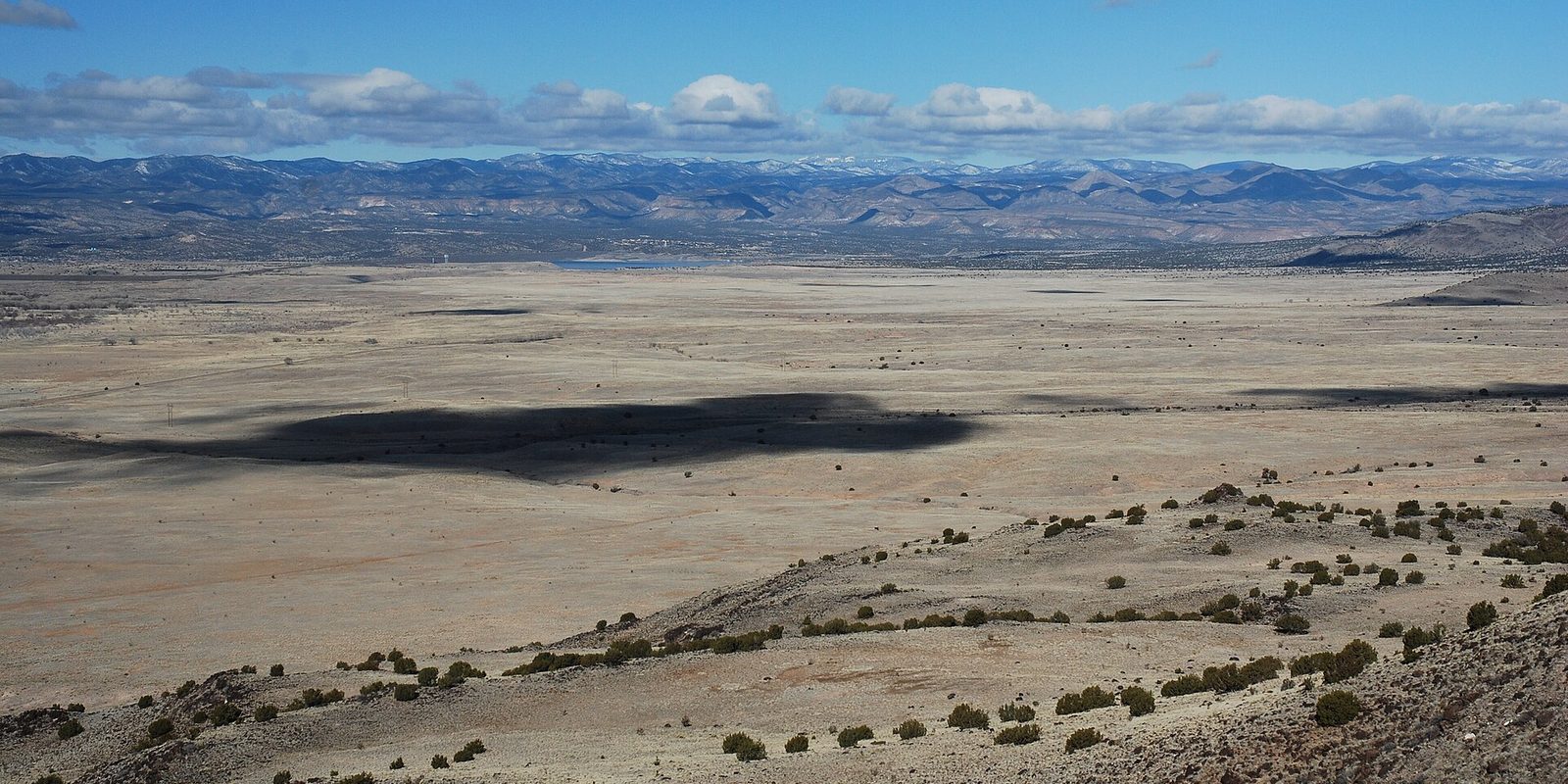
New Mexico runs on three engines that do not look much alike: publicly funded research, energy in several forms, and a film and television production industry that arrives, spends and leaves. Around all three sits a long tail of small businesses, most of them driving further in a day than a business in a dense state drives in a week. Both facts decide what web hosting in New Mexico has to do.
We are not in New Mexico. AldoMedia works from one office in Buffalo, New York, and there is no address, phone number or staff member of ours anywhere in your state. Everything on this page is set up, moved and supported remotely, which is how hosting normally works.
Most states have one dominant story. New Mexico has three running in parallel, and they keep different calendars, which is unusual and worth understanding before you spend anything on a website.
The research side is steady and slow. It is funded on multi-year cycles, it buys through procurement rather than impulse, and the businesses that sell into it are judged on paperwork long before anybody looks at their photographs. If that is your market, your website is a credentials document that happens to live on the web.
Energy is the opposite. It moves with commodity prices and with build cycles, and the work arrives in waves. A supplier or contractor can go from quiet to booked in a season and then back again. What the website has to do is be findable and current during the wave, because nobody is combing through search results in the quiet stretch.
Production work is the strangest of the three. A crew forms, hires locally for a few weeks or months, and disperses. The businesses that catch that money are the ones a coordinator can find, verify and book in an afternoon. Rates, availability, insurance status and a real contact route matter more than design.
If your business sells to more than one of these, resist the urge to average them into a single homepage. The three buyers want completely different things and the averaged version satisfies none of them.
Send us your web address and what you pay a year. We will tell you what the site weighs, how it behaves on a weak connection, and whether the plan you are on matches the site you have. If it already does, we will say so.
This is the part of the state that shapes the trades more than anything on a spreadsheet. The air is dry, the sun is relentless at altitude, and the distances between one job and the next are measured in hours.
Dryness and hard sun create a specific set of maintenance trades. Coatings and finishes break down faster in that light. Timber moves. Roofing systems are chosen for sun and for sudden intense rain rather than for months of snow load. Water is expensive and it is treated as a cost line, so irrigation, well work and anything that reduces consumption is a real business rather than a niche.
None of that is about hosting, but it decides what your website has to explain. A visitor is asking whether you understand what this climate does to their building, their land or their equipment. That answer belongs in plain text on the page, not in a brochure they have to request.
Long service areas change the two questions a visitor arrives with. Not just what do you do, but do you come this far, and what does it cost you to get here. Sites that leave those unanswered generate a lot of enquiries that go nowhere and a lot of calls the business has to turn down.
Then there is the connection itself. Coverage across a state with this much open ground is uneven, and a good share of your visitors are looking you up somewhere the signal is poor. That makes page weight a practical concern rather than a technical one. A homepage carrying a dozen unresized photographs is fine on office wifi and close to useless on a weak signal at the edge of a service area.
The single cheapest improvement most New Mexico trade sites can make is resizing their photographs. It costs nothing, it needs no plan change, and it is felt hardest exactly where your customers are.

Hosting advice is the same everywhere, so rather than repeat it we will point at where the general answers live and stay on what is different here.
The first difference is documents. Businesses selling into research institutions, public agencies and energy operators carry more paperwork than a typical small business: capability statements, certifications, safety records, insurance. Those want to live on your own site, at addresses that do not change, in files you can replace without rebuilding a page. That is an ordinary requirement and an ordinary shared hosting plan handles it. What it is not is a reason to buy a larger plan.
The second is that a document-heavy site is a site where a bad edit is expensive. If your certifications page is what wins you work, losing last month's version matters more than it would for a business whose site is mostly photographs. Know how your backups work before you need them rather than after.
The third is seasonality of attention. Energy and production work both mean long stretches where nobody in the business looks at the website, followed by a period where it carries real weight. Sites neglected on that pattern accumulate quiet problems: an expired certificate, a domain nobody renewed, a contact form mailing to somebody who left. Small to fix, embarrassing to discover during a busy month.
If you want to know what the whole arrangement should cost you in a year, that is set out on what a website costs to run, and it is usually less than people expect.
Copy the site, test it, switch the domain, keep the mail records intact so nothing bounces. You carry on working while it happens, and afterwards there is somebody to call.
It is a fair question and the honest answer is not flattering to anybody's marketing.
Hosting is not a local service. Your website does not sit in New Mexico today and it will not afterwards. It sits in a data centre somewhere, run by a company that is not local to you either, and the physical distance between that building and your customers is measured in milliseconds that no visitor will ever notice. A host down the road from you has no technical advantage over a host two thousand miles away.
So the thing you are genuinely choosing is who answers when something is wrong. That varies enormously between providers and it has nothing to do with geography. We are in Buffalo, we answer on Eastern time, and we have been building and looking after websites since 1999. We are an independent authorised reseller rather than the owner of the underlying platform, and we will say plainly when the plan you already have is the right one.
If what you want is somebody who can drive out to your office, we are the wrong choice and we would rather tell you now. For setting up hosting, moving a site off a host that has gone bad, and keeping email working through the change, being in another state changes nothing about the result.
The genuinely local part of your online presence is your Google Business Profile, and it is free. In a state where people search across long distances, get that right before you spend money anywhere else.
Worth saying plainly, because it argues against selling you more.
Spending more is justified when the site takes payments or bookings, when it carries a large media library, or when a day of downtime costs you work that same day. Number of visitors, on its own, almost never justifies it.
If you are moving away from a host or a designer who stopped answering, the order of operations that keeps you online and keeps your email flowing is on the website migration page. The short version: copy first, test on the new server, and only point the domain across once the new copy works.
We work with businesses anywhere in the state, and one city has a page of its own with more detail on what the local economy asks of a website.
Research, film and outdoor tourism.
Hosting in AlbuquerqueEvery state is on our locations page, and every trade we cover is on hosting by industry.
Photograph: National Trails Office (US National Park Service), Public domain, via Wikimedia Commons. Cropped.
No. There is no meaningful speed advantage to a server sitting inside the state, and most hosting sold as local is not physically local anyway. Distance costs milliseconds. Page weight costs seconds. If your site feels slow to somebody in your service area, the cause is nearly always the page rather than the map.
Usually not. What you are seeing is a heavy page meeting a weak mobile signal, and that combination is common across a state with this much open ground. A bigger plan makes a heavy page marginally less slow. Making the page lighter, mainly by resizing images, actually fixes it.
You are two hours behind us, so we start early relative to your day and finish earlier. In practice that means anything you send overnight is looked at before your morning, and late afternoon your time is the part where a reply may wait until the next day. If you need somebody available at midnight, that is not what hosting support is, from us or from anyone.
Only if nobody checks it. Sites that go quiet do not break on their own, but small things expire while you are not looking: a certificate, a domain renewal, a contact form pointing at an old mailbox. Test your own enquiry form a couple of times a year and put the domain renewal somewhere you will see it.
Almost certainly not. Documents are small, and a shared plan carries a substantial library of them without complaint. What matters more is that the addresses stay stable so links from proposals and directories do not break, and that you can replace a file without rebuilding the page around it.
Describe your business, who you sell to and how far you travel, and we will tell you what your website needs to say and what it should cost to host. If your current setup is already right, that is an answer we are happy to give.
See hosting plans Get help choosing
Or call 716-771-2536. We are in Buffalo, New York, so we answer Eastern time.
.JPG)