
Web Hosting in Maine
A lot of Maine earns most of its money inside a few months and then waits. Tourism, fishing and forestry all run on that rhythm in their own way, and web hosting in Maine has to suit a business with three real months rather than twelve.
We are not in Maine. AldoMedia works from a single office in Buffalo, New York, and there is no Maine address, no local number and nobody who can come to the door. Setup, migration and support all happen remotely, which is the ordinary way hosting is delivered.
A year of trade squeezed into a few months
Most state economies spread themselves evenly enough that a slow week is just a slow week. Maine does not work like that for a large share of its businesses. Visitor spending, the boats, and a good deal of the work in the woods all take their shape from weather and season rather than from a calendar somebody chose, and the result is a year with a very loud part and a very quiet part.
That has an obvious consequence and a less obvious one. The obvious one is that the busy months carry the year, so anything broken during them is expensive in a way it would not be elsewhere. The less obvious one is that the quiet months are when the website silently rots, because nobody is looking at it and nobody is being told it is wrong.
The two failures a short season produces
The first is a site that is out of date at exactly the wrong moment. Last year's hours, last year's rates, a season that ended eight months ago still described in the present tense. Somebody arriving in the first busy week reads all of that as current, because there is nothing on the page telling them otherwise.
The second is a site nobody can change quickly. If updating your hours means emailing whoever built the site and waiting three days, you will not do it weekly during the season, and you certainly will not do it the afternoon the weather turns. The ability to edit a line yourself, in a minute, matters more here than almost any technical feature you could be sold.
- Put a date on anything seasonal, so a reader can tell whether they are looking at this year.
- Write hours as text on the page, never inside an image, so they can be corrected in seconds.
- Say plainly when you are closed for the season and when you expect to reopen. Silence reads as gone out of business.
- Decide in the quiet months what the busy months will need. Nothing useful gets built during the season.
If you only touch the site twice a year, put one of those times in the off season and treat it as maintenance rather than marketing. That is the visit that prevents the emergency.
Get it looked at before the season, not during it
Send us the address. We will tell you what the homepage weighs, how it behaves on a phone on a weak connection, and whether anything on it would embarrass you in a busy week. If it is already fine, we will say so and leave it alone.
Not every Maine business sells to a visitor
It is easy to write about this state as though every business here is selling something to somebody on holiday. A great deal of it is not. Fishing and the working waterfront around it, forestry and the mills, processing, equipment, haulage, marine trades and the suppliers who keep all of it running are businesses whose customers are other businesses, and whose websites have completely different work to do.
Those sites usually fail by saying too little rather than by being out of date. A buyer wants to know what you handle, what volumes, what you are certified for, what equipment you run, whether you can take the job in February. None of that is on the homepage, because the homepage is a photograph and a paragraph about family and tradition. The capability is real. It just is not written down anywhere a buyer can find it.
This costs nothing to fix, and it is not a hosting problem. It is a writing problem. What it needs from the hosting side is only that adding a page does not require a budget conversation, which is a decision made when the site is set up and regretted later.
If somebody would have to phone you to learn something, and there is no commercial reason to keep it back, it probably belongs on the site as plain searchable text.


What a compressed season asks of web hosting in Maine
Less than you would think, and it is worth saying so rather than dressing it up. A site with hours, a description of what you do, some photographs and a contact form is one of the lightest things you can put on a server. Shared hosting handles that comfortably, and the general arithmetic is on what a website costs to run rather than repeated here.
The traffic curve is the unusual part
What is genuinely different in a seasonal economy is the shape of demand. Nine months of very little, then a sharp climb, then months of very little again. People assume that peak needs a bigger plan. Almost always it does not. What buckles in a busy week is not the plan, it is a homepage carrying a dozen full size photographs, or a page that rebuilds itself from scratch for every visitor, or a booking widget loading a pile of external scripts before your phone number appears.
Make the page lighter and the peak stops being interesting. Buy a bigger plan for a heavy page and you have paid more to be slightly less slow. That order matters more here than in a state where the load is flat all year, because you only get one chance at the peak.
Renewals that expire while you are not watching
This is the one that catches seasonal businesses more than anyone. Domains, certificates and plans do not know your trade is asleep. A domain that lapses in the quiet months is a quiet problem for weeks and then a very loud one the day bookings start. Keep the renewal contact address one that is actually read in winter, and know that a lapsed domain has a recovery window which gets more expensive the longer it is left.
Backups sized to how often you change things
A site that changes daily for four months and never for eight is a slightly odd case. The copies you will want are the ones taken during the season, when prices, hours and availability are moving. The mechanics are on website backups. The point specific to this state is only that a backup taken in deep winter may be eight months behind the version that mattered.
We will handle the move, in your quiet months
Copy, test, switch the domain last, keep the mail records intact so enquiries keep arriving. You carry on working while it happens, and afterwards there is somebody who answers.
Do the work in the quiet half of the year
Most businesses that come to us are not starting from nothing. They are leaving something. A host that got slow, a plan that jumped at renewal, a person who built the site and stopped answering, or a site nobody has been able to edit since that person left. All of that is fixable, and in a seasonal economy the fix has an obvious right time.
Move in the off season. Not because a move has to be risky, but because the small chance of a bad afternoon should land in a week when nobody is trying to book. Copy the site first, test it on the new server while the old one is still answering, and change the domain last. Done in that order the site never goes dark, because visitors keep reaching the old server until their connection catches up.
The part that goes wrong is nearly always email, and for the same reason every time. Somebody rebuilds the domain records from scratch and leaves the mail records out, so enquiries vanish for a day before anybody notices. Write down what exists before touching anything. The full sequence is on website migration, and moving the mailboxes themselves is a separate job again.
Ask who will hold the domain registration when the work is finished. It should be you. A business that does not control its own domain does not really control its own website, and that becomes clear at the worst possible moment.
Why a Buffalo company, for a Maine business
Fair question, and it deserves a straight answer rather than a sales one. Hosting is not a local service. Your website does not live in Maine today and it will not live there afterwards. It sits in a data centre, and which state that building is in makes no practical difference to somebody loading your page.
So distance is not the thing you are choosing between. What actually varies between hosting companies is whether a person answers when something is wrong, and whether that person knows anything about your site. We are in Buffalo, we work Eastern time, which is your time, and AldoMedia has been building websites since 1999. We are an independent authorised reseller rather than the operator of the underlying platform, and we say which is which when it matters.
If what you want is somebody who will turn up at the counter in July, we are the wrong choice and we would rather tell you that now than after you have paid. For registering a domain, setting up hosting, moving an existing site and keeping the mail flowing through the change, being in another state changes nothing at all.
The genuinely local part of your online presence is your business profile listing, and that is free. Get the hours and the season right there before you spend anything on hosting.
Where in Maine we work
We work with businesses across the whole state, coastal and inland, year round and seasonal, and the service is identical wherever you are because none of it depends on being nearby.
Every state is on our locations page, and every trade we cover is on hosting by industry.
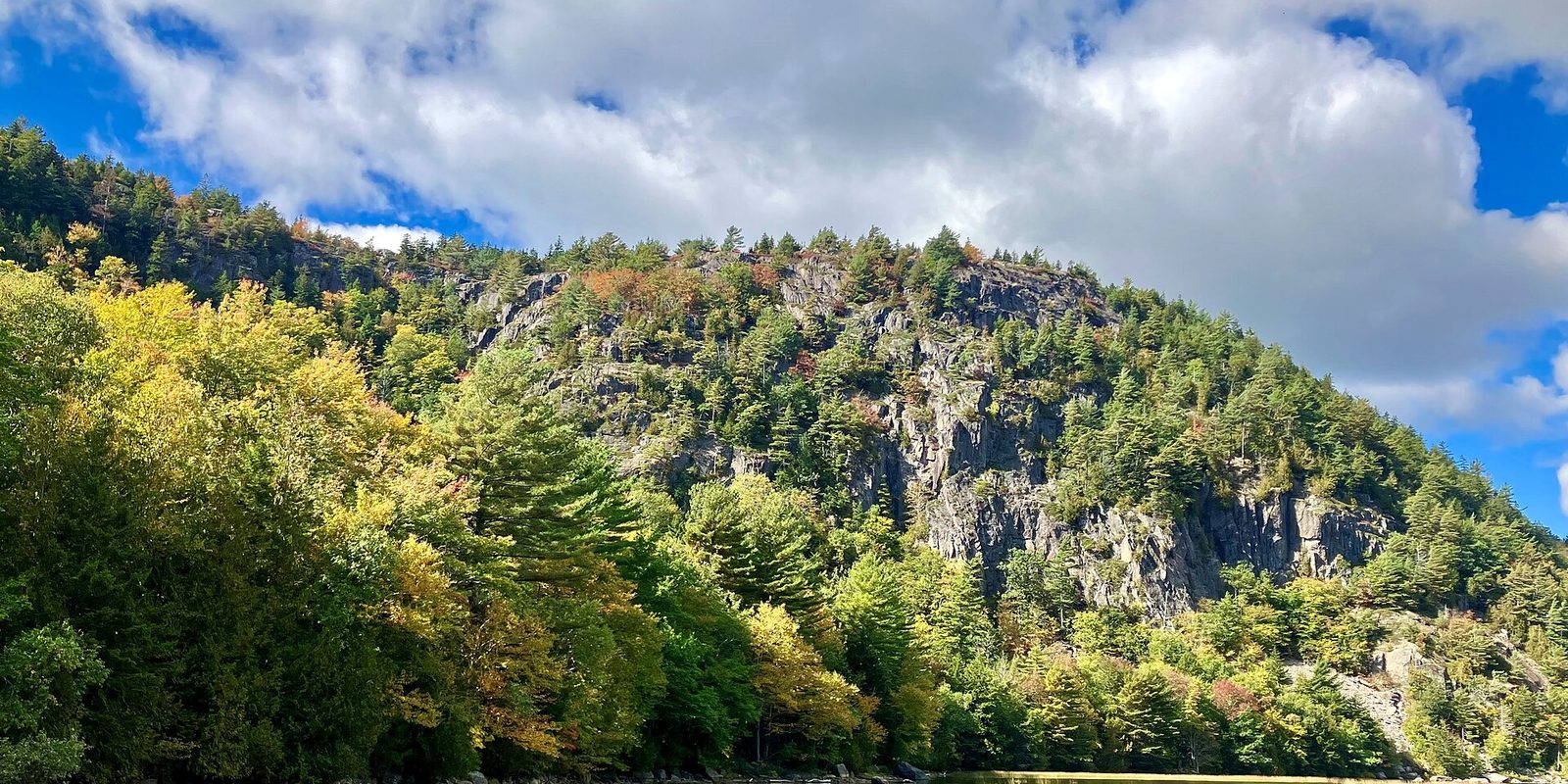
Photograph: usfs_Eastern_Region, Public domain, via Wikimedia Commons. Cropped.
.jpg)
Maine hosting questions
Does my hosting need to be in Maine for the site to feel fast here?
No. The distance a request travels within the north east is measured in milliseconds and is completely swamped by everything else happening on the page. A site that feels slow in Maine is almost always heavy rather than far away. Check the size of the images and whether caching is switched on before you consider moving anything anywhere.
My business is only open part of the year. Should I take the website down in the off season?
No. That is when people are planning, and it is also when search engines decide what you are. Leave it up, say clearly that you are closed and roughly when you expect to reopen, and put a date on it. A site that disappears for half the year reads as a business that closed for good, and it has to earn its position back every spring.
Everything happens in a few weeks for us. Do we need a bigger plan for the peak?
Usually not, and this is where seasonal businesses are most often oversold. A sharp climb in visitors is easy for a server to absorb when the pages are light. What struggles is a homepage full of unresized photographs or a page rebuilt from a database on every visit. Fix the weight and the peak stops mattering. A bigger plan makes a heavy page slightly less slow, which is not the same as fixing it.
We sell to other businesses rather than to visitors. Does any of this seasonal advice apply?
Some of it. The renewal trap applies to everyone, because domains and certificates expire on their own schedule regardless of yours. The traffic advice matters less. What matters more for you is having your actual capability written on the site as text a buyer can search for, and being able to add a page without paying somebody every time.
When is the best time to move a Maine website to a new host?
The quietest stretch of your year, whenever that falls for your trade. A migration done properly should not take the site down at all, but the small chance of an awkward afternoon belongs in a week when nobody is trying to book or order. Plan it while things are slow, and never in the fortnight before you get busy.
Tell us what the site has to survive
Send us the address and what it runs on. We will tell you what would break in a move, what is worth fixing before your busy months, and whether the plan you are paying for already suits the site.
See hosting plans Get help choosing
Or call 716-771-2536. We are in Buffalo, New York, so we answer Eastern time.