

Wichita
Aviation manufacturing and agriculture.
Hosting in Wichita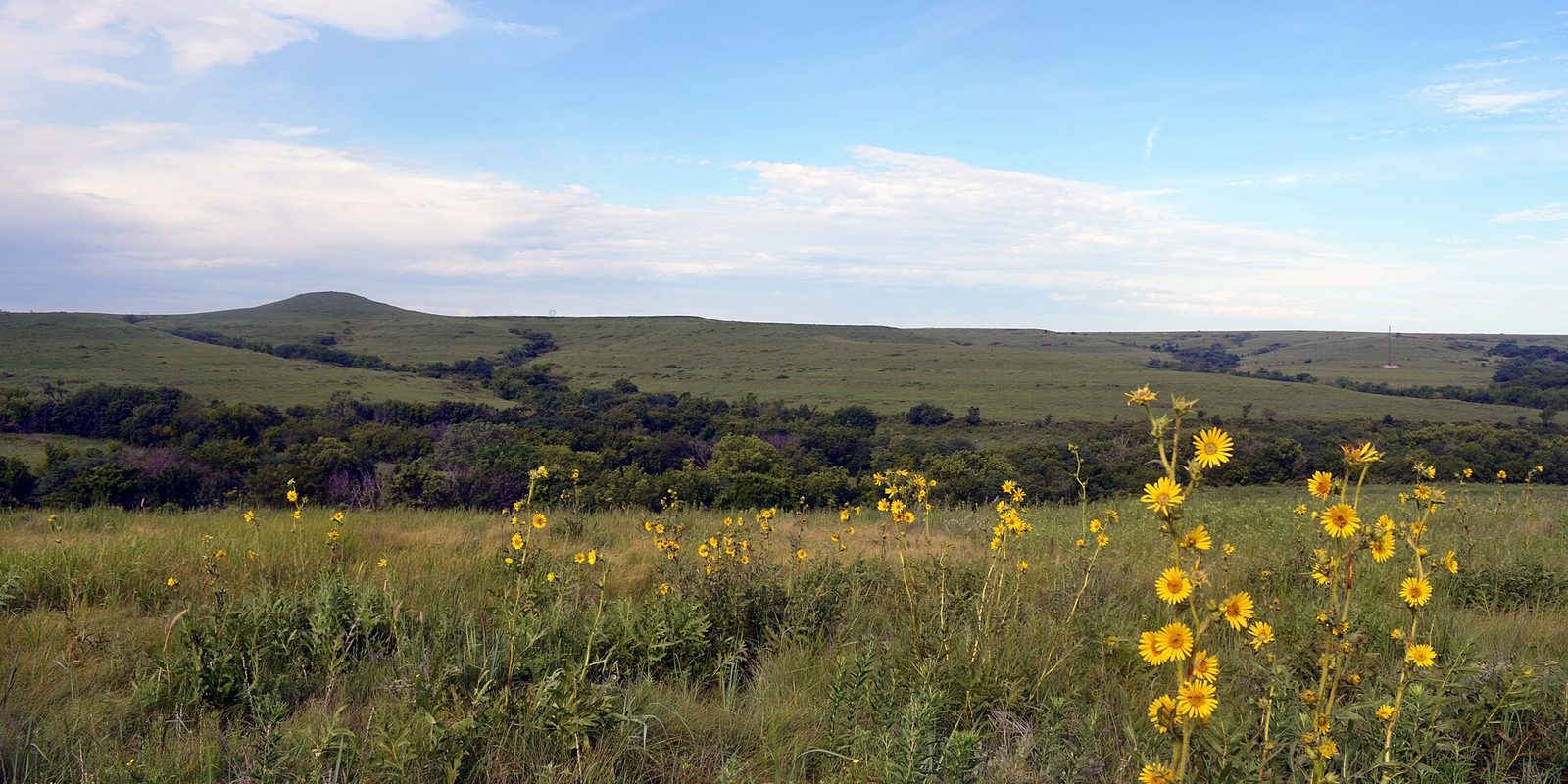
Kansas earns its money in two ways that look nothing alike and behave surprisingly similarly online. Aviation manufacturing sells to engineers and buyers who want documents. Agriculture sells to people who already know what you do and just need to reach you. Neither audience is browsing, and that changes what web hosting in Kansas has to do.
We are not in Kansas. AldoMedia works from one office in Buffalo, New York, and there is no Kansas address, no local number and nobody who can drive to you. Setup, moves and support all happen remotely, which is how hosting normally works anyway.
The state's manufacturing side is built around aircraft and the long tail of shops that feed it: machining, sheet metal, composites, finishing, tooling, test, inspection, distribution. Most of those firms have never sold anything to the public in their lives. Their customers are a handful of large buyers and the tier above them.
The agricultural side is different in every way except the one that matters here. Grain, cattle, equipment dealers, seed and chemical suppliers, agronomy services, transport, storage, the co-operative structures that sit between them. Again, the customer usually already knows the name. They are looking for a phone number, a location, a season's hours, a form.
Both of those are search behaviours that punish a slow, decorative website and reward a plain one. Neither is helped by a homepage that plays a video before it shows a phone number. If your site's job is to be found by somebody who is already halfway to buying, the site should get out of the way.
Almost nothing on a Kansas business site needs to persuade a stranger. It needs to confirm something for somebody who arrived with intent. That is a much easier website to build and a much cheaper one to run.
Send us the address. We will tell you what a procurement search would actually find on it, how heavy the pages are, and whether the plan you pay for is bigger than the site needs.
This is the part worth understanding before you spend anything. In aerospace and defence work, the thing that gets you shortlisted is not your copywriting. It is a capability statement: what processes you hold, what sizes and tolerances you can hit, what materials you handle, what approvals and certifications you carry, what quality system you run to, whether you are registered for export-controlled work, what your part numbering and traceability look like.
A buyer or a quality engineer opens your site to check those facts against a requirement. They are not reading paragraphs about passion for excellence. They want to confirm a list and then either send you a request for quote or close the tab.
The failure mode we see most often is a site that is entirely marketing at the top and entirely PDF at the bottom, with nothing readable in between. The buyer's search never matches the marketing, and the PDF is invisible to it.
If a document on your site is export-controlled or covered by a customer agreement, it should not be sitting in a public folder waiting to be found. That is a decision about what you publish, not a hosting setting, and it is worth making deliberately.

General hosting advice is the same everywhere, so we will not restate it. The shared hosting page covers the ordinary case and the running costs page covers what a small site really costs in a year. What is worth saying here is which of those ordinary things carry more weight in this state's mix of work.
For a supplier, the quote arrives by email and leaves by email. If your mail is on a free consumer account, or on a domain whose records were half rebuilt at some point, you will lose enquiries and never know. Business mail on your own domain, with the sending records set up properly, is not a luxury in a procurement relationship. That is the business email side of the account, and it is the part we treat as more important than the website.
Manufacturing sites tend to accumulate documents rather than images: drawings, spec sheets, quality manuals, certificate scans. That is easy hosting, but it wants a naming habit and a place things go, or you end up with three versions of a certificate and no way to tell which is current.
The farm-facing side of the state has a calendar. Traffic to a dealer or an agronomy service is not flat across the year, and the weeks that matter are the weeks nobody has time to fix anything. Severe weather is also a normal fact of life here, and it takes out offices, not data centres. If your only copy of the site lives on a machine in your building, that is the real exposure. Backups belong somewhere else, which is what the backups page is about.
A heavy site is the usual reason a page feels slow, and it is almost never the plan. Resize the photographs before you buy anything bigger.
Copy first, test on the new server, point the domain last, and carry the mail records across exactly as they are. You keep quoting while it happens.
Fair question, straight answer. Hosting is not a local service. Your site does not live in Kansas today and it will not afterwards. It lives in a data centre somewhere, and the distance between that building and your customers is not what makes a page feel fast or slow.
So the thing you are choosing is not proximity. It is whether somebody answers when the mail stops or a renewal quietly doubles. We are in Buffalo, we answer on Eastern time, which puts us an hour ahead of most of the state and reachable well before your afternoon, and we have been building websites since 1999. We are an independent authorised reseller, so we buy the same infrastructure your last host did and take responsibility for the part they usually will not.
If what you want is somebody who will walk into your plant, we are the wrong choice and we will tell you so. For registering a domain, moving an existing site, keeping mail flowing through the change and having a person to call afterwards, being in another state changes nothing at all.
The two ends of this economy overspend in opposite directions, which is worth naming.
Spending more genuinely earns its keep when a site takes payments, carries a large document library that people search, or supports a business where a day offline costs real work. Visitor numbers on their own rarely justify it.
If you inherited a site from somebody who has stopped answering, start by getting control of the domain and the login rather than by rebuilding. Most of the time the site is fine and the access is the problem.
We work with businesses anywhere in the state, and the aviation cluster has enough of its own habits to be worth writing about separately.
Aviation manufacturing and agriculture.
Hosting in WichitaEvery state is on our locations page, and every trade we cover is on hosting by industry.
Photograph: U.S. Fish and Wildlife Service - Midwest Region, Public domain, via Wikimedia Commons. Cropped.
No. The distance between a data centre and a visitor is measured in milliseconds and is swamped by everything else on the page. A site that feels slow in Kansas is nearly always a heavy site rather than a distant one. Check the weight of the homepage, resize the images and turn caching on before you consider moving anything anywhere.
Not technically. It is a page and a file, and any ordinary plan serves both. The decisions that matter are editorial: keep the capability list as readable text so it can be found, keep the downloadable copy current, and be deliberate about anything export-controlled or covered by a customer agreement, because a public folder is public to everyone.
Usually not. Seasonal peaks make an already heavy page obvious rather than causing the problem. A bigger plan makes a heavy page slightly less slow, while making the page lighter fixes it. If your site takes orders or payments during the peak, that is a different conversation and worth having before the season, not during it.
Nothing. Your site is not served from your building, so an outage there does not take it offline. What an outage can take is anything that only exists in your office, including the only copy of the site files and any mail stored on one machine. That is the thing to fix, and it is cheap to fix.
Not if the order is right. The mail records are written down and recreated exactly before the domain is pointed anywhere, so mail keeps flowing through the change. Email breaks in a migration when somebody rebuilds the DNS from scratch and leaves those records out. The full order of operations is on the website migration page.
Send the address and a sentence about who it is for. We will tell you what to fix, what to leave alone, and whether moving it is worth the trouble. If your current setup is already right, we will say that instead.
See hosting plans Get help choosing
Or call 716-771-2536. We are in Buffalo, New York, so we answer Eastern time.
.jpg)