
Web Hosting in Idaho
Idaho keeps gaining people, and every one of them arrives needing a plumber, a dentist, a feed supplier and a builder they have never heard of. That is a different kind of customer from the one most local businesses were built to serve. It changes what the website has to do, and what you should expect from web hosting in Idaho.
We are not in Idaho. AldoMedia works out of Buffalo, New York, and there is no Idaho office, no local number and nobody who will drive to you. Setup, migrations and support all happen remotely, which is how hosting normally works anyway.
Customers who have no habits yet
In a settled town, most of a small business's work arrives through people who already know it. Somebody's neighbour used you, somebody's father used you, and the website is a formality that confirms you exist.
Idaho has spent years being the other thing. A large share of the people who will call you this year did not live in the state last year. They have no neighbour to ask. They have no history with anyone in your trade. They are choosing an accountant, a vet, a roofer and a hairdresser all at once, from nothing, mostly on a phone, mostly in the first few weeks after the boxes are unpacked.
What that changes about the site
It moves the website from confirmation to first impression. A newcomer cannot tell a twenty-year business from a six-month one by looking at the sign, so they read what is in front of them and decide from that. The things they are actually checking are dull and specific.
- Do you serve where they now live. Newcomers genuinely do not know what is near what, so say the area plainly.
- Are you open. Hours that are wrong cost you a customer who had no reason to try twice.
- Is there a real phone number that can be tapped, and does somebody answer it.
- Does the page load before they lose patience. A person comparing four businesses gives none of them long.
- Is there anything that shows you have been doing this a while. Newcomers cannot see your reputation, so it has to be written down.
The free part matters most here. Your Google Business Profile is where a new arrival meets you first, and it costs nothing. Get it accurate before you spend a dollar on the website.
Find out what your site looks like to a newcomer
Send us the address. We will tell you what the homepage weighs, how it behaves on a phone, and whether somebody who has never heard of you could work out what you do and where you do it. If it is already fine, we will say so.
Two economies sharing one state
Idaho carries an agricultural economy and a technology economy at the same time, and the businesses attached to each want different things from a website.
The agricultural side runs on a calendar. Demand for equipment, parts, services, labour and haulage arrives in compressed windows, and the same page that idles for months is expected to work perfectly in a particular fortnight. The customer is often standing in a field on a weak connection. Weight matters more than polish.
The technology side and everything that has grown up around it behaves differently. Those buyers compare. They read before they call, they look at whether the site is secure, and they notice when something looks abandoned. They are also, quite often, the newcomers, which means both halves of this page describe the same customer at different moments.
The businesses in the middle
Most Idaho small businesses are not in either camp exactly. They are the trades, clinics, shops and services that grow because everyone else is growing. Their websites tend to have been built once, some years ago, by somebody who has since moved on, and to have quietly stopped matching the size of the business. That gap is the common thread across the whole state.

.jpg)
What growth does to web hosting in Idaho
Growth rarely breaks hosting. It exposes decisions made when the business was smaller, and it does it at the worst time.
The usual sequence looks like this. The site was built for a business half the current size. More services get added as pages nobody links to. Photographs go up at full camera size because nothing has complained yet. A booking widget arrives, then a review widget, then a chat box. None of it is a problem on its own. Together they turn a three-page site into something that takes a long moment to load on a phone, in a state where the person loading it is comparing you against two other names.
The fixes are unglamorous and they are mostly not purchases. Resize images before they go up. Turn caching on so the server hands out a finished page instead of building one. Delete the widgets that are not earning their place. Make sure the pages you added since the site was built are actually reachable from the menu.
When a bigger plan is genuinely the answer
It is worth being honest that most Idaho small business sites do not need one. A site that is a handful of pages, a contact form and some photographs sits comfortably on shared hosting and will keep doing so through a lot of growth. Spending more makes sense when you take payments or bookings on your own site rather than linking out, when you run several locations from one site, or when a day of downtime costs you work that day. A rising number of visitors, by itself, almost never justifies it. If you want the whole picture of what running a site costs, that is set out on what a website costs to run.
If the site is slow in a quiet month it will be worse in a busy one. Traffic does not cause slowness. It reveals it.
We will handle the move
Copy, test, switch the domain, keep the mail records intact. You carry on working while it happens, and afterwards there is somebody to call.
The site you inherited
A growing state produces a particular problem more often than a settled one. Businesses change hands, partners leave, and the person who built the website five years ago is no longer reachable. The site keeps running until something needs changing, and then nobody knows where it lives.
We deal with this a lot. The first job is finding out who controls what: the domain registration, the hosting account and the email are frequently in three different places under three different logins, and at least one of them is registered to somebody who has left. None of that is unrecoverable. It is just easier to sort out before a renewal lapses than after. There is a full account of the process on taking over a website.
The related job is the move itself, and the order of operations is what keeps it boring. Copy the site to the new server first, test it there, and only then point the domain across. Done that way the site never goes dark. The part that goes wrong is nearly always email, because somebody rebuilds the DNS from scratch and leaves the mail records out. Write them down before touching anything. The sequence is on the website migration page.
Why a Buffalo company, for an Idaho business
Reasonable question, and it deserves a plain answer rather than a pitch.
Hosting is not a local service. Your website does not live in Idaho now, and it will not afterwards. It lives in a data centre somewhere, and which state that building sits in makes no difference a visitor could feel. Choosing a host in your own state buys you a comforting idea and nothing measurable.
What actually varies between hosts is whether anyone answers when something is wrong, and how much they understand about your particular setup when they do. That has nothing to do with distance. We are in Buffalo, we work Eastern time, we are an independent authorised reseller rather than the operator of the underlying platform, and we have been building and looking after websites since 1999.
The honest limit is this. If you want somebody who will come to your premises, we are the wrong choice and we will tell you so rather than take the work. For setting up hosting, moving a site that already exists, keeping email running through the change and answering the question when something looks odd, being two thousand miles away changes nothing at all.
Where in Idaho we work
We take on hosting for businesses anywhere in the state, from the farming valleys to the technology corridors, and city pages will follow as we add them.
Every state is on our locations page, and every trade we cover is on hosting by industry.
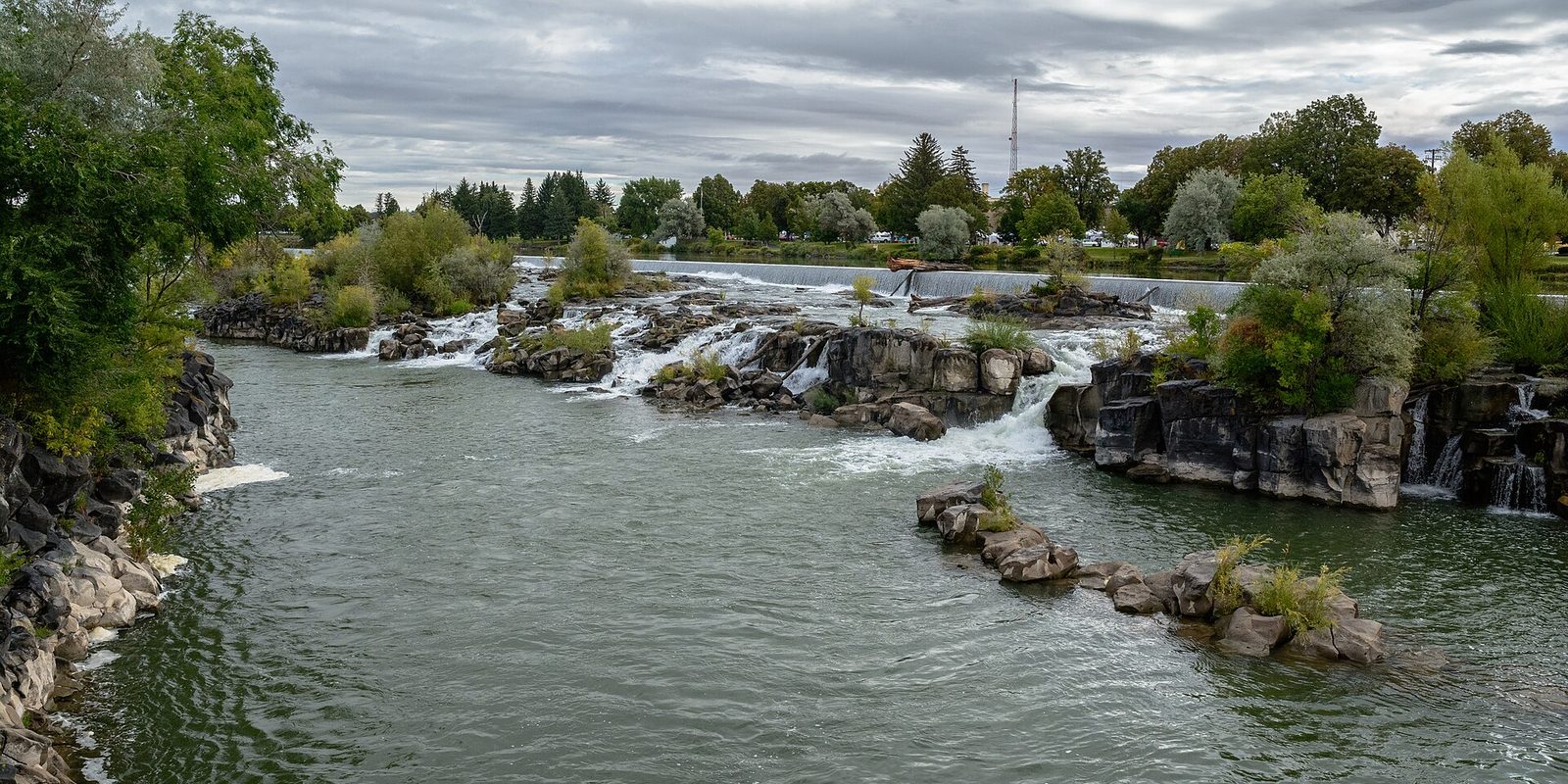
Photograph: Domenico Convertini from Zurich, Schweiz, CC BY-SA 2.0, via Wikimedia Commons. Cropped.
.jpg)
Idaho hosting questions
Does my hosting need to be in Idaho for the site to load quickly here?
No. The delay distance adds is measured in milliseconds and is buried under everything else the page is doing. A site that feels slow in Idaho is nearly always heavy rather than far away. Resize the photographs and turn caching on before you consider moving the hosting anywhere.
Most of my new customers moved here recently. Does that change what the website needs?
Yes, more than most people expect. Someone new to the area cannot rely on word of mouth, so the site is doing work that reputation used to do. Say plainly what you do, where you cover, whether you are open and how long you have been in business. Newcomers are also comparing you against several other names in one sitting, so a slow page loses more than it would elsewhere.
Idaho farm work comes in short bursts. Will the site cope when everything happens at once?
Almost certainly, and for a reason that has little to do with the plan. A few pages of text and images is one of the lightest things you can put on a server. What struggles in a compressed season is a homepage carrying unresized photographs and half a dozen third-party widgets, and a larger plan only makes that slightly less slow. Making the page lighter is the actual fix.
You are in New York. What happens when I need you at eight in the morning my time?
You reach us later in your morning than you would a company in your own time zone, and email is answered before the phone is. If you need somebody physically present within the hour, no host provides that, whatever state they are in. What you are paying for is a person who replies and knows your setup, not a person nearby.
The person who built our site has disappeared. Can you still take it over?
Usually yes. The domain, the hosting and the email are often held in three separate accounts, sometimes registered to someone who has left the business, and untangling that is routine work. Start before a renewal date passes rather than after, because an expired domain is a much harder problem than a forgotten password.
Before your next busy stretch
Tell us what the site runs on, who currently holds the domain, and what the business needs it to do. We will tell you what to fix, what to leave alone, and whether the plan you are already on is the right one.
See hosting plans Get help choosing
Or call 716-771-2536. We are in Buffalo, New York, so we answer Eastern time.