
Web Hosting in Delaware
Delaware has more registered companies than residents, and most of those companies have never traded a dollar inside the state. That gap shapes how sites here get built, who ends up buying web hosting in Delaware, and how often the wrong site is the one online.
We are not in Delaware. AldoMedia works from one office in Buffalo, New York, with no Delaware address, no local number and nobody on the ground there. Setup, migration and support all happen remotely, which for hosting is simply how it works.
A state full of companies that are somewhere else
Delaware built a whole industry out of being the place a company exists on paper. Corporate law here is old, well tested and predictable, and that predictability is the product. So a business trading anywhere in the country can be a Delaware entity while every employee, every customer and every invoice sits in another state entirely.
That creates an odd split that shows up constantly in web work. There is the entity, which has a registered address and a legal name nobody says out loud, and there is the operating business, which has a phone that rings and a website customers actually read. They are frequently not the same thing, and they should not be treated as the same thing online.
Where this goes wrong on a website
- The site is written in the entity's legal name rather than the name customers use, so nobody searching for the business finds it.
- The registered agent's address is published as the business address, which tells search engines the company is somewhere it does no work.
- The domain is registered to a formation service and not to the owner, so nobody in the company can move it later.
- Business email is set up on a personal free address because the entity was formed before anyone thought about the website.
- Two websites exist, one for the holding entity and one for the trading business, competing with each other for the same searches.
None of that is a hosting problem, but it lands on the person setting up hosting, because the first questions are always which name goes on the site, which address, and who owns the domain.
If the domain is in a formation agent's account rather than yours, sort that out before anything else. Read transfer a domain and check who is actually listed as the registrant.
Find out what you actually own
Send us the domain and we will tell you who it is registered to, where the site is hosted, where the mail is going and what is due to renew. No obligation attached to the answer.
Then there are the businesses that genuinely trade here
Behind the registration industry is a real, physical economy, and it is heavier than people expect from a state this small. Chemicals and materials research has been a serious employer here for generations, and it carries a long tail of suppliers, testing labs, engineering firms and specialist contractors. Banking and card processing brought a large financial back office with it, and that in turn supports compliance, legal and staffing firms.
Add a working port and the logistics that follow it, agriculture toward the south of the state, and a summer coastal season that turns quiet trades into busy ones for a few months, and you get a mix where a very small business often sells to a very large one.
That last point matters more than anything else on this page. If your customer is a corporate procurement department or a compliance officer, your website is being read as evidence. It is checked before a meeting, not instead of one.
What a buyer at a large company looks for
- A working certificate, because a browser warning on a supplier site ends the conversation. See SSL.
- Email at your own domain. A free address on a quote is read as a business that might not be there next year.
- Capabilities written as plain text, including certifications and what you will not do.
- A real named contact rather than a form that goes nowhere.
- A site that has been touched in the last year. Stale copyright dates get noticed.


What this economy asks of web hosting in Delaware
Less than most Delaware businesses are sold, and more than a few of them think.
Take the supplier side first. A firm selling into chemicals, logistics or financial services usually has a small site: capabilities, certifications, contact, maybe a downloadable specification sheet. Traffic is low and steady. There is no spike. Shared hosting covers that with room left over, and paying for a larger tier buys nothing a procurement officer will ever notice.
What those firms do need is durability, and it is a different requirement. If a customer relationship runs on ten years of quotes sent from an address at your domain, losing that mailbox is worse than losing the website. Keep the mail records written down, keep the domain in your own account with the renewal date somewhere you will see it, and treat backups as insurance on the email as much as the pages.
The seasonal side of the state is the opposite shape. Trades that live off a short warm season carry photographs, and photographs are what make sites slow. That is a page weight problem rather than a plan problem, and the cure is to resize the images before they go up.
The registered-entity question also decides your renewals. If the domain, the hosting and the email are spread across three accounts opened by three different people, the first one to lapse takes the site down. One account, one owner, one card.
If you want the general picture of what running a site actually costs year to year, that is on what a website costs to run rather than repeated here.
We will handle the move
Copy, test, switch the domain, keep the mail records intact so nothing stops arriving. You carry on working while it happens, and afterwards there is somebody to call.
Why a Buffalo company for a Delaware business
Fair question, and it deserves a direct answer. Hosting is not a local service. Your site does not sit in Delaware today and it will not afterwards. It sits in a data centre somewhere, and which state that is makes no practical difference to somebody loading your page.
So what you are actually choosing is who answers when something is wrong at four in the afternoon. That varies enormously between providers, and it has nothing at all to do with mileage. We are in Buffalo, we work Eastern time, which is your time, and we have been building websites since 1999. We are an independent authorised reseller, not the operator of the underlying platform, and we will say when the plan you already have is the right one.
If what you want is somebody who will come to your office, we are the wrong choice and we will tell you that rather than take the money. For setting up hosting, moving an existing site and keeping the mail working through the change, being in another state changes nothing.
There is a certain symmetry to it. A great many companies are legally in Delaware and operationally elsewhere. Your hosting can be operationally elsewhere and still be entirely yours.
Taking over a site somebody else built
This is the most common thing Delaware businesses ask us about, and the entity split is usually why. Somebody set the site up years ago, often the same firm that handled the formation paperwork or an agency that has since gone quiet, and nobody currently at the company can log in to anything.
Start by finding out what you own before you move anything. Who is the registrant on the domain. Where does the email actually live. Is there a hosting account in the business name or is it on somebody's personal card. Answer those three and the rest is procedure.
The move itself has one rule that matters: copy the site to the new server and test it there before you point the domain across. Done in that order nothing goes dark, because the old server keeps answering until each visitor catches up. Done in the other order you are fixing a live site in public.
The thing that actually breaks is the mail. Somebody rebuilds the DNS from scratch, leaves out the mail records, and the business loses a day of enquiries before anyone works out why the inbox is quiet. Write the existing records down first. The full order of operations is on the website migration page, and the recovery of an orphaned site is on taking over a website.
Working across Delaware
We work with businesses across the whole state, from the corporate and financial corridor in the north to the agricultural and coastal south, and the setup is the same wherever you are.
Every state is on our locations page, and every trade we cover is on hosting by industry.
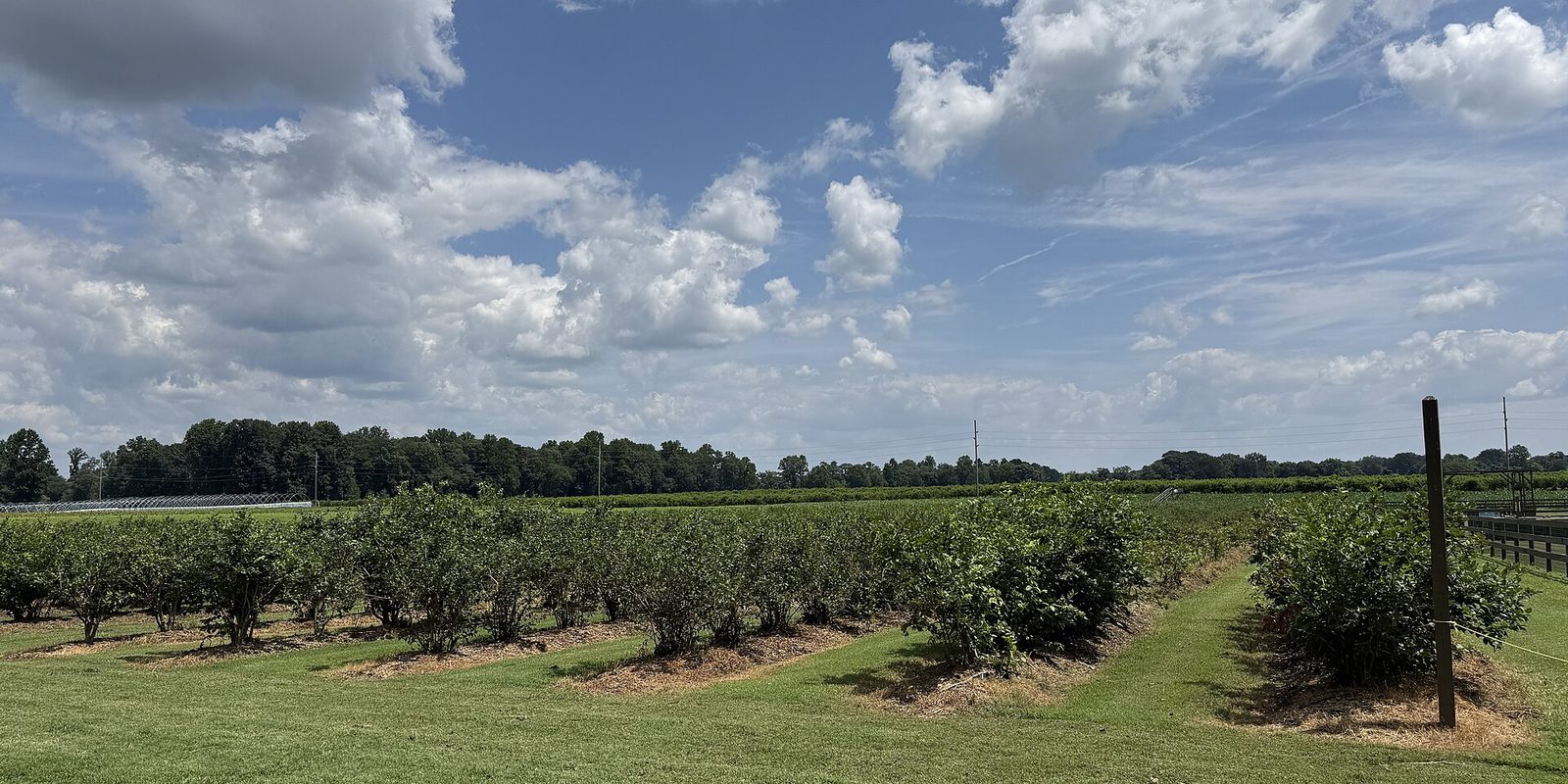
Photograph: Dough4872, CC BY-SA 4.0, via Wikimedia Commons. Cropped.

Delaware hosting questions
My company is registered in Delaware but we operate in another state. Which one goes on the website?
The one where you actually do the work, every time. Your customers search for a business in the place it serves, and search engines treat a registered agent's address as a signal about location whether you meant it that way or not. Put the trading name and the operating address on the site. The legal entity name belongs in the footer, the terms and the invoices.
Does my host need to be in Delaware for the site to be fast here?
No. The distance a request travels is measured in milliseconds and is completely swamped by page weight, uncached pages and third-party scripts. A site that feels slow is almost always heavy rather than far away. Resize the photographs and turn caching on before you consider moving the hosting anywhere.
The company that formed our entity also registered our domain. Is that a problem?
It can be, and it is worth checking today rather than the week you need it. If they are listed as the registrant rather than as your agent, you may not be able to move the domain, renew it or change where the site points without their cooperation. Ask them to confirm you are the registrant in writing, and if you are not, start the transfer while everyone is still on good terms.
We sell to a large corporate buyer. Do they care what we are hosted on?
Not the plan, no. Nobody in procurement asks what tier you bought. What they do notice is a certificate warning, an email address that is not at your own domain, and a site that clearly has not been updated in three years. Those read as risk. Fix those three and the hosting behind them stops being a question.
We are seasonal and only busy for a few months. Should we downgrade in the off season?
Usually not worth it. The saving is small, the switching creates two chances to break something, and a site that goes quiet still needs to be reachable when somebody plans ahead. Better to spend that attention on making the pages lighter before the season starts, so the busy weeks look after themselves.
Start with what you have
Tell us the domain and what the business actually does, and we will tell you what is set up correctly, what is registered in somebody else's name and what needs doing first. If nothing needs doing, we will say that too.
See hosting plans Get help choosing
Or call 716-771-2536. We are in Buffalo, New York, so we answer Eastern time.