
Shared Hosting
The plan type nearly every tree service site belongs on, and what the higher tiers actually change.
Read about shared hosting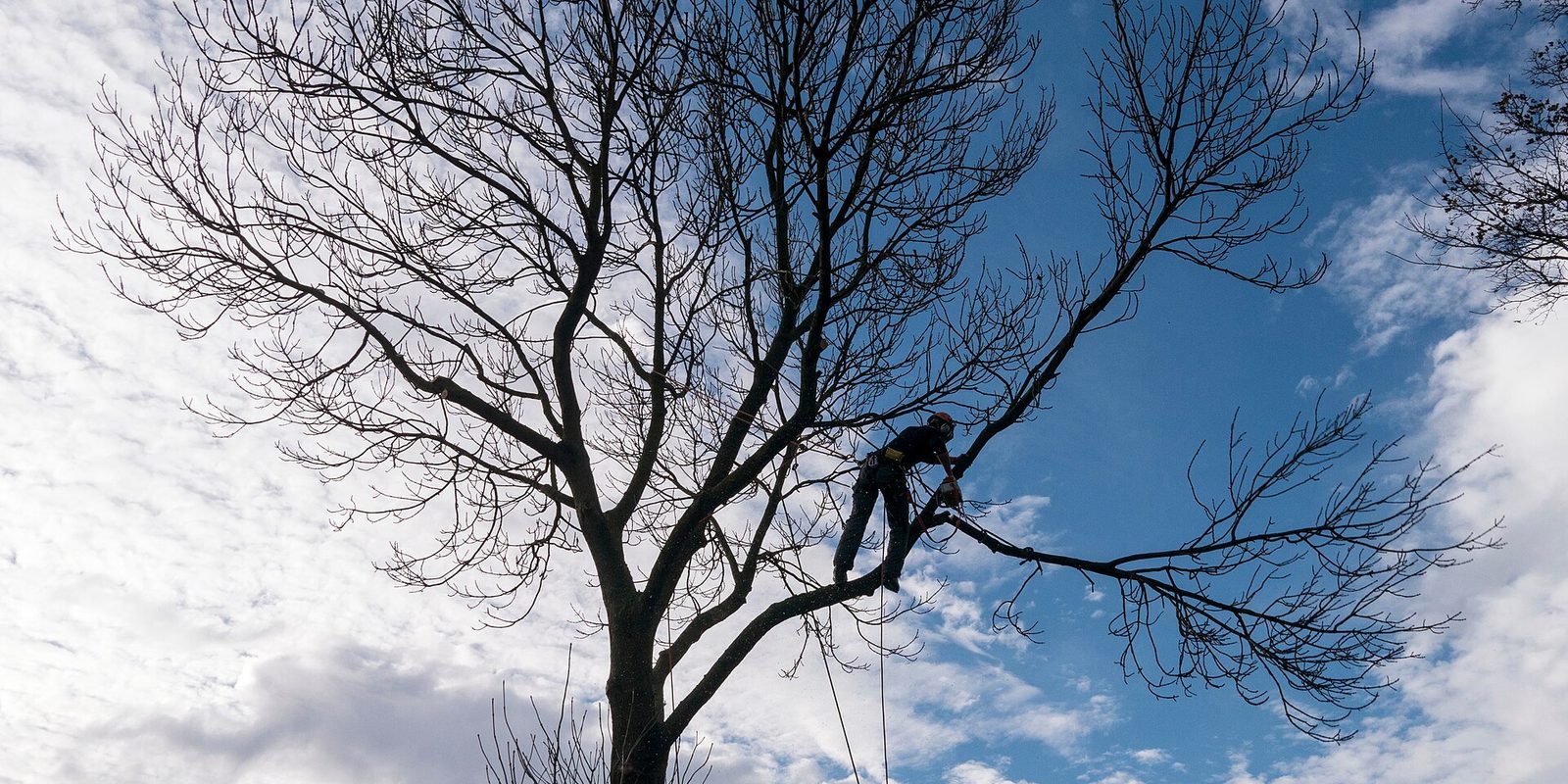
Half of this trade is planned work. Crown reduction booked three weeks out, a hazard assessment, a stump ground down when the weather suits. The other half is a maple through somebody's bedroom ceiling at one in the morning. Those two customers arrive in completely different states of mind, and web hosting for tree service companies has to sit under a site that answers both, which most do not.
Disclosure: AldoMedia is an independent authorized reseller. If you buy through a link on this page we may earn a commission, at no extra cost to you. The hosting platform, the domain registry and the certificate authority are run by upstream providers whose full-time job that is. What AldoMedia does is set the products up properly, support them, and stay accountable for your account.
Read most tree service websites and you can tell exactly who wrote them. They open with tree health. Pruning, disease, soil, the value of a mature canopy. It is good, careful material and it reflects how the owner thinks about the work, because that is the part of the job with craft in it.
Then the storm comes through, and every one of those emergency searches goes somewhere else. Not because the other company is better. Because they bothered to write the page that says, in plain words, that they take down storm-damaged trees at night and here is the number.
The two halves of your business do not share a customer. The pruning customer is planning. They will read, compare, sit on it for a week and ring you on a Tuesday. The emergency customer is standing in the garden in the dark with a torch. They will look at one screen, for maybe fifteen seconds, and either call or move on.
A site built for the first person almost never works for the second. That is the whole argument of this page. Everything below is detail.
This is not a hosting problem, and it is worth saying so early. No plan you can buy will make an emergency page exist. But the hosting decisions further down are the ones that decide whether that page loads when it matters.
If your tree service site is all pruning and no storm work, we will build the emergency page, make it load on a weak signal, and put it on a plan that suits a small site.
Give storm and emergency work its own page, with its own URL, and write it for somebody who is frightened and in a hurry. Not a paragraph on the homepage. Its own page, because that is the thing a search engine can send an emergency search to.
The page needs less than you think. Long copy is not the enemy, but it belongs underneath. The top of the page is doing one job.
Tree on a house. Tree on a car. Tree blocking the driveway. Limb hanging over the roof. Those are the phrases people actually type and speak, and they are not the phrases in an arborist's vocabulary. Write both, but put theirs first.
Near the top, large, and as a real tel: link so tapping it dials. If you use a different number after hours, say which number and which hours. A caller who reaches a voicemail at 2am has already gone to the next result.
"Someone answers this line 24 hours" is a sentence that wins jobs. So is "we return storm calls from 6am". What loses jobs is silence, because the reader assumes the worst and dials elsewhere.
Towns, not a radius in miles. Somebody in Hamburg wants to see Hamburg. A map graphic is not a substitute, because it is an image and nobody reads it in a panic.
Two sentences. You come out and make it safe first, the full removal and cleanup can follow in daylight. That single explanation calms people down more than any amount of writing about your equipment.
Keep that page light. No video header, no gallery slider, no chat widget loading half a dozen scripts. Storm nights are exactly when people are on a weak signal, on battery, sometimes tethered because the power is out. A page that is mostly text and one photograph will load on almost nothing.
After a tree comes down, the second thing people search is not a company name. It is some version of who pays for this. Whether their own policy covers it, whether it matters that the tree stood in the neighbor's garden, whether the insurer needs photographs before anything is moved.
Almost nobody in this trade writes that page, and it is the single best piece of content a tree service can own. You answer it fifteen times a week on the phone already.
Write it carefully, though. You are not the insurer and you are not an adjuster, so the useful version describes the process rather than promising an outcome.
That page earns its keep twice. It brings in people searching in the days after a storm, and it shortens every phone call you take that week.
This trade is unusual in how much the buying decision rests on proof rather than price. A homeowner letting somebody take a 70-foot oak off the side of their house is mostly worried about the house. A commercial buyer or a property manager is worried about liability.
Certification and insurance belong in text on a page, not buried in a PDF and not implied by a logo in the footer. Name the certifications your people actually hold. State plainly that you carry liability cover and workers compensation, and that a certificate of insurance is available on request. Do not publish policy numbers or a scan of the certificate itself, because that is your paperwork and it does not belong on the open web.
Never claim a credential you do not currently hold, and take down any that lapses. Property managers check, and in this trade a lapsed claim is the sort of thing that ends up in a dispute.
In most trades a gallery is decoration. Here it is qualification. A photograph of a crane set up over a house, a bucket truck at reach, a climber roped in above a conservatory, those tell a commercial buyer that you can take the job they are trying to place. Big removals get awarded on exactly that.
The mistake is uploading them straight off the phone. A modern phone photograph is several megabytes, and twenty of them on one page makes a gallery that nobody on a phone will wait for. Resize before uploading. The picture that wins the job is the one that appeared.
Send us your site and we will test the emergency page on mobile data, resize the crane and bucket truck photographs, and sort the hosting. If your current plan is already right, we will say so.
Less than the storm story suggests. A tree service website is a small set of pages that change rarely, plus photographs. It is one of the lighter things you can put on a server, and shared hosting is the right product for it. The entry tier is usually enough.
The one thing worth thinking about is the spike. A serious wind event drops a lot of local traffic into a short window, and it arrives all at once rather than spread across a day. That still is not a hosting problem in most cases, because a page of text and a few images is cheap to serve. What falls over is a site doing unnecessary work on every single visit: unresized photographs, a page rebuilding itself from a database with no caching, three tracking and chat scripts loading before the phone number appears.
So the fix for storm-night performance is almost always to make the pages lighter, not to buy a larger plan. Test the emergency page on a phone with the wifi off. If it is not usable in a couple of seconds on mobile data, that is what to fix.
A certificate so the site loads over https, which you will have anyway, and which matters because your quote form collects an address. There is more on that on the SSL page. And a working backup, because the site you never touch is the site nobody has a copy of. The website backups page covers what a real backup looks like and how to test that it restores.
A business email address at your own domain is the other quiet one. Quotes sent from a free webmail account get treated as suspicious by exactly the property managers you want to work for. That is covered on the business email page.
If you are a certified arborist doing consulting, hazard assessment and written reports, and you do not climb or run a crew, most of this page is not your business.
Your customers are municipalities, developers, solicitors and property managers. They find you by referral and by name. They are not searching at midnight, they are not in a panic, and building an emergency page for a service you do not offer would only bring you calls you have to turn down.
The same restraint applies to a one-crew removal company that is already booked out three weeks and turning work away. If the phone rings enough, a bigger hosting plan buys you nothing. Where spending more is genuinely justified: you run a large photo library, you take bookings or payments on the site rather than by phone, or you have grown to several crews with separate service areas and the site has become a real operation rather than a brochure. Volume of trees is not a reason.
If you are unsure which of those you are, the what a website costs to run page lays out where the money actually goes.
AldoMedia has built and looked after websites for Western New York businesses since 1999, and a site that is all pruning and no storm page is a pattern we know well. We are an independent authorized reseller rather than the operator of the underlying platform, and if the plan you are already on is the right one we will tell you that instead of selling you another.
If you are moving an existing site to a new host, the order of operations that keeps your email working through the change is on the website migration page. Otherwise call 716-771-2536 or tell us what your site runs on.
Yes, and it is the highest-value page on most tree service sites. A search engine sends an emergency search to a page about emergencies, not to a paragraph halfway down a homepage about tree health. Give it its own URL, put the phone number and the after-hours answer at the top, and list the towns you cover in words rather than on a map graphic.
Almost certainly, because a text page with a couple of photographs is cheap to serve and a shared plan absorbs that. Sites that struggle on a storm night are usually carrying unresized phone photographs or a stack of chat and tracking scripts that load before the phone number does. Make the emergency page light and test it on mobile data with wifi off.
It is one of the best pages you can own, because it is what people search in the days after a storm and it is a conversation you already have on the phone. Describe the process rather than the outcome: what to photograph before anything is moved, what your invoice will show, and that coverage varies by policy so they should ring their own insurer or adviser. Do not tell anyone their claim is covered.
In plain text on a page. Name the certifications your people currently hold, say that you carry liability cover and workers compensation, and offer a certificate of insurance on request. Do not publish policy numbers or a scan of the certificate itself, and take down any credential that lapses, because property managers check.
In this trade they are, more than in most. A photograph of a crane set over a house tells a commercial buyer you can handle the removal they are trying to place, and large jobs get awarded on that. Resize them before uploading though. Twenty full-size phone photographs on one page makes a gallery nobody on a phone waits for.
Very little of it. Your work comes by referral and by name, not from panicked midnight searches, and an emergency page would only bring calls you have to decline. State clearly that you do assessment and reports rather than removal, put your credentials front and center, and stay on an entry plan.
The plan type nearly every tree service site belongs on, and what the higher tiers actually change.
Read about shared hostingThe site you never touch is the site nobody has a copy of. What a real backup looks like, and how to test it.
Read about backupsWhy quotes sent from your own domain get taken seriously by property managers, and what setting it up involves.
Read about business emailEvery trade we cover is listed on hosting by industry.
Hero image: Bryan Ledgard, CC BY 2.0, via Wikimedia Commons. Cropped.
Tell us what your tree service site runs on and we will say whether the plan you are paying for is the right one. If it already is, we will tell you that.
Get Your Web Hosting Plan Get help choosing
Or call 716-771-2536 and tell us what the site has to do. If the plan you are already on is the right one, we will say so.
.jpg)