
Shared Hosting
The plan type nearly every solo massage practice belongs on, and what the higher tiers actually change.
Read about shared hosting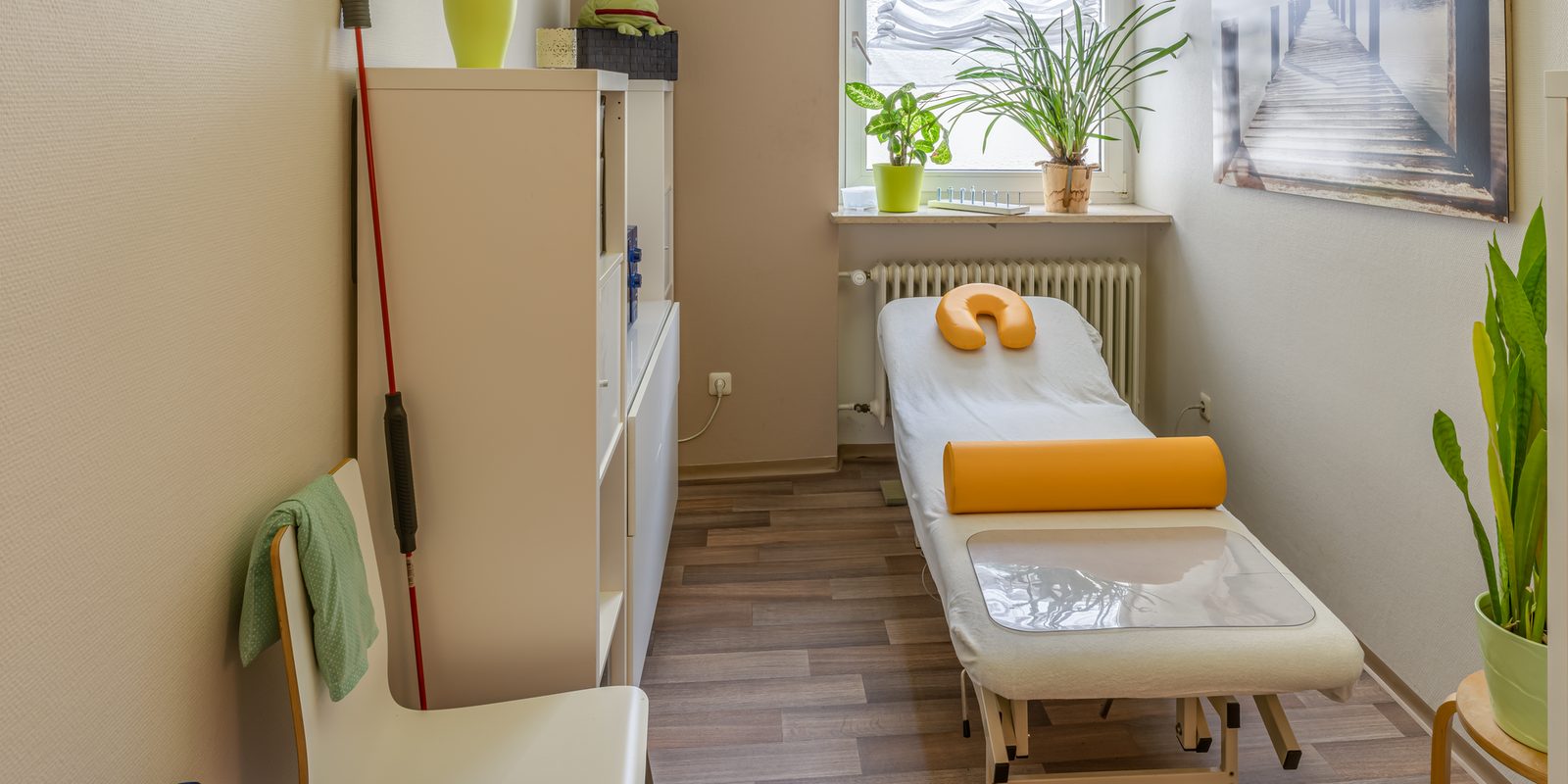
Licensed massage therapy has a problem almost no other trade has. It shares its search terms, its stock photography and its vocabulary with an industry it has nothing to do with. Web hosting for massage therapists has one first job, which is to settle that question before a stranger has to wonder about it.
Disclosure: AldoMedia is an independent authorized reseller. If you buy through a link on this page we may earn a commission, at no extra cost to you. The hosting platform, the domain registry and the certificate authority are run by upstream providers whose full-time job that is. What AldoMedia does is set the products up properly, support them, and stay accountable for your account.
Type your own trade and your town into a search box and look at what comes back. Somewhere on that page, usually not far from you, is a listing that is not a licensed practice. That is the environment your website has to work in, and it changes what the site has to do.
A stranger arriving on your homepage is making one decision in the first few seconds, and it is not about price or modality. It is whether this is a real clinical practice. If the answer is not obvious immediately, a proportion of those people leave and book somewhere the answer was obvious. You never hear about it.
The awkward part is that the standard massage website design actively works against you here. Soft focus photography, a candle, a stone stack, a slow fade between images of a back and a towel, no name, no face, no credentials. That is the same visual language the listings you are trying to be distinguished from use, because it is the cheapest template on the shelf and everybody buys it.
This is not an argument for a cold website. It is an argument for a specific one. Warmth with a name, a face and a license attached reads completely differently to warmth with none of those.
Send us your practice site and we will say plainly whether a stranger can tell in five seconds that you are licensed, and what to change first if they cannot.
It is not a badge graphic and it is not the word professional. It is a short list of specific, checkable facts placed where somebody will see them without scrolling.
Written as plain text, all of that costs nothing to host and takes a minute to update. Put it in an image, a badge or a PDF and it stops being readable by anything except a human with good eyesight, which defeats most of the point.
The serious end of your market searches by technique, not by the word massage. Deep tissue, myofascial release, prenatal, lymphatic drainage, trigger point, sports and injury work, cupping. Somebody with a specific problem is looking for a specific answer, and they will type it.
Give each of the things you genuinely do its own page or at least its own clearly headed section, and describe who it is for and what a session is like. Two lines on a services list does not compete with a practice that wrote three hundred words about prenatal work. Do not list a modality you are not trained in to catch the search. It brings you the wrong appointment and a difficult conversation.
It reads as blunt and it works. A clear line about the practice being therapeutic only, with a note on draping and consent, answers the question your legitimate clients were quietly holding and turns away the inquiries you do not want. It costs one paragraph and it does more work than the rest of the homepage.
This trade converted to online booking faster than most. A client with a sore neck at ten at night wants a Thursday appointment, not a callback in the morning. If the only route to your diary is a phone number, you are competing against practices where the whole thing takes ninety seconds.
You do not need to build the booking system. Nearly everyone uses a hosted scheduling service, which is the sensible choice, and your website's job is to hand people over to it cleanly.
One obvious Book button in the header, on every page, with the same wording every time. Not three different phrasings competing on the homepage.
A contact form that promises a reply is not booking. If the scheduler can show open slots, let it, even if that means the page loads a little slower.
Health history belongs in the scheduler or in your own records, not emailed as plain text and not stored in the website's database. Ask your own adviser what applies to you, but the safe habit is to keep clinical detail off the web server entirely.
Booking widgets break quietly when the provider updates them. Book yourself an appointment on your own phone once a quarter and cancel it. That is the whole check.
One hosting point does apply here. Anything that collects a name, a phone number or a symptom needs a certificate on the domain so the connection is encrypted, and browsers now say so loudly when it is missing. That is what SSL is, it is included with normal hosting, and there is no reason to be without it.
If you take referrals, work alongside chiropractors or physical therapists, or bill insurance or no-fault claims, you are serving two groups of people who want different things from the same website.
The relaxation client wants to know the room is nice and Saturday is open. The injury client wants to know whether you handle their claim, what paperwork they need, whether their prescription or referral matters, and how long the course of treatment usually runs. They are not reading the same page, and trying to serve both from one page usually serves neither.
Health information carries obligations that vary by state and by what you are doing with it. We are not the people to tell you what applies to your practice, and you should check with your own adviser. What we will say from experience is that the practical risk is boring rather than dramatic: intake forms emailed around in plain text, notes left in a website folder, an old form still live on a page nobody remembers. Keeping clinical detail out of the website entirely removes most of that in one move.
We can resize the room photographs, tidy the booking button onto every page and move your mail to your own domain without downtime. If your current plan already suits a solo practice, we will say so.
The two get filed together as therapy and they are not the same profession. The duties are different, the record keeping is different, the client relationship is different, and the website problems barely overlap. Massage has a legitimacy problem in search results. Psychotherapy has a confidentiality and discretion problem, which is a different piece of work. If that is you, read hosting for therapists instead. If you hold both licenses, you probably want two clearly separated sections rather than one blended voice.
Most solo therapists, and it is worth being direct about it. A single-practitioner massage website is a handful of pages, a few dozen photographs and a link to a booking service. It is one of the lightest things you can put on a server, and shared hosting at its entry tier covers it comfortably.
Spending more starts to make sense when there are several therapists with their own pages and their own diaries, when you sell gift certificates or packages through your own site rather than through the scheduler, or when you run a clinic with staff logins. Those are real reasons. Being busy is not one.
Nothing on this list is exciting. All of it turns up on massage practice sites regularly.
Photographs straight off a phone are the usual reason a treatment page takes six seconds to appear. A room photo at full camera resolution can be larger than the entire rest of the site. Resize before uploading and the problem disappears without changing anything about the plan.
Booking widgets and review embeds load code from somebody else's server. Two is usually fine. Five means your page waits for five other companies before it finishes. Remove the ones that are not earning their place.
Email is the other one. A practice address at your own domain rather than a free one is part of the same legitimacy argument as the license number, and it stops your appointment confirmations landing in spam. If you are moving hosts, the order of operations that keeps mail flowing through the change is on the website migration page. Read it before you change anything, not after.
And keep a backup you have actually restored once. A site is small enough that this is trivial to arrange and awful to discover you never did.
AldoMedia has been building and looking after websites for Western New York businesses since 1999. We are an independent authorized reseller rather than the operator of the underlying platform, and if the plan you are already on is the right one we will tell you that instead of selling you a bigger one.
For current pricing and plan comparisons, start on the hosting page. If you would rather talk it through, call 716-771-2536 or tell us what your site runs on now.
Yes, as ordinary text rather than inside an image, and near the top rather than buried in a footer. It is the fastest way to answer the question a stranger is silently asking, and it is checkable, which is the point. Add where you trained and how long you have practiced alongside it.
Most licensed therapists find it helps. A short, plain paragraph about the work being therapeutic, with a line on draping and consent, reassures the clients you want and discourages the inquiries you do not. It reads as blunt when you write it and it stops being noticeable once it is live.
You can, but the simpler habit is not to. Health details collected through a website tend to end up emailed in plain text or sitting in a folder on the server that nobody remembers. Let your scheduling service handle intake, or take it on paper in the room. Check with your own adviser about what applies to your practice.
One will not. The problem is stacking a scheduler, a review feed, a chat box and a social embed on the same page, because each one waits on a different company's server. Pick the booking widget, keep it, and drop the rest. Also test the booking flow on your own phone every few months, since these break quietly when the provider updates.
The entry shared plan, in almost every case. A few service pages, a booking link and some photographs is one of the lightest sites there is. Spend the money on rewriting the homepage so it makes your credentials obvious, and on resizing your photographs, which will do more for you than any upgrade.
Usually one site with two clearly separated sections, each with its own landing page, its own credentials and its own booking route. Blending them muddies both. The website concerns are genuinely different, so read the hosting for therapists page as well as this one before deciding.
The plan type nearly every solo massage practice belongs on, and what the higher tiers actually change.
Read about shared hostingWhy any page that takes a name, a phone number or a symptom needs an encrypted connection.
Read about SSLWhy an address at your own domain does the same job as your license number, and how to set one up.
Read about business emailEvery trade we cover is listed on hosting by industry.
Hero image: PantheraLeo1359531, CC BY 4.0, via Wikimedia Commons. Cropped.
Send us the address of your practice site and we will tell you what a stranger sees in the first five seconds, and whether the plan you are paying for is more than you need.
Get Your Web Hosting Plan Get help choosing
Or call 716-771-2536 and tell us what the site has to do. If the plan you are already on is the right one, we will say so.
