

Shared Hosting
The plan type nearly every dance studio site belongs on, and what the higher tiers actually change.
Read about shared hosting
A dance studio publishes photographs of other people's children. That single fact should shape more of the site than anything else does, including the schedule page, the recital gallery you are proudest of, and what you ask of web hosting for dance studios.
Disclosure: AldoMedia is an independent authorized reseller. If you buy through a link on this page we may earn a commission, at no extra cost to you. The hosting platform, the domain registry and the certificate authority are run by upstream providers whose full-time job that is. What AldoMedia does is set the products up properly, support them, and stay accountable for your account.
Most studio websites are lovely. Recital shots, competition team portraits, a gallery from the spring showcase, first names in the captions so families can find their child. It reads as warmth, and it is meant as warmth.
Here is how it goes wrong. A parent asked at registration that their child not be photographed. The request went on a paper form in a filing cabinet. Eight months later a volunteer builds the recital gallery from a shared folder of 400 photographs, and that child is in the third row of the group shot on the homepage. Nobody was careless on purpose. The consent lived in one place and the photographs lived in another, and the two never met.
That is the failure this page exists to prevent, and no hosting plan prevents it. What hosting can do is make the fix quick, which matters more than it sounds. When a parent calls, the difference between taking a photograph down in five minutes and taking it down next week is the difference between an apology and a problem.
Rules on photographing and naming minors vary by state and by what your enrollment paperwork actually says. Treat everything here as a description of the problem, not legal advice, and have your own adviser look at your consent form.
We set up studio sites so a parent's removal request can be honored the same hour, with the consent list sitting where the recital photographs are. If your current setup already does that, we will say so.
A consent policy that only works when the person building the gallery remembers it is not a policy. It is a hope. The version that holds up is boring and mechanical, and it takes an afternoon to set up.
One question, three answers: no photographs at all, photographs but no name, photographs and first name fine. A yes or no checkbox forces families into a choice they do not want to make, and most tick yes because it feels rude not to.
The list of children who are not to be published needs to sit in the same place as the images, not in a drawer in the office. A shared document the person building the gallery has to open before they start is enough. It just has to be unavoidable.
First names in captions are the thing families like most and the thing that carries the most risk. A photograph of a child is one piece of information. A photograph with a first name, a class time and a studio address is several, and they combine badly.
A line on the gallery page saying who to email to have a photograph removed, and a promise to do it quickly. Then actually do it quickly. This is the single thing that keeps a mistake from becoming an argument.
Families change their minds, children age, custody arrangements change. Consent collected in 2019 is not consent now, and rolling it forward silently is how studios end up publishing something a parent thought they had withdrawn.
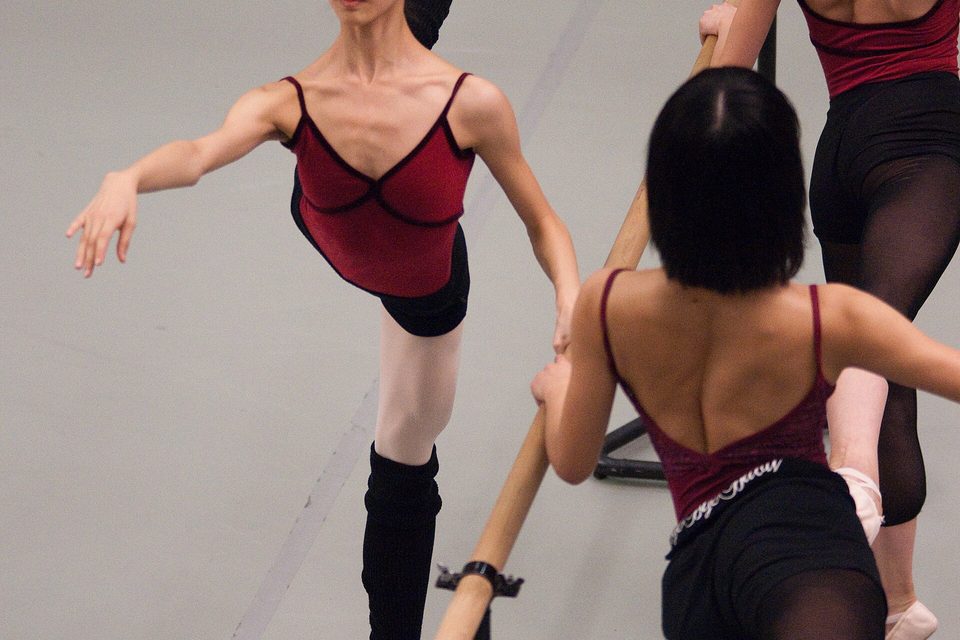
One more thing worth saying plainly. Photographs taken from behind, from the wings, in silhouette, or of hands and feet at the barre carry almost all of the atmosphere and identify nobody. A studio that builds its public gallery that way, and keeps the identifiable recital photographs behind a login for enrolled families, has solved most of this without giving up anything visitors will miss.
For most of the year a studio website is quiet. Then registration opens, and in the space of about two hours you get the busiest traffic of the year, all of it doing the one thing that is expensive: filling in a form, choosing classes, paying.
If the site is going to struggle, it struggles then. And the cause is almost never the hosting plan.
| What gets blamed | What is usually happening | What fixes it |
|---|---|---|
| The hosting plan | The plan is fine. Every visitor is loading a 12MB recital gallery on the way to the form. | Resize the photographs, or keep the gallery off the landing page |
| Too many parents at once | The registration system is a third-party platform, and the slow part is not on your server at all | Ask the platform what it is rated for, before the day |
| The website software | Six plugins, a video background and a social feed load before the form does | Strip the registration page down to the form |
| The server going down | Nothing went down. The payment step timed out and the parent could not tell | Test the whole flow, on a phone, a week before |
The practical move is to build one plain, fast page that exists only for registration, and send everybody there. No gallery, no video, no news feed. It loads instantly, it is easy to fix under pressure, and it works on the phone a parent is holding in a parking lot.
As for the plan itself, a studio site belongs on shared hosting and the entry tier usually covers it. If someone is selling you a larger plan on the strength of registration day, ask them to explain what the extra capacity does for a form that is hosted somewhere else.
Parents arrive at your site with a very specific question. My daughter is seven, she has done one year of ballet, what can she take and when. They are filtering on age and level before they are filtering on anything else, and most studio schedule pages make that hard.
The version that works is unglamorous: real web text, grouped by age, with the level and the term dates written out. It costs nothing extra to host, it loads faster than the PDF did, and you can change a Tuesday class in a minute without opening design software.
If you offer a trial class or a first-class-free week, put it on the schedule page itself rather than only on a separate page. That is where the decision is being made.
We will rebuild your class schedule as real web text, grouped by age with term dates written out, and strip the registration page down to the form. Call 716-771-2536 and tell us what the studio site runs on.
Recital week brings a different kind of traffic. Grandparents, aunts, family from out of state, all arriving at once and all looking for the same three things: the date, the venue, and how to buy a ticket. Many of them have never been to your site before and will never come back.
Almost every studio sells those tickets through a third-party platform, and that is a sensible choice. Ticketing is a real piece of software and you should not be building one. What matters is what your own site does around it.
Afterwards comes the gallery, and the gallery is where the consent work from earlier either pays off or does not. Take the extra hour. Check the list before you publish, not after somebody calls.
If your studio teaches adults only, most of this page does not apply to you, and it is worth saying so directly rather than letting you buy protection you do not need.
An adult ballroom, salsa, tap or fitness-dance studio has no consent complexity worth speaking of. Adults can be asked once, on the spot, and they can say no for themselves. There is no gallery review process, no annual re-consent, no logged-in area for enrolled families. Your website is a schedule, a price list, a location and a contact form, and that is one of the lightest things anybody can put on a server.
Where spending more genuinely makes sense: you run classes for children and want a login area so identifiable recital photographs are not public at all, you run registration and payment on your own site rather than a platform, or you operate several locations from one website. Those are real reasons. Being busy in September is not one.
AldoMedia has built and looked after websites for Western New York businesses since 1999, and studio sites with the schedule locked inside a PDF and a recital gallery nobody has reviewed are familiar work. We are an independent authorized reseller rather than the operator of the underlying platform, and if the plan you are on already fits the site, we will tell you that instead of selling you a bigger one.
If you are inheriting a site somebody else built, and nobody is quite sure who has the logins, start with taking over a website. Otherwise call 716-771-2536 or tell us what your studio site runs on.
With consent, and with more care than most studios take. Ask at registration in writing, offer three answers rather than a yes or no, keep the list of exclusions in the same place as the photographs, and re-ask every year. Default to no first names in captions, because a name plus a class time plus your address adds up to more than a photograph on its own. Rules vary by state and by what your enrollment form says, so have your own adviser read it.
Take it down the same day, then check whether the same image is anywhere else: a homepage slider, a social post, an older gallery, a cached copy of the page. Publish an email address on the gallery page for exactly this purpose so the request reaches you rather than turning into a phone call to the front desk during class.
Usually yes, and if it does not, the hosting plan is rarely the reason. The common causes are a heavy gallery loading on the way to the form, a third-party registration platform that is the actual bottleneck, or a payment step that times out without telling the parent. Build one stripped-down page that exists only for registration, and test the whole flow on a phone a week beforehand.
No. A PDF is hard to read on the phone most parents are using, it cannot be searched, a screen reader struggles with it, and it goes stale because updating it means finding the original file. The same information as ordinary web text, grouped by age with the level and term dates written out, loads faster and can be corrected in a minute.
It is worth it if you publish identifiable photographs of children, because it keeps the recital gallery out of public view entirely while families still get their pictures. It is not worth it for an adult studio, or for a children's studio that keeps its public gallery to shots taken from behind and in silhouette. A login is a thing to maintain, so only add one if it is carrying real weight.
Not really, because the selling happens on their servers. What changes is what your own page has to do. Put the date, doors time and venue address in plain text on your site rather than hiding them behind a click, link out to the platform instead of embedding it, and find out whether you can export the buyer list before you assume it is yours.
The plan type nearly every dance studio site belongs on, and what the higher tiers actually change.
Read about shared hostingThe real risk to a small studio site is losing it. What a backup should cover and how to test one.
Read about backupsInherited a studio site and nobody knows who has the logins. How to get control back.
How to take it overEvery trade we cover is listed on hosting by industry.
Hero image: Gaelle Marcel gaellemm, CC0, via Wikimedia Commons. Cropped.
Tell us what your studio site runs on and we will tell you whether the plan you are paying for fits it. If it already does, we will say so.
Get Your Web Hosting Plan Get help choosing
Or call 716-771-2536 and tell us what the site has to do. If the plan you are already on is the right one, we will say so.
.jpg)