

Shared Hosting
The plan type nearly every cafe site belongs on, and what the higher tiers actually change.
Read about shared hosting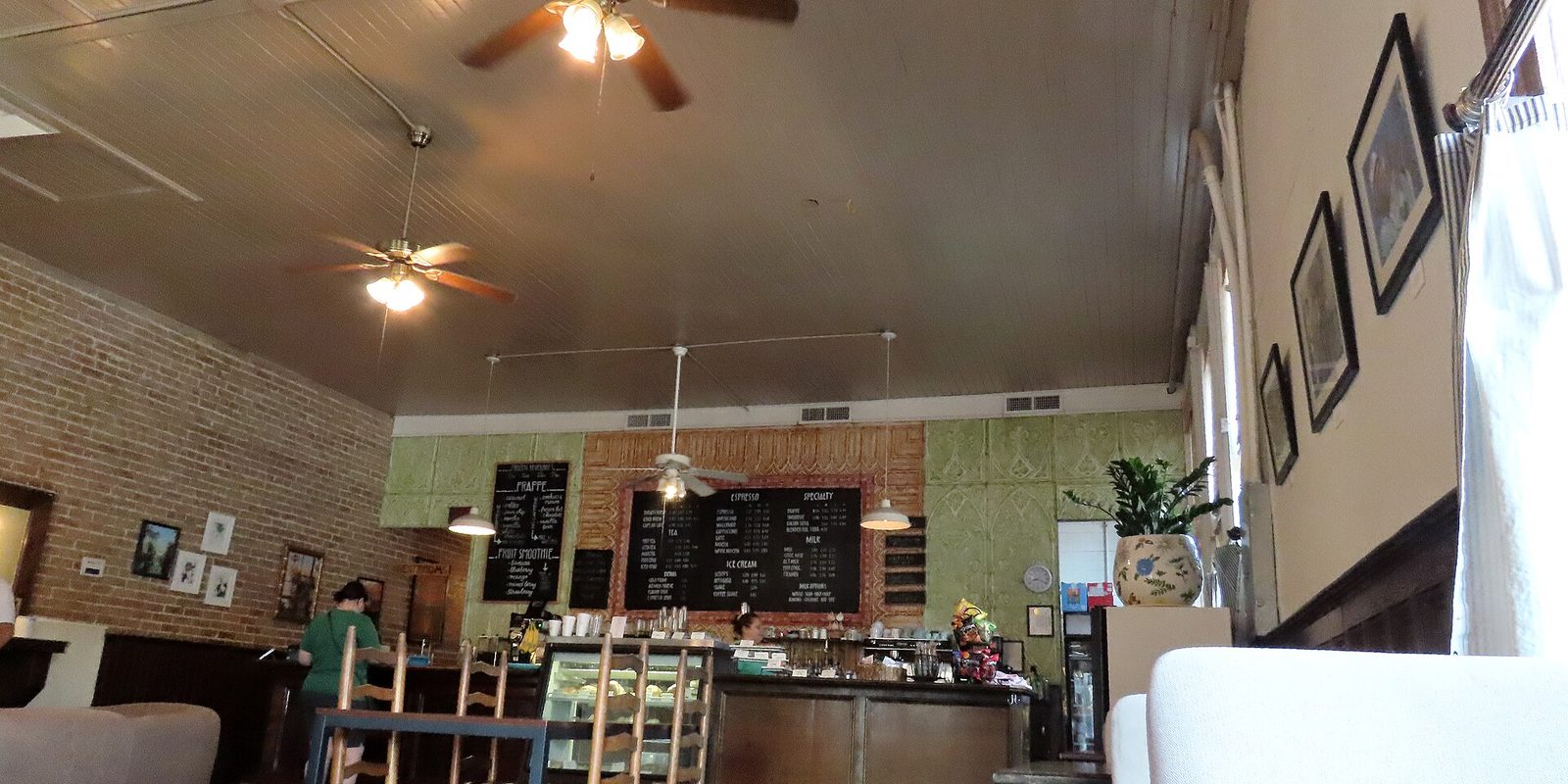
For a cafe, the most valuable content you will ever put on the internet is about four lines long. It is today's opening hours. Most of the people looking you up are standing somewhere nearby deciding whether to walk over right now, so web hosting for cafes is really a way to get four lines of text to them first.
Disclosure: AldoMedia is an independent authorized reseller. If you buy through a link on this page we may earn a commission, at no extra cost to you. The hosting platform, the domain registry and the certificate authority are run by upstream providers whose full-time job that is. What AldoMedia does is set the products up properly, support them, and stay accountable for your account.
Watch what people actually do on a cafe website and the pattern is boring and consistent. They check the hours. They check the address, or they tap the map. A smaller number look at what you serve, and a smaller number again look at anything else. That is the site.
So the question is not what your website should say. It is whether the hours on it are correct at this exact moment, and whether they load before the person gives up and walks to the place next door.
This is good news, because it makes the job small. A cafe site is a handful of pages of ordinary text and a few photographs. It is one of the lightest things anybody puts on a server, and it should be priced accordingly.
If your hours are inside an image, a poster graphic or a PDF, they are not really on your site. A phone cannot read them out, a search engine cannot index them, and you cannot change them without opening design software.
We set a cafe site up so today's hours are plain text you can edit from your phone in under a minute, holiday exceptions included. That is a one-off job, not a bigger plan.
Here is the failure, and it is nearly universal. Your hours exist in at least three places. The sign in the window. Your Google Business Profile. Your website. Possibly a fourth, in whichever social account you use most. They disagree with each other, because the website is the one nobody remembers to change.
Somebody reads the stale one, drives over, finds a locked door. Some of them shrug. Some of them write a review about it. That review outlives the mistake by years.
Regular weekly hours tend to be right, because you set them once. What goes wrong is everything that is an exception. Summer Sundays. The week you close between Christmas and New Year. The morning you open late for a staff meeting. Those are the changes that never make it to the website, and those are exactly the days people check.
The fix is not clever. Put your hours in one place on the site that you can edit in under a minute from your phone, write the exceptions in plain words next to them, and make updating them the last thing you do on the last normal day before the change.
Most cafe searches are somebody within walking or driving distance, on a phone, with a short attention span. They are asking two things at once: is there coffee near me, and is it open.
The honest thing to say is that your Google Business Profile answers most of that, not your website. For local searches the profile is the front door. It carries your hours, your map pin, your photographs and your reviews, and a very large share of people never click through to the site at all.
That does not make the website pointless. It makes it the thing the profile points at, and the thing you actually own. Google can change the profile layout tomorrow, suspend an account by mistake, or merge you with a business that closed in 2014. Your own domain and your own pages are the part nobody can take away, which is also why the domain name matters more than the design does.
That is a five-page site at most. It can be three.
A cafe site is read outside, on a phone, often on a poor signal, by somebody who is already walking. Speed is not a technical nicety here. It is whether the hours arrive before the decision does.
Almost every slow cafe site is slow for the same reason, and it is not the hosting plan. It is photographs. Somebody uploaded twelve pictures straight off a camera or a modern phone, each one several megabytes, and the homepage now weighs more than a video. No plan fixes that, because the file still has to travel down the phone signal.
A picture that displays about a thousand pixels wide does not need to be five thousand pixels wide. Shrinking your images is usually the single biggest speed improvement available to a cafe site, and it is free.
A review badge, a social feed, a booking script and a chat bubble each load code from somewhere else before your page finishes. Keep the one that earns its place and remove the rest.
If your site runs on WordPress, caching stops every visit rebuilding the page from scratch. The WordPress hosting page explains what a WordPress plan arranges for you and what is still your job.
If the page is light and the widgets are gone and it is still slow, that is worth investigating. In practice it almost never gets that far.
One more thing that is not optional: your site needs an SSL certificate so it loads over https. Without it browsers show a warning, and a warning on a phone is enough to lose the visit.
Send us what your cafe site runs on and we will look at the photograph weight, the widgets and the hours setup, then tell you what to fix. If your current plan is already right, we will say so.
Plenty of cafes want to sell bags of beans, gift cards or a subscription. That can work. It is worth being clear that it is a separate business with separate demands, and it should not be bolted onto the decision about hosting your opening hours.
The moment you take payments and hold customer accounts, the site stops being four pages of text. It has logins, it has an order history, it has a payment integration to keep updated, and it has a security profile that a brochure site simply does not have. That is when website security and reliable backups stop being optional extras and start being the point.
It also changes the work rather than the technology. Somebody has to pack boxes, print labels, answer emails about a delayed order and roast to a schedule. Most cafes that quietly drop online sales drop it for that reason, not because the website failed.
If you want to test the idea first, take orders by email or by phone for a month and see whether anybody bites. If they do, build the shop. If they do not, you have saved yourself a year of paying for a shop nobody used.
When you do build it, treat it as a new project on a plan sized for it. Adding a shop later is normal and easy. Paying for shop-sized hosting for two years first is just paying.
This is most cafes, and it deserves to be said flatly rather than buried. A cafe does not need a big site or a big plan. If somebody is selling you either, ask what it is for and make them answer in plain words.
Where spending more is genuinely justified: you are selling online and taking payments, you run several locations on one site, you are running a roastery with a wholesale side, or you have a site heavy enough that shared hosting is visibly straining. Those are real reasons. Being busy at 8am is not one of them.
The one thing worth paying a person for, rather than paying a plan for, is getting the site set up so you can change the hours yourself. That is a one-off job and it pays for itself the first holiday weekend.
AldoMedia has built and looked after websites for Western New York businesses since 1999, and small hospitality sites are familiar work. We are an independent authorized reseller rather than the operator of the underlying platform. If the plan you are already paying for is the right one, we will tell you that instead of selling you another.
If you are taking over a site somebody else built, or you are not sure who currently controls the domain, start with taking over a website. See hosting plans for current pricing, call 716-771-2536, or tell us what your site runs on.
For most searches Google shows the hours and many people never click through, so the profile does the heavy lifting. The website still matters because you own it. A profile can be suspended, merged with a closed business or redesigned without warning, and you have no control over any of that. Your own domain and pages are the version nobody else can change, and they are cheap enough that going without is a false saving.
One place on the site, editable from your phone in under a minute, written as ordinary text rather than sitting inside a graphic. Then make updating them the last task before any change takes effect, on the same list as ordering milk. The hours that break are never the regular weekly ones, they are the seasonal switch and the holiday closure, and those are the days people check hardest.
Only if you will keep it current. A drinks list with last year's prices annoys people more than no list at all, and cafe prices move. A short description of what you serve, your roaster, whether you do food and what the milk options are covers what most people want. If you do publish prices, publish them as text you can edit yourself, never as a PDF or a photograph of the board.
It is worth a few honest sentences, not a page. Say whether there is Wi-fi, whether there are outlets, roughly how many seats you have and whether you are comfortable with laptops staying a while. If you would rather people did not camp out at the busiest hours, say that too. It reads better as a plain house rule than as a sign taped to a table.
Yes, but not until you actually do it. A shop adds logins, payments, order records and a real security and backup requirement, which is a different plan from a four-page site. Adding it later is straightforward, so there is no reason to pay for shop-sized hosting while you are still deciding. Test the demand with email or phone orders first.
No. Your morning queue and your website traffic have almost nothing to do with each other, and a page of text does not care how many people read it at once. If the site is slow it is nearly always weight rather than load, usually photographs uploaded at full camera size plus a few third-party widgets. Resize the images and remove the widgets before considering a bigger plan.
The plan type nearly every cafe site belongs on, and what the higher tiers actually change.
Read about shared hostingFor a three-page site the choice is genuinely close. Here is how to decide without regretting it.
Compare the twoEvery line on the bill for a small site, including the ones people forget until renewal.
See the running costsEvery trade we cover is listed on hosting by industry.
Hero image: abbeyprivate, Public domain, via Wikimedia Commons. Cropped.
Tell us what your cafe site runs on and we will tell you whether the plan you are paying for is the right size. If it already is, we will say so and leave you alone.
Get Your Web Hosting Plan Get help choosing
Or call 716-771-2536 and tell us what the site has to do. If the plan you are already on is the right one, we will say so.
