

Shared Hosting
The plan type nearly every salon site belongs on, and what the higher tiers actually change.
Read about shared hosting
A beauty salon sells a long list of small services. Forty of them, sometimes more, at every price point from a brow tidy to a course of treatments. Web hosting for beauty salons is the trivial part. The hard part is making that list legible enough that somebody can decide what to book without calling to ask.
Disclosure: AldoMedia is an independent authorized reseller. If you buy through a link on this page we may earn a commission, at no extra cost to you. The hosting platform, the domain registry and the certificate authority are run by upstream providers whose full-time job that is. What AldoMedia does is set the products up properly, support them, and stay accountable for your account.
Watch how a new client uses a salon website. They are not reading about your training or looking at the fit-out. They are trying to answer one question: what do I book, and how long will I be here. Everything else on the site is there to support that.
The usual version of the menu makes that question hard to answer. Forty treatments are dumped into a single price list, alphabetically or in whatever order they were typed, with a number next to each one and nothing else. No duration. No indication of what is included. No sense of which of the four similar-sounding facials is the one for a first visit.
So the client phones. That call is not a sign the website is working. It is the website failing quietly and passing the cost to whoever is at the desk, usually while they have somebody in the chair.
None of that is a hosting feature. It is text on a page. But it is the difference between a site that books and a site that generates phone calls, and it is worth fixing before you spend a penny on anything else.
Send us your current price list. We will show you where the durations and one-line descriptions go, and set the menu up so you can change a price yourself in a minute.
The mechanics are simple and mostly a matter of discipline. The reason salon menus drift is that treatments get added over years and nobody ever goes back and reorganizes the page. Sorting it once buys you a long time.
Categories first, treatments underneath. Somebody thinking about lashes should reach every lash option in one scroll and not have to read past three waxing prices to get there.
Price and time together, always. If a treatment varies, give the range and say what changes it. A client planning a Saturday needs the time more than they need the price.
Plain words, not brochure language. What it is, who it suits, what it is not. This is the line that stops the phone call asking what the difference is.
Patch test, consultation, arrive with clean skin, no gel over a certain length. Put it on the treatment, not in a paragraph at the bottom that nobody reaches.
Prices move. If changing a price means emailing whoever built the site, the site will show last year's prices by autumn. That is a workflow problem, and it is the one to solve first.
If the menu currently lives in a PDF or a photograph of a printed price list, that is the first job. Words inside an image cannot be read on a phone properly, cannot be found by a search engine and cannot be edited in a minute.
As for what this asks of a server: almost nothing. A menu is text. It is one of the lightest things you can publish. Shared hosting is the right product for a salon site and the entry tier is usually genuinely enough.
People do not often search for a salon by name unless they already know you. They search for a treatment plus a place. Lash lift, dermaplaning, gel removal, a particular brand of facial, all with a town on the end.
If every one of your treatments lives as a single line on one long menu page, you have one page competing for forty different searches. It will not win many of them, because it does not really answer any of them.
The fix is to give your handful of signature treatments a page each. Not all forty. Pick the five or six that bring in the most money or the most new clients, and write a real page for each: what happens during the appointment, how long it takes, how long the result lasts, aftercare, what it costs, what to do before you come in.
This is also the point at which a site stops being a leaflet. A treatment page brings in someone who has never heard of you, and it keeps working while the salon is closed.
Packages are good business and bad for readability. Every bundle you add multiplies the number of lines on the menu, and past a certain point the client stops reading and picks whatever is at the top.
Keep them separate. The main menu lists individual treatments. Packages, courses of treatments and gift bundles go on their own page, linked from the menu with a single line. The client who wants a package will look for one. The client booking a single facial should not have to read past six of them.
If you sell a course, say what happens if somebody stops halfway, whether the sessions expire, and whether they can be shared. Those three questions come up on the phone constantly, and every one of them is a sentence on a page.
Gift vouchers deserve their own page too, and it should be findable in December by somebody who has never been to your salon. It is often the single busiest page on a salon site for six weeks of the year.
We will build proper pages for the five or six treatments that bring in your new clients, with patch test rules stated in days. If your current plan already covers it, we will tell you that too.
Some treatments cannot go straight into the diary. Tints and lash work commonly need a patch test a set time beforehand. Some treatments need a consultation first. Some are ruled out by medication, pregnancy or a recent treatment elsewhere.
Every one of those is a booking that will be canceled if the client finds out on the day. That is a lost slot, an unhappy client and sometimes a refund argument. The website is the cheapest place to prevent it.
Salons that treat skin more clinically, with injectables or medical-grade devices, carry a heavier version of this problem and usually a different set of obligations. That is closer to the med spa page than to this one, and worth reading if it describes you.
If hair is the main business and beauty is a side room, this page is not the one for you. A hair salon website is organized around stylists: who does what, who has availability, whose work you are looking at in the gallery. The booking decision is a person as much as a service. The hair salons page is written around that, and it fits better than anything here.
The same goes for a single-treatment business. If you do lashes and only lashes, you do not have a menu problem. You have one service, and your site should be one strong treatment page rather than a menu structure built for forty lines.
Several locations on one site with separate menus and teams. Taking payment or deposits directly on your own site rather than through a booking platform. Storing client intake forms or consultation notes on the site, which raises a duty of care worth discussing with your own adviser before you build it. Those are real reasons. Being busy is not one. A fully booked salon and a quiet one put the same load on a server.
One thing that is worth money regardless of plan size: knowing your site can be put back. Backups matter more once your menu, your prices and years of gallery photographs live in one place.
AldoMedia has built and looked after websites for Western New York businesses since 1999, and salon sites with a forty-line price list and no durations are familiar work. We are an independent authorized reseller rather than the operator of the underlying platform, which means we have no reason to talk you up a tier. If the plan you are on is already right, we will say so.
If you are moving from an old site or taking one over from whoever built it, the order of operations that keeps your email working through the change is on the website migration page. Call 716-771-2536 or tell us what your site runs on and what your menu currently lives in.
No. Forty thin pages are worse than one good menu. Pick the five or six treatments that bring in the most money or the most new clients and write a proper page for each, covering what happens, how long it takes, how long it lasts and what to do beforehand. Everything else stays as a line on the menu with a duration and a short description.
Put a duration and one plain sentence under every line on the menu. Most of those calls are somebody trying to tell two similar treatments apart, or working out whether they can fit it into a lunch hour. Two sentences on the page answers both, and the person at the desk gets their afternoon back.
On the treatment itself, in the menu line and again on the treatment page, with the number of days stated rather than the words "in advance". If you take online bookings, get the same wording into the booking flow. Clients who book late at night do not read the page, and a missed patch test is a canceled slot on the day.
Almost certainly not. Salon sites are slow for one reason nearly every time: a gallery of photographs uploaded straight off a phone at full size. Resize them before they go up and the site gets faster on the plan you already have. Buying a larger plan to carry oversized images is paying monthly for a one-off job.
Usually not. Most salons use a third-party booking platform and link to it, which means the load and the client data sit on that platform rather than your server. That is a perfectly sensible arrangement. Just keep your menu and your treatment pages on your own site, because the platform listing rarely gets found in search and it is not yours.
Yes, and that is easier if the website is the version you edit first. Salons end up with stale prices online because updating the site means asking somebody else. Make sure you can change a price yourself in a minute, then treat the site as the master copy and print from it.
The plan type nearly every salon site belongs on, and what the higher tiers actually change.
Read about shared hostingWhere a salon site ends up if the menu and photos live inside somebody else's platform.
Compare the twoGetting your menu, prices and years of gallery photographs back if something goes wrong.
Read about backupsEvery trade we cover is listed on hosting by industry.
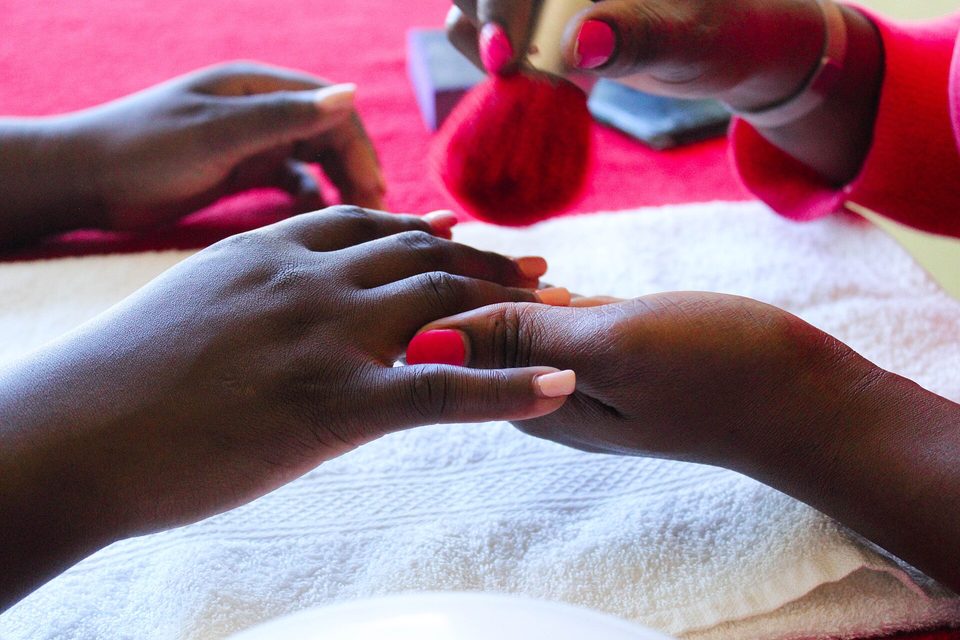
Hero image: Joe Shlabotnik, CC BY 2.0, via Wikimedia Commons. Cropped.
Send us your current price list and what your site runs on. We will tell you what is missing from the menu and whether the plan you are paying for is the right one.
Get Your Web Hosting Plan Get help choosing
Or call 716-771-2536 and tell us what the site has to do. If the plan you are already on is the right one, we will say so.
